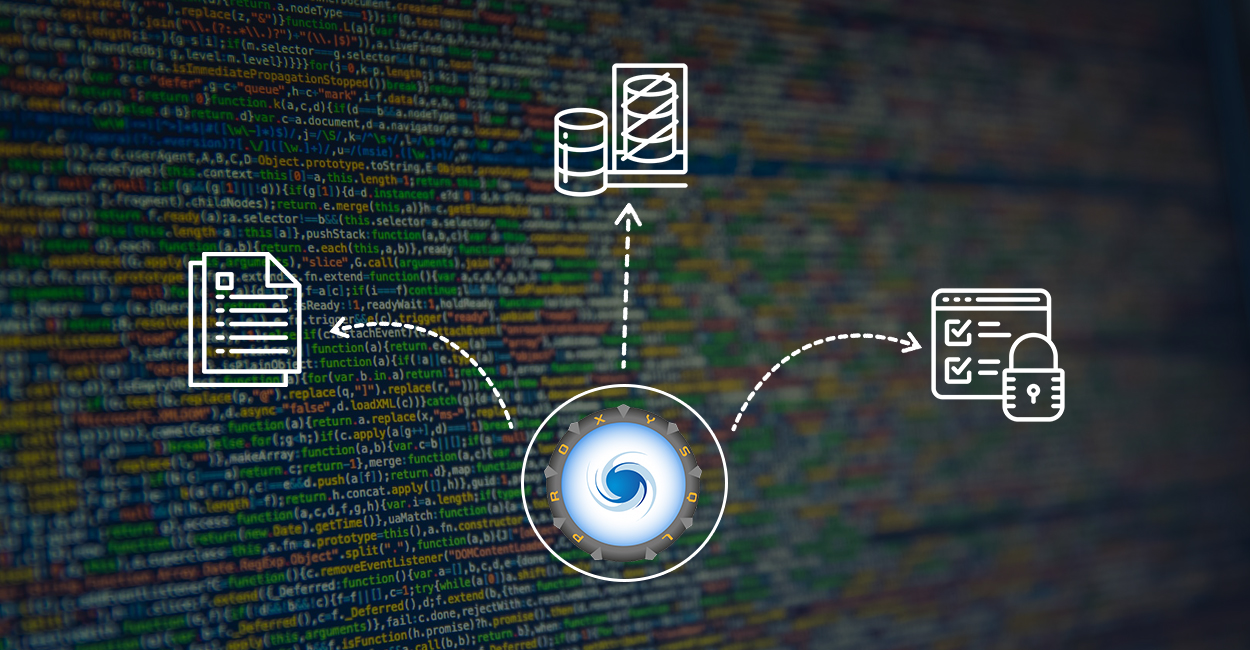

ProxySQL is one of the advanced software load balancer that we have in market. ProxySQL has an in-built abilty to identify the reads,writes and route the write traffic to master and read traffic between the available slaves. One occurence of a Replication delay or server crash or replication breakag
ProxySQL provides several features to improve the performance, flexibility, and security of MySQL environments. This blog covers query caching, query routing, query mirroring, query rewriting, and data masking, along with how these features can help manage database traffic, optimize queries, test changes, and protect sensitive data.
Next generation databases must address some of the points such as being non-relational,highly available,open source and horizontally scalable. NoSQL databases has much increased features when it comes to non-structural data. In this article, we will discuss basics of NoSQL databases and why you need.
A MariaDB Galera cluster can experience severe stalls when concurrent updates to the same primary key trigger an unexpected deadlock issue. This blog explains how we reproduced the issue in MariaDB 10.2, why the affected node became unresponsive, and the recovery and upgrade options used to resolve it.
This blog explains how PostgreSQL Autovacuum works — covering the launcher/worker process model, the exact formula that decides when a table becomes eligible, and the key differences between VACUUM, Autovacuum, and VACUUM FULL. It includes an interactive eligibility calculator, tunable parameters, monitoring queries, and best practices to help DBAs prevent table bloat and transaction ID wraparound.
Choosing the right database for analytics depends on the workload, data size, and query patterns. This blog compares MySQL, MariaDB ColumnStore, and ClickHouse using a large time-series dataset. The benchmark compares storage usage and query performance, with ClickHouse delivering the best results for this particular workload and ultimately being selected for production.
MariaDB Spider is a storage engine that supports federation and sharding across multiple MySQL or MariaDB servers. It helps distribute data and workloads, making it useful for scaling large datasets, balancing traffic, and improving data retrieval through parallel processing.
Auto slave promotion without any DBAs intervention using Orchestrator and ProxySQL. If you are looking for a HA solution without going for synchronous replication or Aws RDS then Orchestrator with ProxySQL is a great choice.
ProxySQL can help manage MySQL traffic and reduce the impact of unexpected database load. This blog explores a real-world case where a sudden CPU spike was traced to a frequently executed, unindexed query. By using ProxySQL to route the query to a replica, the load on the MySQL master was reduced without requiring immediate application changes.
Huge data blocks resides under single MDF file might cause a performance of the query and impact the application services. This blog help you to understand how we can the split the single MDF file into multiple data files.
MSSQL server replication allows data to be copied between SQL Server databases for different availability and data distribution needs. The three main types are Snapshot Replication, Transactional Replication, and Merge Replication. This guide explains how each type works, its advantages and limitations, and when it is best suited for different traffic patterns.
SQL Server 2017 brings the best features of the Microsoft relational database engine to the enterprise Linux ecosystem, including SQL Server Agent, Azure Active Directory (Azure AD) authentication, best-in-class high availability/ disaster recovery, and unparalleled data security.
TiDB Resource Control helps manage resource usage by assigning limits and priorities to different workloads. It allows high-priority applications to get the resources they need while preventing other workloads from affecting critical operations. This is especially useful when multiple teams or workloads share the same TiDB cluster.
MongoDB schema validation helps maintain data consistency while preserving MongoDB’s flexible document model. It allows you to define rules for document structure, required fields, data types, and permitted values using JSON Schema. It also demonstrates how MongoDB rejects documents that fail the defined rules, helping applications prevent unintended schema changes and invalid data.
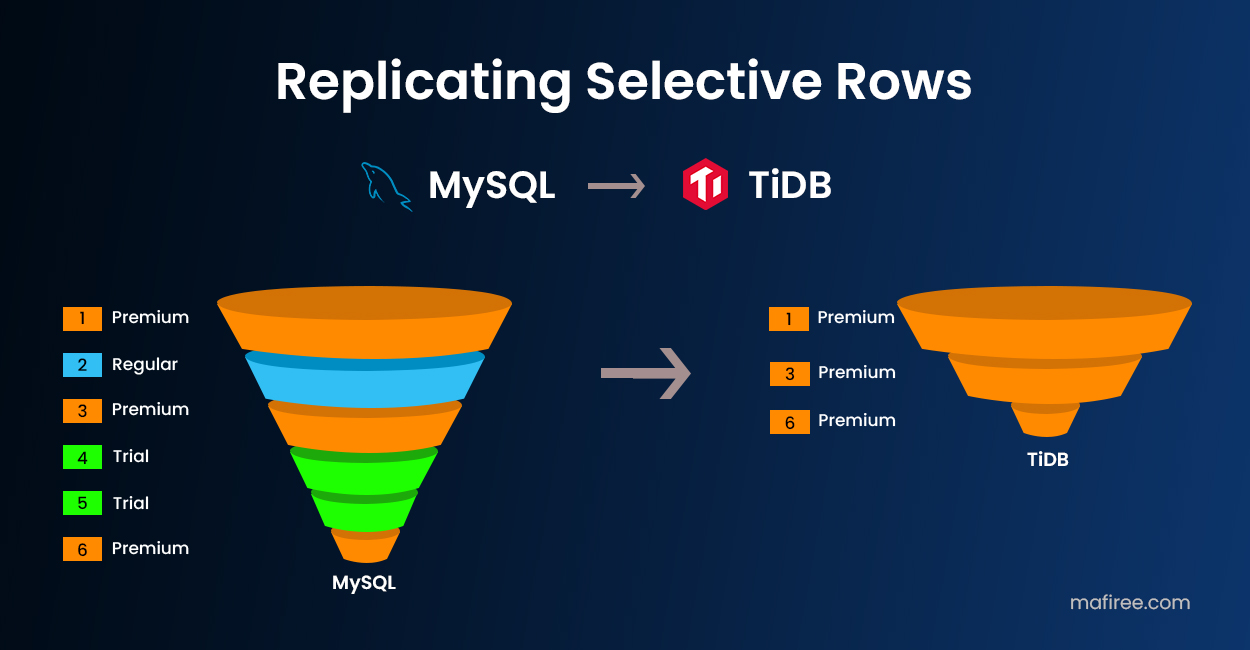
Analytics with TiDB's Row-Wise Filtering. Discover how our client slashed costs and boosted flexibility with TiDB's granular data management features. Dive into the future of database optimization with Mafiree
Aerospike is a high-performance NoSQL database built for real-time, mission-critical applications. It delivers low-latency performance, horizontal scalability, high availability, strong consistency, and cross-data-center replication, making it suitable for workloads such as ad tech, gaming, and recommendation systems.
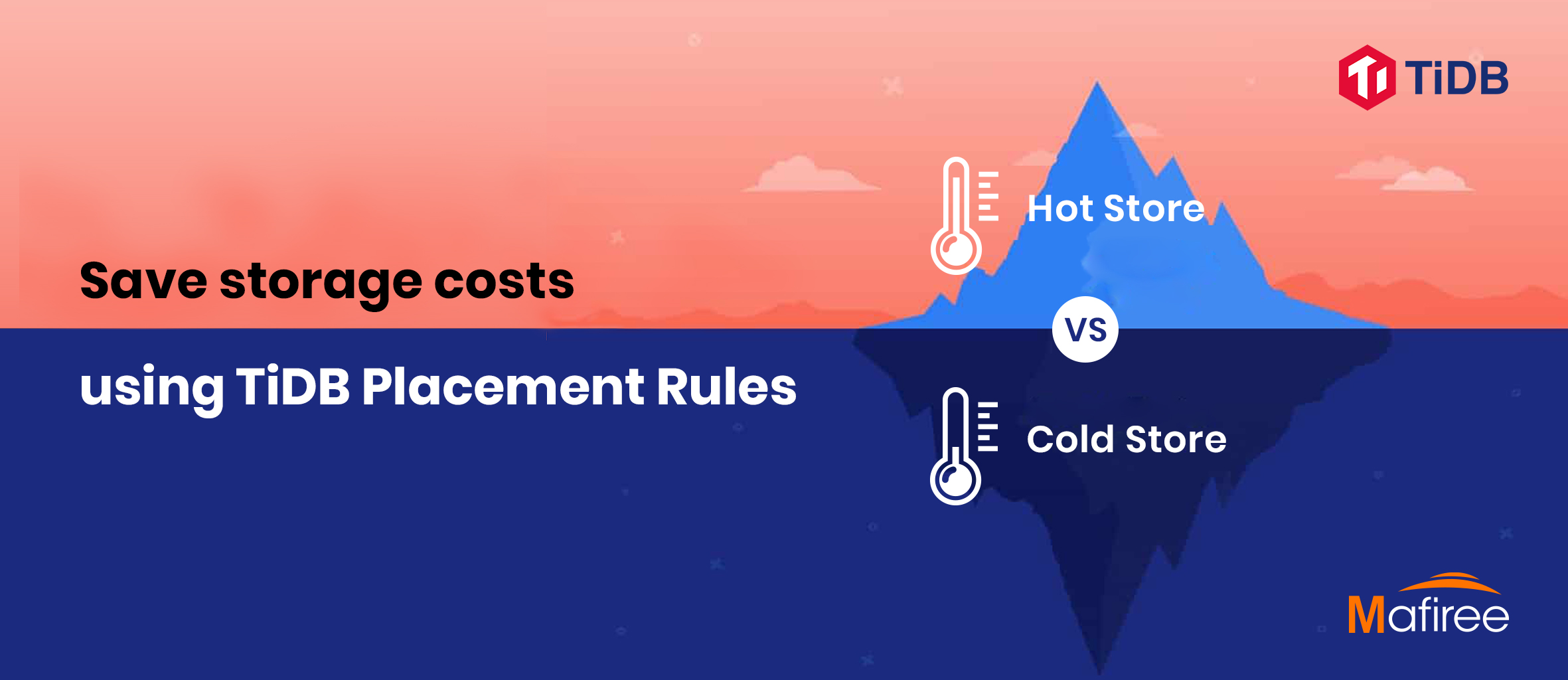
TiDB Placement Rules help control where data is stored within a TiKV cluster. By assigning data to specific storage tiers, zones, or hosts, they can improve performance, resource utilization, and cost efficiency.
Unlock the full potential of ClickHouse with these must-know functions. From data transformation to advanced analytics, elevate your database skills today!
Load balancing in PostgreSQL distributes client connections across multiple database servers to improve performance, scalability, and availability. This guide compares Pgpool-II, ProxySQL, and HAProxy, covering their key features, advantages, limitations, and suitability for PostgreSQL workloads.
Master Database Integrity with Check Constraints: Improve Data Quality and System Performance
Learn how materialized views and their refreshable counterparts simplify complex analytics by precomputing results, boosting query performance, and enabling near real-time decision-making.
Learn how to automate index rollover in AWS OpenSearch using ISM (Index State Management) policies to manage your log data efficiently and ensure optimal search performance.
In the fast-moving world of logistics and transportation, real-time data management is critical. A leading transportation company, handling millions of transactions per hour, faced growing complexity in managing, transforming, and analyzing operational data.
Explore the 8 critical changes in MySQL 8.4 you need to know before migrating your production environment. From authentication updates to InnoDB defaults, this release brings significant operational implications for developers and DBAs.
TiDB TTL (Time-To-Live) automatically removes expired rows based on a defined retention period. It helps manage growing datasets, reduce storage usage, and minimize the need for manual cleanup. This guide covers TTL configuration, scheduled cleanup jobs, conditional expiration, monitoring, and key limitations.
“Fortify Your MySQL Security: Slow Down Attackers with Connection Control Plugin” Learn how the MySQL Connection Control Plugin helps defend against brute-force login attempts by introducing intelligent, progressive delays—without locking out legitimate users.
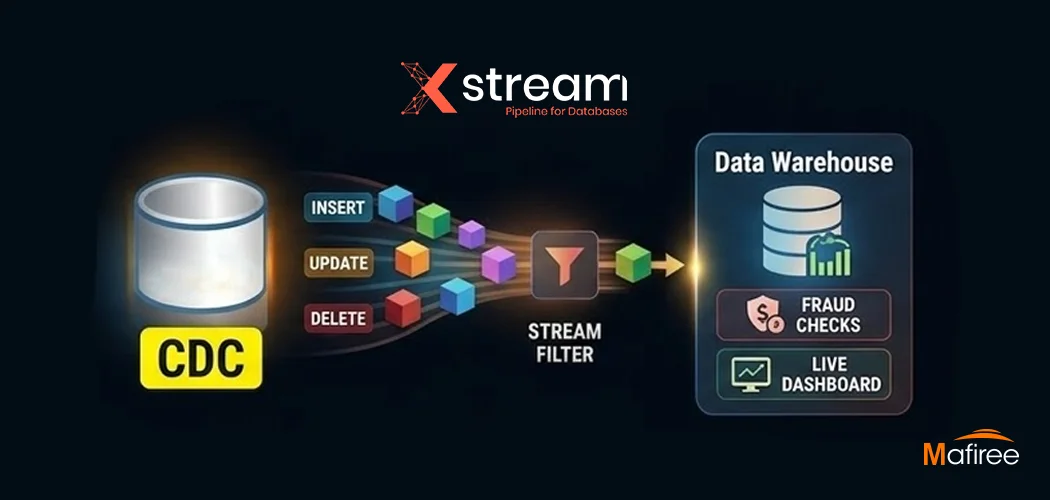
Each second, databases are constantly changing—and this is where change data capture plays a crucial role. As updates happen across systems, applications need a way to instantly know what changed without scanning entire datasets. Change Data Capture (CDC) solves this by tracking only the changes and delivering them in real time, enabling systems to stay in sync and power efficient, scalable real-time data pipelines.
Modern systems don’t suffer from a lack of data — they suffer from too much of it, in too many places. Every service, application, and platform generates its own stream of information. Transactions, logs, user actions, system events — all flowing continuously, but rarely in sync. The real challenge isn’t collecting data anymore. It’s making sense of it. That’s where ETL begins its quiet work in the background.
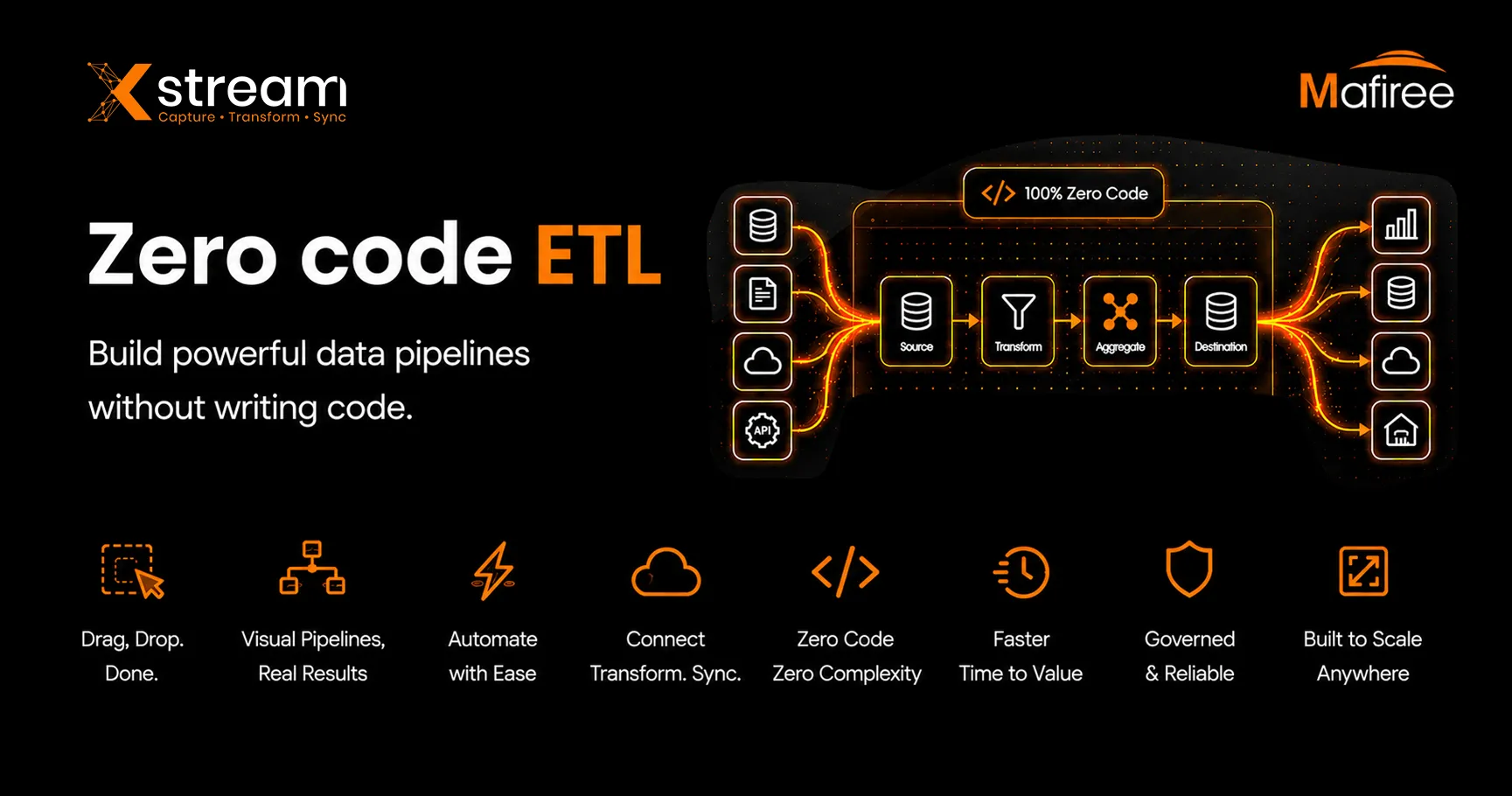
Zero-Code ETL simplifies data integration by replacing complex coding with visual workflows, automation, and prebuilt connectors. It helps businesses deploy pipelines faster, reduce maintenance effort, support real-time data movement, and scale operations more efficiently, allowing teams to focus on insights rather than managing infrastructure.
Most MySQL slowdowns are fixable in-house. A smaller set of problems keep coming back, keep growing, or sit outside what routine tuning can solve — and that's the line worth knowing before an incident forces the decision for you.
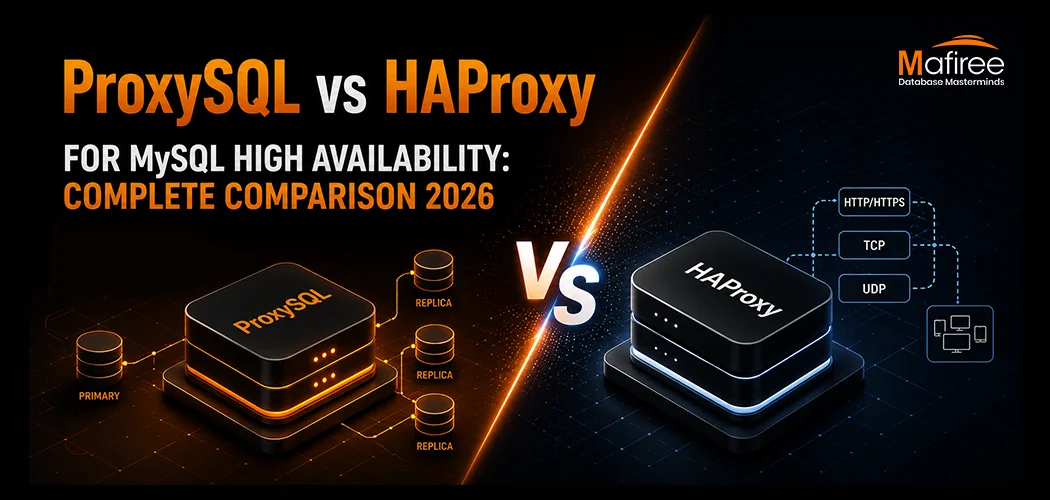
ProxySQL excels in MySQL-specific query routing, read/write splitting, and performance tuning. HAProxy offers robust load balancing across multiple protocols and is ideal for general-purpose proxying. Choose ProxySQL if your focus is on MySQL optimization; select HAProxy for broader application-level load balancing. Both tools support failover mechanisms but with different levels of database-specific integration.
Choose an in-house DBA when you need continuous database ownership, deep knowledge of internal systems, and day-to-day operational control. Choose MySQL consulting when you need specialized expertise, performance tuning, migrations, complex troubleshooting, or additional database capacity without hiring a full-time specialist. A hybrid model can be the best fit when your team handles routine database operations internally but needs external expertise for complex projects, peak workloads, or specialized MySQL problems. The right choice depends on workload consistency, technical complexity, required coverage, internal expertise, scalability, and total cost—not simply the hourly or salary cost. Mafiree's managed database services provide ongoing MySQL support alongside specialized database expertise for organizations that need more flexibility than a purely in-house model.
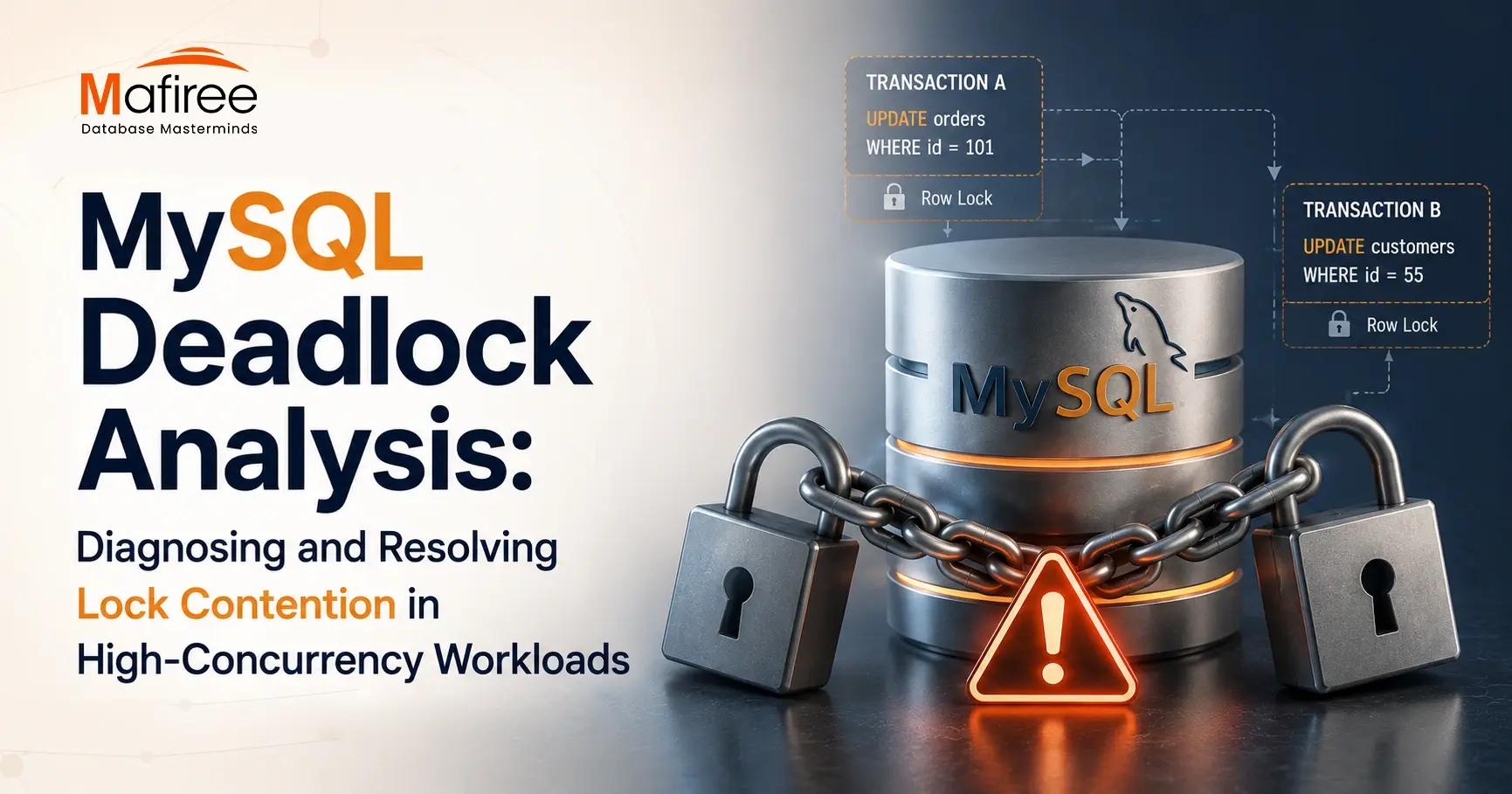
A MySQL deadlock occurs when two or more transactions hold locks that each other needs, creating a circular dependency that prevents them from proceeding. InnoDB detects the deadlock and rolls back one transaction; applications typically receive MySQL error 1213 and should safely retry the transaction. To diagnose a deadlock, start with SHOW ENGINE INNODB STATUS; for recurring incidents, use innodb_print_all_deadlocks and Performance Schema data_locks and data_lock_waits to investigate lock relationships. Common causes include inconsistent transaction ordering, long-running transactions, and inefficient indexing or locking patterns. The most effective fixes are to keep transactions short, access shared resources in a consistent order, optimize the indexes used by locking statements, and implement safe retry handling.
More than 6000 Servers Monitored
Happy Clients
Certified DBAs
24 x 7 x 365 Support
Miru IT Park, Vallankumaranvillai,
Nagercoil, Tamilnadu - 629 002.
Unit 303, Vanguard Rise,
5th Main, Konena Agrahara,
Old Airport Road, Bangalore - 560 017.
Call: +91 6383016411
Email: sales@mafiree.com