
 Orbit
 Xstreami


Database Insights, Tips & Expert Blogs

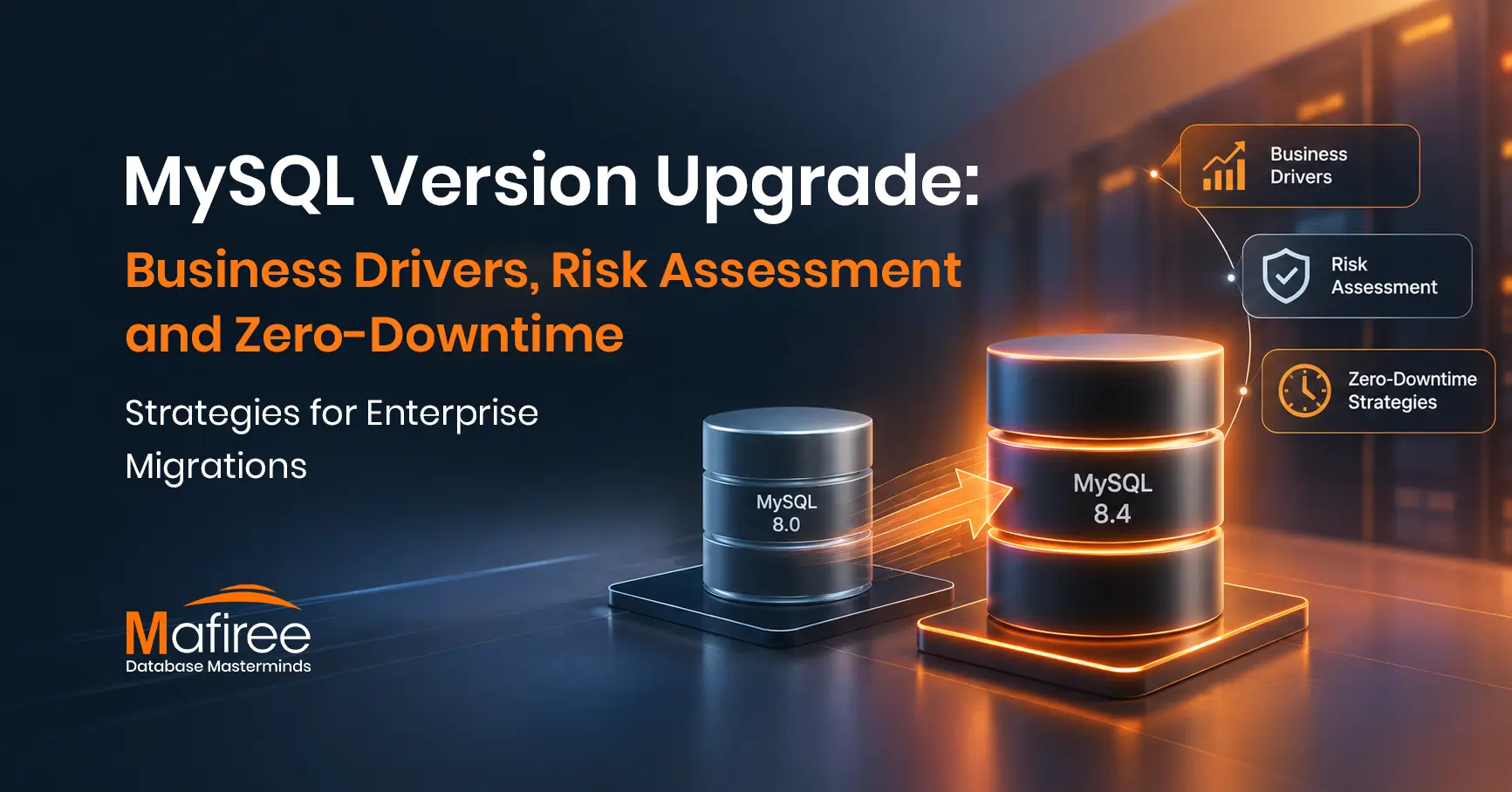
MySQL Version Upgrade: Business Drivers, Risk Assessment and Zero-Downtime Strategies for Enterprise Migrations
Author : Shenbaga Varna S
October 14, 2026
A MySQL version upgrade moves a database from an older release to a newer version while maintaining application compatibility and data integrity. Key reasons to upgrade include security, performance, compliance, and access to newer features. Major upgrade risks include compatibility issues, data integrity problems, downtime, and application failures. A successful upgrade requires planning, compatibility testing, backups, migration, validation, and a rollback plan. Zero-downtime approaches can use replication, load balancing, MySQL Router, or ProxySQL depending on the architecture.
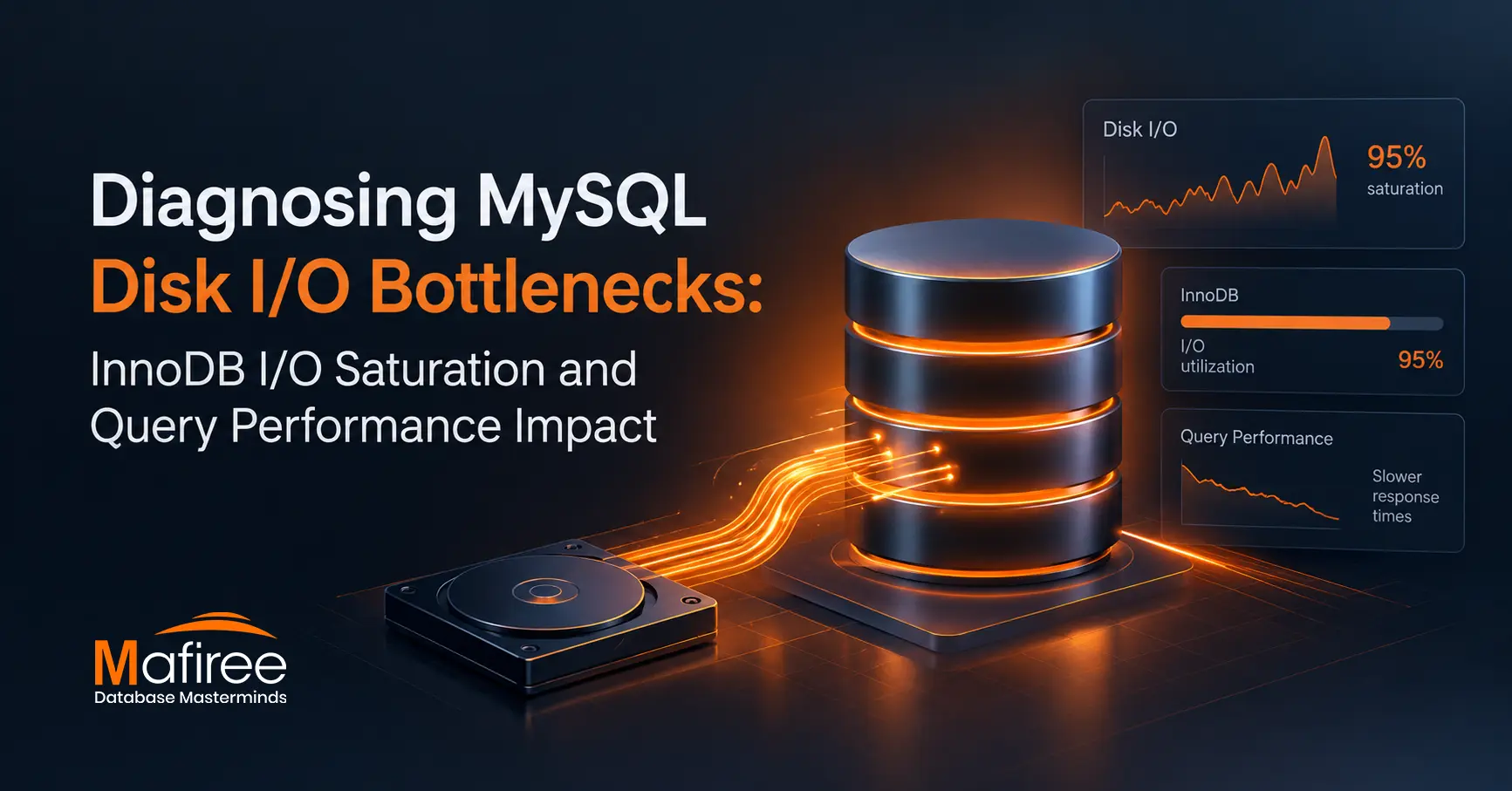
Diagnosing MySQL Disk I/O Bottlenecks: InnoDB I/O Saturation and Query Performance Impact
Author : Shenbaga Varna S
October 08, 2026
A MySQL disk I/O bottleneck occurs when the storage subsystem cannot keep up with the database’s read and write workload. Common signs include high I/O wait times, increased query latency, and high disk utilization. Performance Schema, iostat, and pt-ioprofile can help identify the source of I/O pressure. Common optimization approaches include increasing the InnoDB buffer pool, improving storage configuration, and reducing unnecessary disk reads through query and index optimization.
MySQL Incident Response: When Does Slow Response Signal a Support Model Gap?
Author : Shenbaga Varna S
September 23, 2026
Slow MySQL incident resolution is often a symptom of a weak support model—not just a technical problem. Learn how to identify gaps in escalation, monitoring, automation, DBA expertise, and post-incident reviews before they lead to recurring downtime.
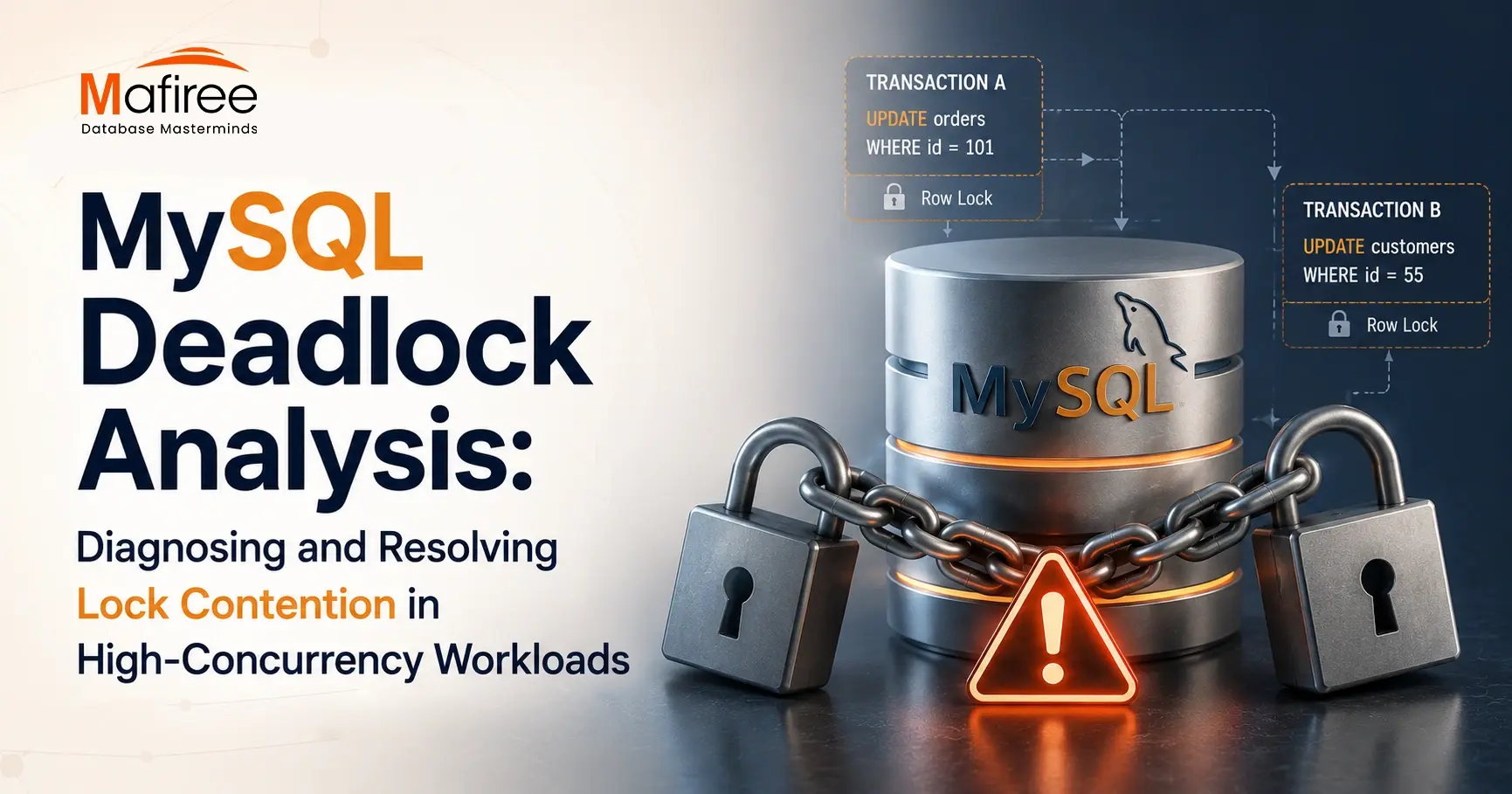
MySQL Deadlock Analysis: Diagnosing and Resolving Lock Contention in High-Concurrency Workloads
Author : Shenbaga Varna S
September 01, 2026
A MySQL deadlock occurs when two or more transactions hold locks that each other needs, creating a circular dependency that prevents them from proceeding. InnoDB detects the deadlock and rolls back one transaction; applications typically receive MySQL error 1213 and should safely retry the transaction. To diagnose a deadlock, start with SHOW ENGINE INNODB STATUS; for recurring incidents, use innodb_print_all_deadlocks and Performance Schema data_locks and data_lock_waits to investigate lock relationships. Common causes include inconsistent transaction ordering, long-running transactions, and inefficient indexing or locking patterns. The most effective fixes are to keep transactions short, access shared resources in a consistent order, optimize the indexes used by locking statements, and implement safe retry handling.
MySQL Consulting vs In-House DBA: Which Is Right for Your Team?
Author : Shenbaga Varna S
August 19, 2026
Choose an in-house DBA when you need continuous database ownership, deep knowledge of internal systems, and day-to-day operational control. Choose MySQL consulting when you need specialized expertise, performance tuning, migrations, complex troubleshooting, or additional database capacity without hiring a full-time specialist. A hybrid model can be the best fit when your team handles routine database operations internally but needs external expertise for complex projects, peak workloads, or specialized MySQL problems. The right choice depends on workload consistency, technical complexity, required coverage, internal expertise, scalability, and total cost—not simply the hourly or salary cost. Mafiree's managed database services provide ongoing MySQL support alongside specialized database expertise for organizations that need more flexibility than a purely in-house model.
MySQL Consultant: When to Call in a Performance Expert
Author : Shenbaga Varna S
July 28, 2026
Most MySQL slowdowns are fixable in-house. A smaller set of problems keep coming back, keep growing, or sit outside what routine tuning can solve — and that's the line worth knowing before an incident forces the decision for you.
MySQL Performance Issues: 7 Signs You Need Professional Tuning
Author : sukan
September 10, 2026
MySQL performance issues are rarely sudden — they build over time through slow queries, InnoDB buffer pool misses, replication lag, lock contention, thread pile-ups, tablespace bloat, and unstable query plans. This post identifies the seven most reliable signs that your MySQL environment needs professional DBA attention, with diagnostic queries and remediation guidance for each.
Column-Level Security: Enterprise Data Protection Without the Infrastructure Overhead
Author : sukan
May 13, 2026
Column-level security is a native database feature that restricts access to specific table columns by user role. Mafiree implemented this for a client as a cost-effective replacement for a planned CDC replication architecture that existed solely to strip sensitive columns. The result: zero additional infrastructure, single source of truth, full GDPR/HIPAA compliance posture, and validated in production with no performance impact.
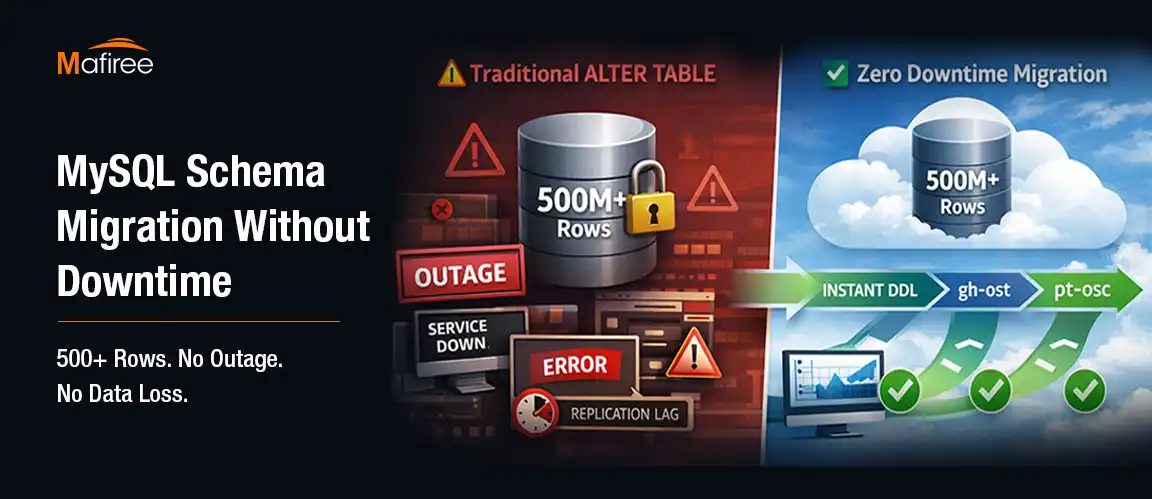
MySQL Schema Migration Without Downtime: A Real Fintech Case Study
Author : Jethish
February 20, 2026
Schema changes on large MySQL tables can bring production systems to a halt if not handled correctly. This case study walks through how Mafiree helped a fintech client execute a zero-downtime MySQL schema migration on a 500M+ row production database — covering the real challenges faced, the three-phase tool strategy using gh-ost, pt-online-schema-change, and MySQL 8.0 INSTANT DDL, production configuration settings with performance benchmarks, and best practices for safely evolving your MySQL schema without impacting users
Highlights
More than 6000 Servers Monitored
Happy Clients
Certified DBAs
24 x 7 x 365 Support

Contacts


Nagercoil Office
Miru IT Park, Vallankumaranvillai,
Nagercoil, Tamilnadu - 629 002.
Bangalore Office
Unit 303, Vanguard Rise,
5th Main, Konena Agrahara,
Old Airport Road, Bangalore - 560 017.
Call: +91 6383016411
Email: sales@mafiree.com