
Mafiree logo
  • About
  • Services
  • Blogs
  • Careers
  • Products
    • orbit logo Orbit
    • streamer logo Xstreami
  • Contact
Schedule a Call
Menu
  • About
  • Services
  • Blogs
  • Careers
  • Products
    • orbit logo Orbit
    • streamer logo Xstreami
  • Contact
  • Schedule a Call
Database
Database Managed Database Services
MySQL MySQL
MySQL Consulting
MySQL Migration Services
MySQL Optimization & Query Tuning
MySQL Database Administration
MySQL Backup & Recovery
MySQL Security & Maintenance
MySQL Cloud Services (AWS RDS, Aurora, Google Cloud SQL, Azure)
MySQL for Ecommerce
MySQL High Availability & Replication
MongoDB MongoDB
MongoDB Consulting
MongoDB Migration Services
MongoDB Optimization & Query Tuning
MongoDB Database Administration
MongoDB Backup & Recovery
MongoDB Security & Maintenance
MongoDB Cloud (Atlas)
MongoDB Solutions by Industry
MongoDB High Availability & Replication
PostgreSQL PostgreSQL
PostgreSQL Consulting
PostgreSQL Migration & Upgrades
Performance Tuning & Query Optimization
PostgreSQL Administration & Managed Services
High Availability, Clustering & Replication
PostgreSQL Backup, Recovery & Disaster Planning
PostgreSQL Security, Compliance & Auditing
PostgreSQL for Analytics & Data Warehousing
PostgreSQL on Cloud & Containers
PostgreSQL Extensions & Open-Source Integrations
PostgreSQL for Every Industry
SQL Server MSSQL
MSSQL Consulting
MSSQL Migration Services
MSSQL Optimization & Query Tuning Services
MSSQL Database Administration Services
MSSQL Backup & Recovery Services
MSSQL High Availability & Replication Services
MSSQL Security & Compliance Services
MSSQL Performance Monitoring & Health Checks
MSSQL Solutions by Industry
Aerospike Aerospike
Aerospike Consulting
Aerospike Migration Services
Aerospike Performance Optimization & Tuning
Aerospike Backup & Recovery
Aerospike High Availability
Aerospike Cloud & Hybrid Deployments
Aerospike for Real-Time Applications (AdTech, FinTech, Retail, IoT)
Clickhouse Clickhouse
ClickHouse Consulting
ClickHouse Migration Services
ClickHouse Optimization & Query Tuning
ClickHouse Database Administration
ClickHouse Backup & Recovery
ClickHouse Security & Maintenance
ClickHouse Cloud Services (ClickHouse Cloud, AWS, GCP, Azure)
ClickHouse Solutions by Industry
ClickHouse High Availability & Replication
TiDB TiDB
TiDB Consulting
TiDB Administration & Maintenance
TiDB Security and Privacy Maintenance
TiDB Performance & Query Optimization
TiDB Migration Services
TiDB Backup & Disaster Recovery
TiDB High Availability Solutions
TiDB Solutions by Industry
TiDB Cloud Services
ScyllaDB ScyllaDB
ScyllaDB Consulting
ScyllaDB Administration & Maintenance
ScyllaDB Security and Privacy Maintenance
ScyllaDB Performance & Query Optimization
ScyllaDB Migration Services
ScyllaDB Backup & Disaster Recovery
ScyllaDB High Availability Solutions
ScyllaDB Solutions by Industry
ScyllaDB Cloud Services
DevOps
DevOps DevOps Services
Version Control Version Control
Kubernetes Kubernetes
Infrastructure Infrastructure Management
Web Servers Web Servers
Networking
Networking Networking Services
Basic Basic
Advanced Advanced
MySQL MySQL
MongoDB MongoDB
PostgreSQL PostgreSQL
MSSQL MSSQL
Aerospike Aerospike
Clickhouse Clickhouse
TiDB TiDB
ScyllaDB ScyllaDB
Version Control Version Control
Kubernetes Kubernetes
Infrastructure Infrastructure Management
Web Servers Web Servers
Basic Basic
Advanced Advanced
MySQL Consulting
MySQL Migration Services
MySQL Optimization & Query Tuning
MySQL Database Administration
MySQL Backup & Recovery
MySQL Security & Maintenance
MySQL Cloud Services (AWS RDS, Aurora, Google Cloud SQL, Azure)
MySQL for Ecommerce
MySQL High Availability & Replication
MongoDB Consulting
MongoDB Migration Services
MongoDB Optimization & Query Tuning
MongoDB Database Administration
MongoDB Backup & Recovery
MongoDB Security & Maintenance
MongoDB Cloud (Atlas)
MongoDB Solutions by Industry
MongoDB High Availability & Replication
PostgreSQL Consulting
PostgreSQL Migration & Upgrades
Performance Tuning & Query Optimization
PostgreSQL Administration & Managed Services
High Availability, Clustering & Replication
PostgreSQL Backup, Recovery & Disaster Planning
PostgreSQL Security, Compliance & Auditing
PostgreSQL for Analytics & Data Warehousing
PostgreSQL on Cloud & Containers
PostgreSQL Extensions & Open-Source Integrations
PostgreSQL for Every Industry
MSSQL Consulting
MSSQL Migration Services
MSSQL Optimization & Query Tuning Services
MSSQL Database Administration Services
MSSQL Backup & Recovery Services
MSSQL High Availability & Replication Services
MSSQL Security & Compliance Services
MSSQL Performance Monitoring & Health Checks
MSSQL Solutions by Industry
Aerospike Consulting
Aerospike Migration Services
Aerospike Performance Optimization & Tuning
Aerospike Backup & Recovery
Aerospike High Availability
Aerospike Cloud & Hybrid Deployments
Aerospike for Real-Time Applications (AdTech, FinTech, Retail, IoT)
ClickHouse Consulting
ClickHouse Migration Services
ClickHouse Optimization & Query Tuning
ClickHouse Database Administration
ClickHouse Backup & Recovery
ClickHouse Security & Maintenance
ClickHouse Cloud Services (ClickHouse Cloud, AWS, GCP, Azure)
ClickHouse Solutions by Industry
ClickHouse High Availability & Replication
TiDB Consulting
TiDB Administration & Maintenance
TiDB Security and Privacy Maintenance
TiDB Performance & Query Optimization
TiDB Migration Services
TiDB Backup & Disaster Recovery
TiDB High Availability Solutions
TiDB Solutions by Industry
TiDB Cloud Services
ScyllaDB Consulting
ScyllaDB Administration & Maintenance
ScyllaDB Security and Privacy Maintenance
ScyllaDB Performance & Query Optimization
ScyllaDB Migration Services
ScyllaDB Backup & Disaster Recovery
ScyllaDB High Availability Solutions
ScyllaDB Solutions by Industry
ScyllaDB Cloud Services
  1. Home
  2. > Blogs
  3. > TiDB
  4. > How TiDB 7.4 Resource Isolation Improves Workloads

How TiDB 7.4 Resource Isolation Improves Workloads

TiDB Resource Control helps manage resource usage by assigning limits and priorities to different workloads. It allows high-priority applications to get the resources they need while preventing other workloads from affecting critical operations. This is especially useful when multiple teams or workloads share the same TiDB cluster.

Abishek S September 10, 2026

Subscribe for email updates

Summarize with AI: ChatGPT Google AI Perplexity Claude Grok

In the world of managing clusters, making sure resources are distributed properly is crucial. Without this, some user requests can take up too much of the resources, causing issues for more critical tasks.


To tackle this, we set limits or quotas for various resource groups. The TiDB feature comes in handy here, allowing requests from users to be allocated properly. At the same time, the TiKV layer schedules these requests based on their importance, which is determined by these quotas.


This two-step method ensures that your applications receive the resources they require without causing trouble for others. It’s like keeping things running smoothly and preventing any traffic jams in your cluster.


Use cases for Resource Control


Optimizing Workloads: When you’re dealing with various workloads on different TiDB machines, especially if some of them are smaller or medium-sized, you can consolidate them into a single TiDB cluster for more efficient management.


Team-Focused Clusters: In environments where multiple teams share the same cluster, you can set priorities for each team to ensure smooth collaboration and resource allocation.


Let’s explore an example where multiple teams are sharing a single TiDB cluster, and these teams can be categorized as follows


TeamCommentsRPS
‘Main-Transactions’Responsible for main business happening in a cluster5000
‘Report-Queries’For scheduled OLAP requests500
‘Adhoc-Requests’Manual queries fired by developers500


RPS - Request Units Per Seconds


Below we can see the details about the resource group we created.


  1. mysql> SELECT * FROM information_schema.resource_groups WHERE NAME IN("main_transaction","report_details","adhoc_details");
  2. # +------------------+------------+----------+-----------+-------------+------------+
  3. | NAME             | RU_PER_SEC | PRIORITY | BURSTABLE | QUERY_LIMIT | BACKGROUND |
  4. +------------------+------------+----------+-----------+-------------+------------+
  5. | adhoc_details    | 500        | MEDIUM   | NO        | NULL        | NULL       |
  6. | main_transaction | 5000       | HIGH     | YES       | NULL        | NULL       |
  7. | report_details   | 500        | MEDIUM   | YES       | NULL        | NULL       |
  8. +------------------+------------+----------+-----------+-------------+------------+
  9. 3 rows in set (0.48 sec)

Note: main_transaction has the highest priority with more RU / sec.


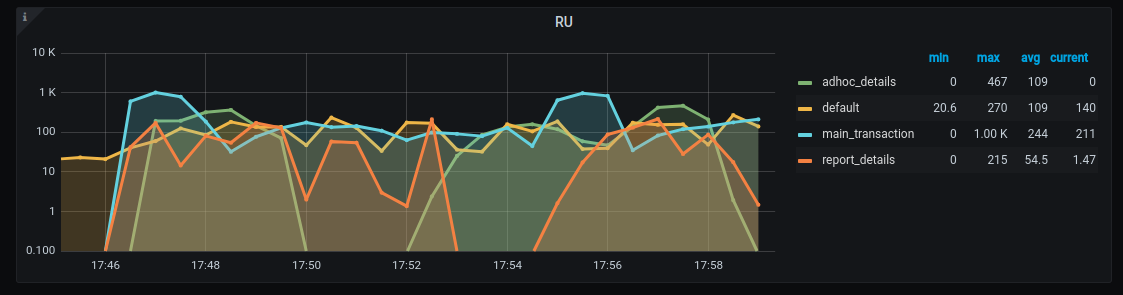
Traffic is generated by sysbench client on the TiDB nodes and with the implementation of resource control were able to see the following metrics,
 

Graph


Breaking down with each individual metrics,


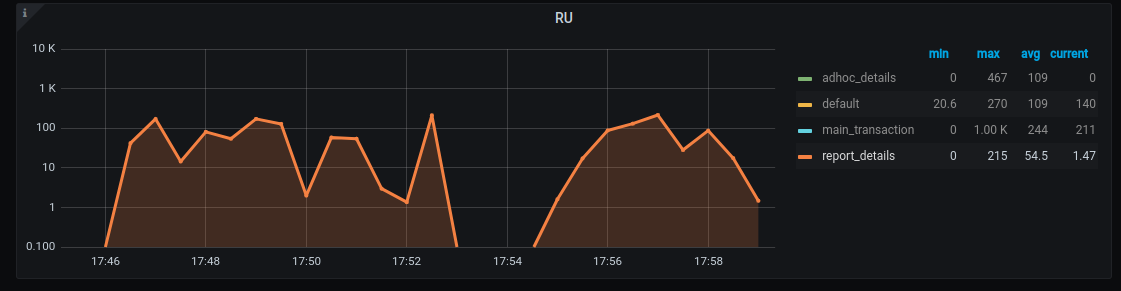
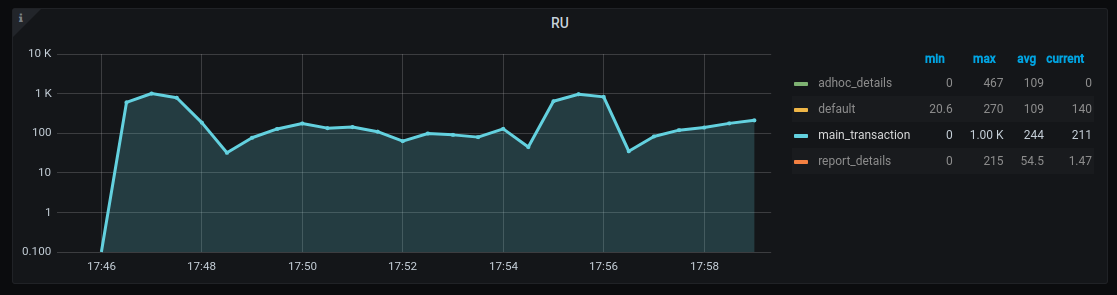
Main Transactions
 

Graph


Reports


Graph


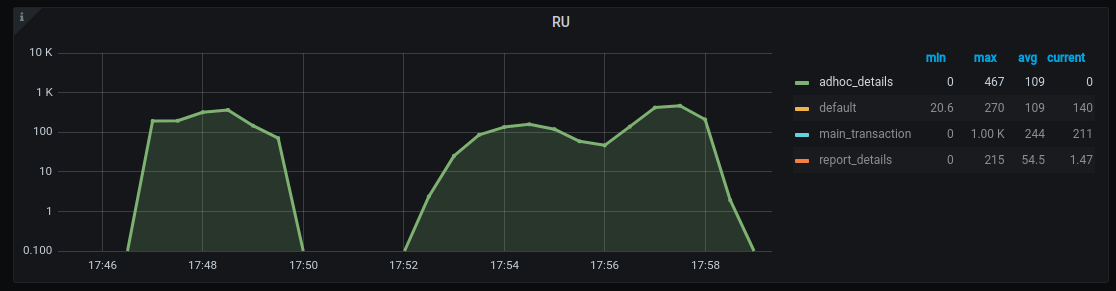
Ad-hoc queries


Graph


In this scenario, the primary transaction group has the flexibility to utilize resources beyond their allocated limits, effectively making them a high-priority group. Meanwhile, the other groups are considered as having normal priority. The request_details group also has the liberty to exceed its allocated resource limit.


As depicted in the graph, the primary transaction group doesn’t experience downtime thanks to its high-priority status. The other groups share equal priority, so when one group experiences a resource shortage, another group can make use of those resources without disruption.


In summary, TiDB resource control feature empowers you to efficiently manage your clusters and allocate resources as needed. Whether you’re dealing with high-priority tasks or maintaining a seamless workflow for various teams, this solution ensures smooth operations.

If you have any questions or require assistance, feel free to reach out to us at sales@mafiree.com. We’re here to help you make the most of your TiDB cluster management.


Conclusion

TiDB Resource Control helps organizations manage shared clusters by setting resource limits and priorities for different workloads. This keeps critical transactions running smoothly while allowing other workloads to use available resources efficiently.

At Mafiree, we help businesses optimize and manage TiDB environments for better performance, reliability, and resource utilization.

FAQ

Resource isolation prevents one workload from consuming excessive cluster resources and affecting other critical workloads.
You can isolate workloads by assigning them to Resource Groups and configuring resource quotas, priorities, and burstable settings.
It helps maintain predictable performance, reduce resource contention, prioritize critical workloads, and improve resource utilization in shared clusters.
Resource Groups control workloads through RU/sec limits and priority settings, allowing administrators to determine how resources are distributed between workloads.
Yes. Administrators can assign transaction workloads a higher priority so they receive preferential resource allocation when competing with reporting or ad-hoc queries.

Author Bio

Abishek S

Abishek S is a MongoDB and TiDB Certified DBA at Mafiree with strong expertise in distributed databases, TiDB architecture, and cross-database consistency tools. He writes technical content focused on practical database solutions, data consistency verification, replication strategies, and performance optimization for modern data platforms. His work helps engineers and DBAs improve reliability and efficiency in real-world database operations.

Leave a Comment

Related Blogs

TiDB Out of Memory (OOM) Errors: Root Cause Analysis & Memory Tuning Guide

TiDB OOM Errors fall into two types — a full node crash triggered by the OS, or a single query cancelled by TiDB's own memory controls. This guide walks through how to confirm which occurred, identify the SQL patterns most responsible (HashJoin, HashAgg, large transactions, stale statistics), configure the four key memory parameters, enable disk spill as a safety net, and verify production readiness with a structured checklist.

  441 views
Manage Large Data Import in TiDB

Managing large-scale data import in TiDB requires specialized tools and strategies due to its distributed architecture. Unlike traditional databases, TiDB must efficiently distribute data across multiple nodes while maintaining consistency and performance. TiDB Lightning is the primary high-performance tool designed for bulk data ingestion, supporting formats like CSV, Parquet, and Dumpling exports. It offers two import modes: physical mode for maximum speed during initial loads and logical mode for safer imports into active production environments. Additionally, TiDB introduces IMPORT INTO, a SQL-based import method that simplifies data loading for moderate datasets with minimal setup. This guide covers TiDB Lightning architecture, import modes, performance comparisons, complete migration workflows, and best practices to help you efficiently manage large amounts of data, avoid common failures, and choose the right import strategy for your use case.

  1497 views
How to Automate Data Deletion Using TiDB TTL

TiDB TTL (Time-To-Live) automatically removes expired rows based on a defined retention period. It helps manage growing datasets, reduce storage usage, and minimize the need for manual cleanup. This guide covers TTL configuration, scheduled cleanup jobs, conditional expiration, monitoring, and key limitations.

  13256 views
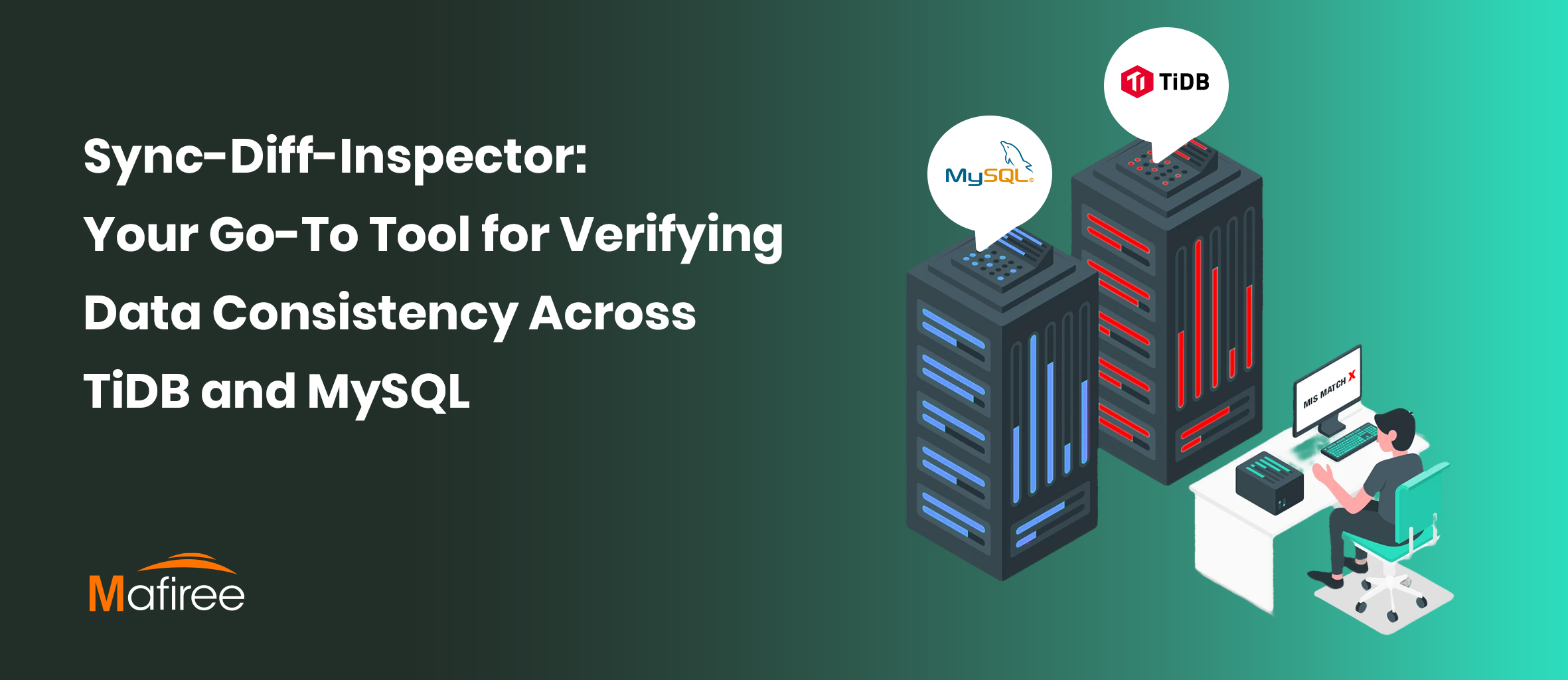
Sync-Diff-Inspector: Your Go-To Tool for Verifying Data Consistency Across TiDB and MySQL

A powerful tool to compare, detect, and fix data inconsistencies across distributed databases—ensure accurate migrations and seamless replication with Sync-Diff-Inspector.

  3010 views
The Feature You’ve Been Looking For – Speed Up Your Queries with TiDB Cached Tables!

Boost database performance with TiDB cached tables—reduce latency and accelerate read-heavy queries.

  2839 views
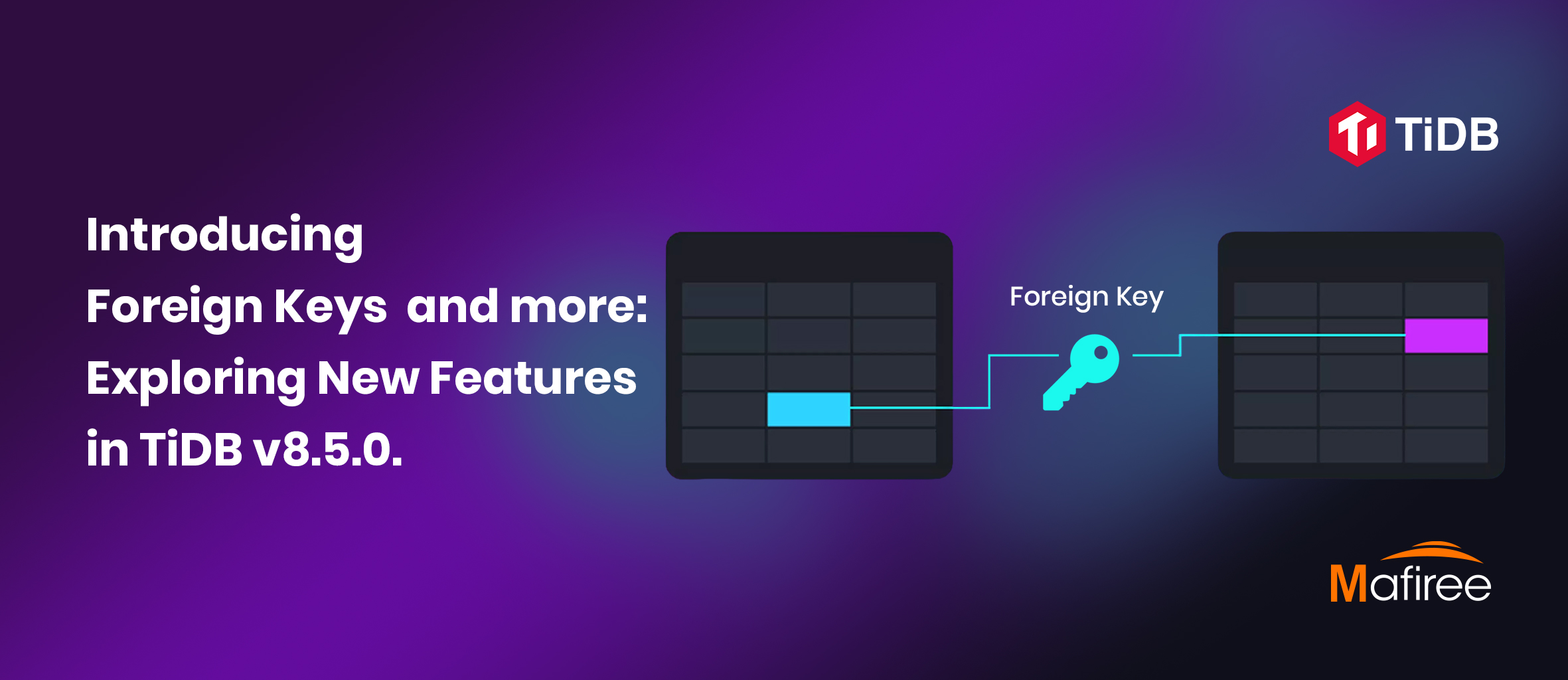
Introducing Foreign Keys and more: Exploring New Features in TiDB v8.5.0

Explore the latest features in TiDB v8.5.0, including support for Foreign Keys, improved performance, and enhanced security for modern database management.

  3312 views
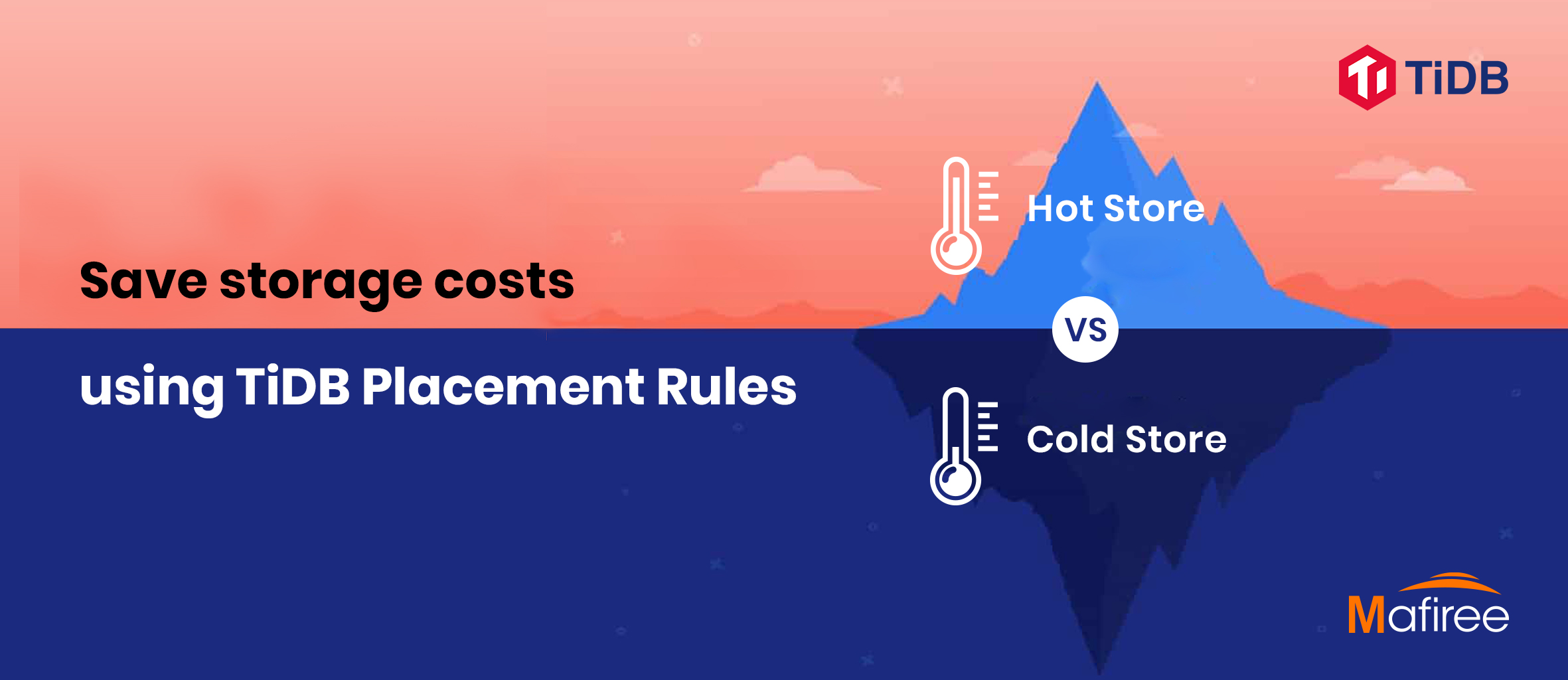
Optimizing Storage Using TiDB Placement Rules

TiDB Placement Rules help control where data is stored within a TiKV cluster. By assigning data to specific storage tiers, zones, or hosts, they can improve performance, resource utilization, and cost efficiency.

  13230 views
How Selective Row Replication Works: MySQL to TiDB

Analytics with TiDB's Row-Wise Filtering. Discover how our client slashed costs and boosted flexibility with TiDB's granular data management features. Dive into the future of database optimization with Mafiree

  593 views
TiDB Pause Resume DDL: Safely Manage Long-Running Schema Changes in Production

TiDB provides a powerful pause and resume DDL feature that allows database administrators to control long-running schema changes without canceling them. Instead of aborting operations like index creation or column modifications during peak traffic, teams can pause the DDL job and resume it later during low-traffic periods. This guide explains how TiDB pause resume DDL works, when to use pause vs resume vs cancel, and provides step-by-step commands for managing DDL operations safely in production environments.

  1814 views
Why TiDB? - 5 Indicators You've Outgrown MySQL

Dive into our blog post to uncover signs that hint it's time to move on from MySQL and find out how TiDB steps up as the ideal solution

  3780 views
Scaling Databases Horizontally: A Solution for High-Concurrency Systems

Blog post on how TiDB handles the OLAP requests without compromising OLTP

  3121 views

Subscribe for email updates

Get in touch with us

Highlights

More than 6000 Servers Monitored

Happy Clients

Certified DBAs

24 x 7 x 365 Support

PCI

Database Services

MySQL MongoDB PostgreSQL SQL Server Aerospike Clickhouse TiDB ScyllaDB

Quick Links

Careers Blog Contact Privacy Policy Disclaimer Policy

Contacts

Linkedin Mafiree Facebook Mafiree Twitter Mafiree

Nagercoil Office

Miru IT Park, Vallankumaranvillai,

Nagercoil, Tamilnadu - 629 002.

Bangalore Office

Unit 303, Vanguard Rise,

5th Main, Konena Agrahara,

Old Airport Road, Bangalore - 560 017.

Call: +91 6383016411

Email: sales@mafiree.com


Copyright © - All Rights Reserved - Mafiree