
Mafiree logo
  • About
  • Services
  • Blogs
  • Careers
  • Products
    • orbit logo Orbit
    • streamer logo Xstreami
  • Contact
Schedule a Call
Menu
  • About
  • Services
  • Blogs
  • Careers
  • Products
    • orbit logo Orbit
    • streamer logo Xstreami
  • Contact
  • Schedule a Call
Database
Database Database Managed Services
MySQL MySQL
MySQL Consulting Services
MySQL Migration Services
MySQL Optimization & Query Tuning
MySQL Database Administration
MySQL Backup & Recovery
MySQL Security & Maintenance
MySQL Cloud Services (AWS RDS, Aurora, Google Cloud SQL, Azure)
MySQL for Ecommerce
MySQL High Availability & Replication
MongoDB MongoDB
MongoDB Consulting Services
MongoDB Migration Services
MongoDB Optimization & Query Tuning
MongoDB Database Administration
MongoDB Backup & Recovery
MongoDB Security & Maintenance
MongoDB Cloud (Atlas)
MongoDB Solutions by Industry
MongoDB High Availability & Replication
PostgreSQL PostgreSQL
PostgreSQL Consulting
PostgreSQL Migration & Upgrades
Performance Tuning & Query Optimization
PostgreSQL Administration & Managed Services
High Availability, Clustering & Replication
PostgreSQL Backup, Recovery & Disaster Planning
PostgreSQL Security, Compliance & Auditing
PostgreSQL for Analytics & Data Warehousing
PostgreSQL on Cloud & Containers
PostgreSQL Extensions & Open-Source Integrations
PostgreSQL for Every Industry
SQL Server MSSQL
MSSQL Consulting Services
MSSQL Migration Services
MSSQL Optimization & Query Tuning Services
MSSQL Database Administration Services
MSSQL Backup & Recovery Services
MSSQL High Availability & Replication Services
MSSQL Security & Compliance Services
MSSQL Performance Monitoring & Health Checks
MSSQL Solutions by Industry
Aerospike Aerospike
Aerospike Consulting Services
Aerospike Migration Services
Aerospike Performance Optimization & Tuning
Aerospike Database Administration
Aerospike Backup & Recovery
Aerospike High Availability
Aerospike Cloud & Hybrid Deployments
Aerospike for Real-Time Applications (AdTech, FinTech, Retail, IoT)
Analytics DB
Analytics DB Analytics DB Services
Clickhouse Clickhouse
ClickHouse Consulting Services
ClickHouse Migration Services
ClickHouse Optimization & Query Tuning
ClickHouse Database Administration
ClickHouse Backup & Recovery
ClickHouse Security & Maintenance
ClickHouse Cloud Services (ClickHouse Cloud, AWS, GCP, Azure)
ClickHouse Solutions by Industry
ClickHouse High Availability & Replication
TiDB TiDB
TiDB Consulting & Architecture Planning
TiDB Administration & Maintenance
TiDB Security and Privacy Maintenance
TiDB Performance & Query Optimization
TiDB Migration Services
TiDB Backup & Disaster Recovery
TiDB High Availability Solutions
TiDB Solutions by Industry
TiDB Cloud Services
ScyllaDB ScyllaDB
ScyllaDB Consulting & Architecture Planning
ScyllaDB Administration & Maintenance
ScyllaDB Security and Privacy Maintenance
ScyllaDB Performance & Query Optimization
ScyllaDB Migration Services
ScyllaDB Backup & Disaster Recovery
ScyllaDB High Availability Solutions
ScyllaDB Solutions by Industry
ScyllaDB Cloud Services
DevOps
DevOps DevOps Services
Version Control Version Control
Kubernetes Kubernetes
Infrastructure Infrastructure Management
Web Servers Web Servers
Networking
Networking Networking Services
Basic Basic
Advanced Advanced
MySQL MySQL
MongoDB MongoDB
PostgreSQL PostgreSQL
MSSQL MSSQL
Aerospike Aerospike
Clickhouse Clickhouse
TiDB TiDB
ScyllaDB ScyllaDB
Version Control Version Control
Kubernetes Kubernetes
Infrastructure Infrastructure Management
Web Servers Web Servers
Basic Basic
Advanced Advanced
MySQL Consulting Services
MySQL Migration Services
MySQL Optimization & Query Tuning
MySQL Database Administration
MySQL Backup & Recovery
MySQL Security & Maintenance
MySQL Cloud Services (AWS RDS, Aurora, Google Cloud SQL, Azure)
MySQL for Ecommerce
MySQL High Availability & Replication
MongoDB Consulting Services
MongoDB Migration Services
MongoDB Optimization & Query Tuning
MongoDB Database Administration
MongoDB Backup & Recovery
MongoDB Security & Maintenance
MongoDB Cloud (Atlas)
MongoDB Solutions by Industry
MongoDB High Availability & Replication
PostgreSQL Consulting
PostgreSQL Migration & Upgrades
Performance Tuning & Query Optimization
PostgreSQL Administration & Managed Services
High Availability, Clustering & Replication
PostgreSQL Backup, Recovery & Disaster Planning
PostgreSQL Security, Compliance & Auditing
PostgreSQL for Analytics & Data Warehousing
PostgreSQL on Cloud & Containers
PostgreSQL Extensions & Open-Source Integrations
PostgreSQL for Every Industry
MSSQL Consulting Services
MSSQL Migration Services
MSSQL Optimization & Query Tuning Services
MSSQL Database Administration Services
MSSQL Backup & Recovery Services
MSSQL High Availability & Replication Services
MSSQL Security & Compliance Services
MSSQL Performance Monitoring & Health Checks
MSSQL Solutions by Industry
Aerospike Consulting Services
Aerospike Migration Services
Aerospike Performance Optimization & Tuning
Aerospike Database Administration
Aerospike Backup & Recovery
Aerospike High Availability
Aerospike Cloud & Hybrid Deployments
Aerospike for Real-Time Applications (AdTech, FinTech, Retail, IoT)
ClickHouse Consulting Services
ClickHouse Migration Services
ClickHouse Optimization & Query Tuning
ClickHouse Database Administration
ClickHouse Backup & Recovery
ClickHouse Security & Maintenance
ClickHouse Cloud Services (ClickHouse Cloud, AWS, GCP, Azure)
ClickHouse Solutions by Industry
ClickHouse High Availability & Replication
TiDB Consulting & Architecture Planning
TiDB Administration & Maintenance
TiDB Security and Privacy Maintenance
TiDB Performance & Query Optimization
TiDB Migration Services
TiDB Backup & Disaster Recovery
TiDB High Availability Solutions
TiDB Solutions by Industry
TiDB Cloud Services
ScyllaDB Consulting & Architecture Planning
ScyllaDB Administration & Maintenance
ScyllaDB Security and Privacy Maintenance
ScyllaDB Performance & Query Optimization
ScyllaDB Migration Services
ScyllaDB Backup & Disaster Recovery
ScyllaDB High Availability Solutions
ScyllaDB Solutions by Industry
ScyllaDB Cloud Services
  1. Home
  2. > Blogs
  3. > PostgreSQL
  4. > Load Balancing in PostgreSQL

Load Balancing in PostgreSQL

PostgreSQL itself does not have built-in load balancing, but there are several ways to achieve load balancing in a PostgreSQL setup using external tools.

Jethish December 24, 2024

Subscribe for email updates

Load balancing in PostgreSQL refers to distributing client requests across multiple database servers to improve performance, scalability, and reliability. It helps in managing heavy workloads efficiently by balancing the read and write operations among servers.


Key Concepts

  • As data traffic grows and applications become more demanding, efficient distribution of database queries becomes essential. 
  • Load balancing in PostgreSQL helps distribute workloads across multiple servers to enhance performance, ensure reliability, and reduce the risk of server overloads. 
  • Here’s a comprehensive guide to the fundamentals of load balancing in PostgreSQL and the tools you can use to implement it.

Tools for Load Balancing in PostgreSQL

  1. pgpool-II
  2. proxysql [Alpha version]
  3. HAProxy

Pgpool-II

  • Pgpool-II is an open-source middleware that sits between PostgreSQL servers and their clients, managing connections, load balancing and failover. 
  • It helps distribute client queries across multiple PostgreSQL servers, improving performance and ensuring high availability. 
  • Pgpool-II supports features like connection pooling, replication, parallel query processing and more.

Features of Pgpool-II

  • Connection Pooling
  • Load Balancing
  • Replication
  • Automatic failover

Pros of Pgpool:

High Availability: Pgpool-II keeps your database available even if one server goes down. If a server fails, it automatically switches to a working one.

Smart Load Balancing: Pgpool-II uses a smart way to balance the workload, which improves the performance of applications that read a lot of data.

Connection Pooling: Pgpool-II reuses existing connections, which reduces the time and resources needed to create new connections, making the system more efficient.

Parallel Query Execution: Pgpool-II can run queries at the same time across different servers, which can speed up processing for large amounts of data.

Online Recovery: Pgpool-II allows you to recover failed servers without having to take the system down, ensuring continuous availability.


Cons of Pgpool:

Complex Configuration: Setting up Pgpool-II can be complicated, especially for users who are not familiar with PostgreSQL or load balancing. The various configuration options and features can be overwhelming.

Potential Bottlenecks: Since Pgpool-II acts as a middleware between clients and PostgreSQL servers, it can become a bottleneck if not properly configured or if it encounters performance issues. This can affect overall database performance.

Limited Write Scalability: Pgpool-II primarily supports read scaling through load balancing. It does not provide effective write scaling, as writes must be directed to a single primary server.

Dependency on Configuration Changes: Certain changes, such as adding or removing servers, may require restarting Pgpool-II, which could lead to temporary unavailability. This can be a drawback in environments that require high uptime.


What is ProxySQL

  • ProxySQL is an advanced, high-performance SQL proxy that acts as an intermediary between client applications and backend database servers.
  • It utilizes a multi-threaded architecture to enable efficient query processing and connection management.
  • ProxySQL is now positioned to provide a comprehensive solution for environments that use both MySQL and PostgreSQL.

Key features include:

  • Dynamic query routing based on configurable rules
  • Connection pooling to reduce database connection overhead
  • Query caching for improved response times
  • Load balancing across multiple backend servers
  • Query rewriting and filtering capabilities
  • Real-time traffic analysis and monitoring
  • Support for database failover, and high availability setups

Pros of ProxySQL:

Query Routing and Load Balancing: ProxySQL can distribute incoming queries across multiple PostgreSQL servers, ensuring efficient resource utilization and reduced response time. This is particularly beneficial in high-load environments or where read-write traffic needs to be balanced across primary and replica servers.

Query Rules and Rewriting: ProxySQL allows defining rules to rewrite or route queries, providing flexibility for operations like redirecting queries based on specific conditions. This can improve performance by directing complex read operations to replicas or rewriting queries to optimize their execution on PostgreSQL.

Security and Access Control: ProxySQL provides an additional security layer by allowing user authentication, password management, and role-based access at the proxy level. This makes it easier to manage permissions centrally.Added Plain Text and MD5 and SCRAM-SHA-256 authentication method for PostgreSQL.

Custom Logging and Analytics: It offers extensive logging and real-time analytics to help in monitoring database queries, which is useful for identifying performance bottlenecks or security issues.


Cons of ProxySQL:

Resource Consumption: ProxySQL itself requires resources (CPU, memory), which can become significant under heavy loads or with complex configurations. In environments with high traffic, this resource usage might need careful management.

Limited Support for Non-MySQL Databases: While ProxySQL has added support for PostgreSQL and other databases, its feature set is still more mature for MySQL. Some advanced capabilities may not yet be as robust or fully supported for other database engines, leading to potential limitations.

Complexity in Configuration: Setting up and tuning ProxySQL can be complex, especially for advanced configurations with custom query routing and transformation rules. Administrators need familiarity with ProxySQL's configuration language and settings.


HAProxy

  • HAProxy (High Availability Proxy) is a powerful, open-source load balancer and proxy server for TCP and HTTP-based applications. 
  • It's widely used to distribute client requests across multiple servers, ensuring high availability, fault tolerance, and scalability for applications like PostgreSQL databases.

Key Features of HAProxy for PostgreSQL

  • Load Balancing
  • High Availability
  • Connection Pooling
  • Health Checks
  • Failover and Automatic Recovery

Pros of Using HAProxy with PostgreSQL

Advanced Load Balancing Algorithms : HAProxy supports different load balancing algorithms, such as round-robin, least connections, and more. This provides flexibility in how connections are distributed, based on the requirements of the workload.

Scalability : HAProxy allows for easy scaling of the PostgreSQL database infrastructure. As traffic grows, new PostgreSQL servers can be added to the load balancing pool with minimal disruption.

High Availability and Failover : With automated failover and health checks, HAProxy ensures continuous database availability even in the event of server failures, without requiring manual intervention.

Cost-Efficiency : HAProxy is open-source and free to use, which reduces the cost compared to other commercial load balancing and failover solutions.


Cons of Using HAProxy with PostgreSQL

Complex Configuration: While HAProxy offers advanced features, setting it up for PostgreSQL requires careful configuration. Incorrect configurations can lead to problems such as inefficient load balancing, connection issues, or downtime during failover.

Monitoring Overhead: Continuous health checks and failover monitoring require additional system resources, which may be a concern in resource-constrained environments.


Comparison between pgpool, proxysql and haproxy 

Feature / Aspect

Pgpool-II

HAProxy

ProxySQL

Primary Purpose

Connection pooling, load balancing, query routing, replication, failover.

High availability, load balancing, health checks for backend nodes.

Query routing, connection pooling, query caching

Logging and Monitoring

Basic query and connection logs.

Extensive logging

Advanced query statistics and performance metrics.

Connection Pooling

Yes

No

Yes

Failover Management

Yes 

Yes 

Limited 

Load Balancing

Yes 

Yes 

Yes 

Health Checks

Yes 

Yes 

Yes 

Community and Ecosystem

PostgreSQL-specific with active community support.

Broad community support but not PostgreSQL-specific.

MySQL-focused; PostgreSQL support is newer.

If you have any questions or need expert assistance with setting up or optimizing PostgreSQL load balancing, feel free to reach out to us at sales@mafiree.com . Our team is here to help you achieve unparalleled performance and resilience for your database systems. Together, let’s build a database environment that’s ready for the challenges of tomorrow.


Author Bio

Jethish

Jethish is a PostgreSQL DBA at Mafiree with expertise in building scalable, reliable, and high-performance database infrastructures. He focuses on PostgreSQL architecture, replication strategies, performance tuning, and high availability for mission-critical systems. Through his technical writing, he shares clear, practical insights on database internals, replication choices, load balancing, and cross-database integrations that help engineers and DBAs tackle real-world data challenges.

Leave a Comment

Related Blogs

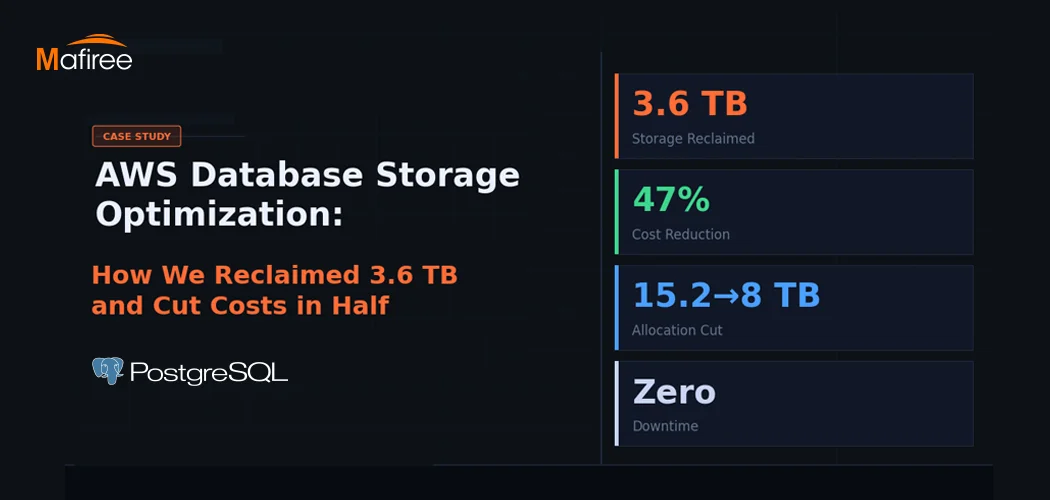
AWS Database Storage Optimization: How We Reclaimed 3.6 TB and Cut Costs in Half

A client came to us with a classic AWS database storage optimization problem: 15.2 TB allocated, less than a third actually in use — and a bill that kept growing regardless. Within one week, Mafiree had reclaimed 3.6 TB, validated a safe path to cut allocation nearly in half, and executed a zero-downtime migration. Here's the full story.

  201 views
PostgreSQL Connection Pooling: PgBouncer vs Odyssey – Performance & Configuration

PostgreSQL uses a process-per-connection model, which can limit scalability in high-traffic environments. Connection poolers help manage this challenge by reusing database connections efficiently. This blog compares PgBouncer and Odyssey, two popular PostgreSQL connection poolers, highlighting their architecture, performance characteristics, configuration differences, and ideal use cases. It helps organizations choose the right pooling solution based on workload scale, complexity, and operational requirements.

  2273 views
8 Enhancing Features in PostgreSQL 18

PostgreSQL 18: Efficiency, security, and reliability, all in one upgrade

  4208 views
Optimizing PostgreSQL Queries with Functional Indexes – A Real-World Case Study

Cutting Query Time from 10 Minutes to Under 1 Second – How Functional Indexes Helped Us Optimize Aurora PostgreSQL and Stabilize CPU Performance.

  2944 views
Mastering PostgreSQL Meta-Commands: The Ultimate psql Cheat Sheet

Why memorize SQL queries when \d, \l, and \dx do the heavy lifting? Learn the power of PostgreSQL’s psql meta-commands today.

  140 views

Subscribe for email updates

Get in touch with us

Highlights

More than 6000 Servers Monitored

Happy Clients

Certified DBAs

24 x 7 x 365 Support

PCI

Database Services

MySQL MongoDB PostgreSQL SQL Server Aerospike Clickhouse TiDB MariaDB Columnstore

Quick Links

Careers Blog Contact Privacy Policy Disclaimer Policy

Contacts

Linkedin Mafiree Facebook Mafiree Twitter Mafiree

Nagercoil Office

Miru IT Park, Vallankumaranvillai,

Nagercoil, Tamilnadu - 629 002.

Bangalore Office

Unit 303, Vanguard Rise,

5th Main, Konena Agrahara,

Old Airport Road, Bangalore - 560 017.

Call: +91 6383016411

Email: sales@mafiree.com

Copyright © - All Rights Reserved - Mafiree