 Orbit
Orbit
 Xstreami

- About
- Services
- Blogs
- Careers
- Products
- Contact Schedule a Call
ProxySQL can help manage MySQL traffic and reduce the impact of unexpected database load. This blog explores a real-world case where a sudden CPU spike was traced to a frequently executed, unindexed query. By using ProxySQL to route the query to a replica, the load on the MySQL master was reduced without requiring immediate application changes.
Sabareesh September 10, 2026

Load balancers are becoming an integral part in the database world. Load balancer is an intermediate service that understands the application traffic and distributes its across available database instances.
Here are some of the benefits of ProxySQL in the DB layer.
Overall, it empowers the administrator to maintain efficient operations of the entire infrastructure.
This blog is about a use case, how ProxySQL helps in resolving one of the major issues we have experienced in the database.
ProxySQL is one of the advanced load balancers used in the MySQL database environment.
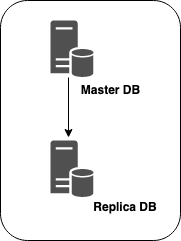
Our setup is with Master and Replica running MySQL 5.7 version, with ProxySQL serving both reads and writes to the master DB. Replica is used for failover and backup.
Database is optimized with all the slow queries tuned, fair to say that CPU usage never crossed more than 10%. Suddenly we are noticing severe performance issues in the application, immediately we can see that CPU usage hit 100%.
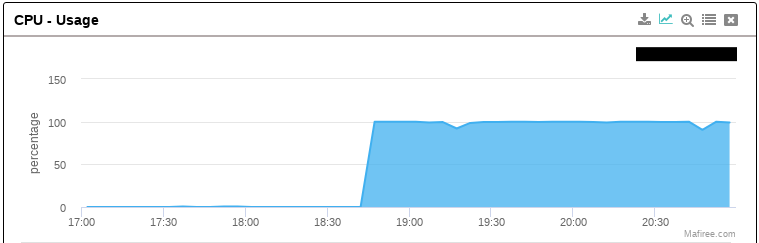
On troubleshooting this, we can see that QPS tripled as can be reflected in the below chart.
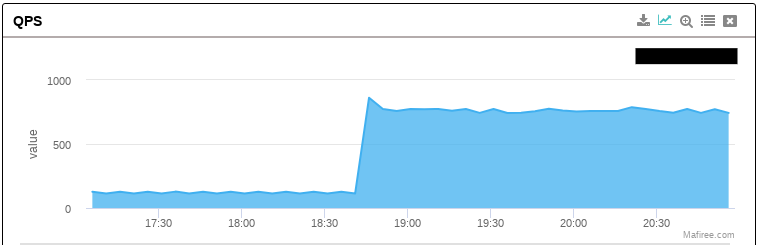
This was confirmed by the application team that a new release was done, upon troubleshooting the slow query logs we are able to see one query which doesn’t have the index hitting the database very frequently. Unfortunately this is one of the biggest tables that we can’t afford to have the index right away. Apart from that, the application team was worried about rolling back the release due to business implications.
DBA has to add the index to solve the problem but that would be costly in this point which has live traffic and table size. Thankfully we have a load balancer sitting on top of database servers, we have used ProxySQL to route the query to replica and reduced the load on the master DB.
Attaching the same query:
select id, user_id, product_name from product where created_on between '2020-01-01 00:00:00' and '2020-09-14 23:59:59'It scans almost ~15 Lakhs records everytime and the occurrence of the query is very high.
As mentioned earlier, ProxySQL has provision for query re-routing and we decided to move the specified query to the slave server. Query digest / pattern needs to be identified and can be configured in ProxySQL for query-rerouting.
rule_id: 10 active: 1 digest: 0xCFF0EF06A44DA55Edestination_hostgroup: 11 apply: 1Once these changes are done, immediately queries are moved to the replica and master DB breaths normal.
Following chart is the indication of CPU usage in master and replica after moving out the culprit queries to the replica.
After Making the changes:
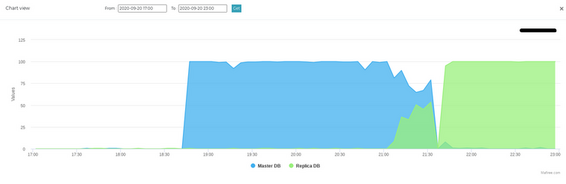
ProxySQL provides a practical way to manage MySQL traffic and handle unexpected database load. In this case, routing the problematic query to the replica helped bring the master CPU back to normal without making immediate changes to the application.
At Mafiree, we help teams tackle production database challenges with practical MySQL optimization and performance solutions that reduce bottlenecks and keep critical workloads running smoothly.
More than 6000 Servers Monitored
Happy Clients
Certified DBAs
24 x 7 x 365 Support



Miru IT Park, Vallankumaranvillai,
Nagercoil, Tamilnadu - 629 002.
Unit 303, Vanguard Rise,
5th Main, Konena Agrahara,
Old Airport Road, Bangalore - 560 017.
Call: +91 6383016411
Email: sales@mafiree.com