
Mafiree logo
  • About
  • Services
  • Blogs
  • Careers
  • Products
    • orbit logo Orbit
    • streamer logo Xstreami
  • Contact
Schedule a Call
Menu
  • About
  • Services
  • Blogs
  • Careers
  • Products
    • orbit logo Orbit
    • streamer logo Xstreami
  • Contact
  • Schedule a Call
Database
Database Managed Database Services
MySQL MySQL
MySQL Consulting
MySQL Migration Services
MySQL Optimization & Query Tuning
MySQL Database Administration
MySQL Backup & Recovery
MySQL Security & Maintenance
MySQL Cloud Services (AWS RDS, Aurora, Google Cloud SQL, Azure)
MySQL for Ecommerce
MySQL High Availability & Replication
MongoDB MongoDB
MongoDB Consulting
MongoDB Migration Services
MongoDB Optimization & Query Tuning
MongoDB Database Administration
MongoDB Backup & Recovery
MongoDB Security & Maintenance
MongoDB Cloud (Atlas)
MongoDB Solutions by Industry
MongoDB High Availability & Replication
PostgreSQL PostgreSQL
PostgreSQL Consulting
PostgreSQL Migration & Upgrades
Performance Tuning & Query Optimization
PostgreSQL Administration & Managed Services
High Availability, Clustering & Replication
PostgreSQL Backup, Recovery & Disaster Planning
PostgreSQL Security, Compliance & Auditing
PostgreSQL for Analytics & Data Warehousing
PostgreSQL on Cloud & Containers
PostgreSQL Extensions & Open-Source Integrations
PostgreSQL for Every Industry
SQL Server MSSQL
MSSQL Consulting
MSSQL Migration Services
MSSQL Optimization & Query Tuning Services
MSSQL Database Administration Services
MSSQL Backup & Recovery Services
MSSQL High Availability & Replication Services
MSSQL Security & Compliance Services
MSSQL Performance Monitoring & Health Checks
MSSQL Solutions by Industry
Aerospike Aerospike
Aerospike Consulting
Aerospike Migration Services
Aerospike Performance Optimization & Tuning
Aerospike Backup & Recovery
Aerospike High Availability
Aerospike Cloud & Hybrid Deployments
Aerospike for Real-Time Applications (AdTech, FinTech, Retail, IoT)
Clickhouse Clickhouse
ClickHouse Consulting
ClickHouse Migration Services
ClickHouse Optimization & Query Tuning
ClickHouse Database Administration
ClickHouse Backup & Recovery
ClickHouse Security & Maintenance
ClickHouse Cloud Services (ClickHouse Cloud, AWS, GCP, Azure)
ClickHouse Solutions by Industry
ClickHouse High Availability & Replication
TiDB TiDB
TiDB Consulting
TiDB Administration & Maintenance
TiDB Security and Privacy Maintenance
TiDB Performance & Query Optimization
TiDB Migration Services
TiDB Backup & Disaster Recovery
TiDB High Availability Solutions
TiDB Solutions by Industry
TiDB Cloud Services
ScyllaDB ScyllaDB
ScyllaDB Consulting
ScyllaDB Administration & Maintenance
ScyllaDB Security and Privacy Maintenance
ScyllaDB Performance & Query Optimization
ScyllaDB Migration Services
ScyllaDB Backup & Disaster Recovery
ScyllaDB High Availability Solutions
ScyllaDB Solutions by Industry
ScyllaDB Cloud Services
DevOps
DevOps DevOps Services
Version Control Version Control
Kubernetes Kubernetes
Infrastructure Infrastructure Management
Web Servers Web Servers
Networking
Networking Networking Services
Basic Basic
Advanced Advanced
MySQL MySQL
MongoDB MongoDB
PostgreSQL PostgreSQL
MSSQL MSSQL
Aerospike Aerospike
Clickhouse Clickhouse
TiDB TiDB
ScyllaDB ScyllaDB
Version Control Version Control
Kubernetes Kubernetes
Infrastructure Infrastructure Management
Web Servers Web Servers
Basic Basic
Advanced Advanced
MySQL Consulting
MySQL Migration Services
MySQL Optimization & Query Tuning
MySQL Database Administration
MySQL Backup & Recovery
MySQL Security & Maintenance
MySQL Cloud Services (AWS RDS, Aurora, Google Cloud SQL, Azure)
MySQL for Ecommerce
MySQL High Availability & Replication
MongoDB Consulting
MongoDB Migration Services
MongoDB Optimization & Query Tuning
MongoDB Database Administration
MongoDB Backup & Recovery
MongoDB Security & Maintenance
MongoDB Cloud (Atlas)
MongoDB Solutions by Industry
MongoDB High Availability & Replication
PostgreSQL Consulting
PostgreSQL Migration & Upgrades
Performance Tuning & Query Optimization
PostgreSQL Administration & Managed Services
High Availability, Clustering & Replication
PostgreSQL Backup, Recovery & Disaster Planning
PostgreSQL Security, Compliance & Auditing
PostgreSQL for Analytics & Data Warehousing
PostgreSQL on Cloud & Containers
PostgreSQL Extensions & Open-Source Integrations
PostgreSQL for Every Industry
MSSQL Consulting
MSSQL Migration Services
MSSQL Optimization & Query Tuning Services
MSSQL Database Administration Services
MSSQL Backup & Recovery Services
MSSQL High Availability & Replication Services
MSSQL Security & Compliance Services
MSSQL Performance Monitoring & Health Checks
MSSQL Solutions by Industry
Aerospike Consulting
Aerospike Migration Services
Aerospike Performance Optimization & Tuning
Aerospike Backup & Recovery
Aerospike High Availability
Aerospike Cloud & Hybrid Deployments
Aerospike for Real-Time Applications (AdTech, FinTech, Retail, IoT)
ClickHouse Consulting
ClickHouse Migration Services
ClickHouse Optimization & Query Tuning
ClickHouse Database Administration
ClickHouse Backup & Recovery
ClickHouse Security & Maintenance
ClickHouse Cloud Services (ClickHouse Cloud, AWS, GCP, Azure)
ClickHouse Solutions by Industry
ClickHouse High Availability & Replication
TiDB Consulting
TiDB Administration & Maintenance
TiDB Security and Privacy Maintenance
TiDB Performance & Query Optimization
TiDB Migration Services
TiDB Backup & Disaster Recovery
TiDB High Availability Solutions
TiDB Solutions by Industry
TiDB Cloud Services
ScyllaDB Consulting
ScyllaDB Administration & Maintenance
ScyllaDB Security and Privacy Maintenance
ScyllaDB Performance & Query Optimization
ScyllaDB Migration Services
ScyllaDB Backup & Disaster Recovery
ScyllaDB High Availability Solutions
ScyllaDB Solutions by Industry
ScyllaDB Cloud Services
  1. Home
  2. > Blogs
  3. > PostgreSQL
  4. > Choosing the Right Replication Type in PostgreSQL

Choosing the Right Replication Type in PostgreSQL

Choosing the Right Replication Type in PostgreSQL – Understand the key differences between Streaming and Logical Replication, their best use cases, and how to implement them effectively for high availability, scalability, and disaster recovery.

Jethish April 28, 2025

Subscribe for email updates

Summarize with AI: ChatGPT Google AI Perplexity Claude Grok

Replication in PostgreSQL is a crucial aspect of ensuring data availability, redundancy, and scalability. Two of the most widely used replication methods in PostgreSQL are Streaming Replication and Logical Replication. Each serves different use cases, and choosing the right one depends on factors such as real-time synchronization, selective data replication, and cross-version compatibility.

Streaming Replication

  • Streaming replication allows a standby server to continuously receive WAL (Write-Ahead Logging) records from the primary server in real time. 
  • It operates at the physical level, meaning the entire database cluster is replicated without the option to filter specific tables or schemas.

Types of Streaming Replication :

  1. Asynchronous Replication: The primary server does not wait for confirmation from the standby before committing a transaction.
  2. Synchronous Replication: The primary server waits for at least one standby to acknowledge the transaction before committing.


Pros :

  • Provides near real-time replication with minimal lag.
  • Supports hot standby, allowing read queries on the standby server.
  • Suitable for high availability (HA) setups.

Cons :

  • Entire database replication is enforced; no selective replication.
  • Requires additional monitoring and failover mechanisms (e.g., Patroni).
  • Cannot replicate between different PostgreSQL versions.

Best for :

  • High Availability (HA) & Disaster Recovery setups.
  • Read scaling by offloading read queries to standby.
  • Cases where full database replication is needed.

Logical Replication

Logical replication allows for more flexibility by enabling row-level replication of specific tables or schemas instead of the entire database. It operates using a publish-subscribe model:


  • The publisher sends WAL changes for specific tables.
  • The subscriber applies changes to its database.


Pros :

  • Supports selective replication, allowing users to choose specific tables.
  • Enables cross-version replication.
  • Can be used for heterogeneous replication (e.g., replicating data from PostgreSQL to other databases like ClickHouse or Kafka).

Cons :

  • Higher performance overhead compared to streaming replication.
  • Does not automatically replicate schema changes (DDL changes need to be manually applied).

Best for :

  • Replication across different PostgreSQL versions.
  • Selective replication (only specific tables instead of full database).
  • Change Data Capture (CDC) solutions for analytics and data warehousing

Key Differences: Streaming vs. Logical Replication

Feature

Streaming Replication

Logical Replication

Replication ScopeEntire database clusterSpecific tables or schemas
Data ConsistencyPhysical-level WAL replicationRow-level replication
Supports Hot Standby✅ Yes❌ No
Supports Cross-Version❌ No✅ Yes
Failover HandlingRequires manual or automated failover tools (e.g., Patroni)More flexible, but not suited for automatic failover


Which One Should You Choose?

  • Choose Streaming Replication if you need high availability, disaster recovery, or read scaling.
  • Choose Logical Replication if you require flexible, selective replication, cross-version upgrades, or data transformation.

Additional Considerations

  1. If your business relies on real-time reporting and analytics, Logical Replication allows for streaming data into external systems.
  2. If you require geographically distributed clusters, Logical Replication can help in distributing specific datasets to different regions.
  3. If your primary focus is automatic failover and zero downtime, Streaming Replication (with tools like Patroni, Repmgr ..etc) is the best option.

Both Streaming Replication and Logical Replication have their advantages and trade-offs. If your priority is high availability and real-time failover, Streaming Replication is the best choice. However, if you need flexibility in data replication and version independence, Logical Replication is the way to go.

Before implementing a replication solution, consider your business needs and infrastructure to determine the most suitable approach for your PostgreSQL deployment.


Need expert guidance on PostgreSQL replication? 

Mafiree offers 24/7 database support, ensuring seamless replication, high availability, and optimal performance. Contact Mafiree at sales@mafiree.com for professional assistance.

Author Bio

Jethish

Jethish is a PostgreSQL DBA at Mafiree with expertise in building scalable, reliable, and high-performance database infrastructures. He focuses on PostgreSQL architecture, replication strategies, performance tuning, and high availability for mission-critical systems. Through his technical writing, he shares clear, practical insights on database internals, replication choices, load balancing, and cross-database integrations that help engineers and DBAs tackle real-world data challenges.

Leave a Comment

Related Blogs

PostgreSQL Indexing: B-Tree, GIN, BRIN and When Each One Actually Helps

Learn how to choose the right PostgreSQL index for better query performance. This guide explains B-Tree, GIN, and BRIN indexes, their ideal use cases, performance characteristics, and key indexing best practices to help optimize PostgreSQL databases efficiently.

  48 views
PostgreSQL Replication Setup: Step-by-Step Guide for Streaming Replication and Failover

Understand how PostgreSQL streaming replication works, deploy a primary server and replica node, implement failover for high availability, and optimize your replication setup with Mafiree's expert DBA services. Ensuring high availability and data protection in PostgreSQL environments is critical for modern applications. One of the most effective ways to achieve this is through PostgreSQL replication setup, particularly using streaming replication with failover capabilities. This guide walks you through configuring a robust PostgreSQL replication system, covering everything from basic setup to handling failover scenarios.

  184 views
REPACK in PostgreSQL 19: Finally, Online Table Bloat Removal in Core

PostgreSQL 19 introduces REPACK, a native command that unifies the functionality of VACUUM FULL and CLUSTER while adding support for CONCURRENTLY to minimize downtime. Unlike traditional table rewrites that require long ACCESS EXCLUSIVE locks, REPACK can reclaim table bloat online by copying live data, rebuilding indexes, and applying concurrent changes before a final metadata swap. This article explores how REPACK works internally, compares it with VACUUM FULL and pg_repack, demonstrates a hands-on performance test, explains the new pg_stat_progress_repack monitoring view, and covers current limitations and best practices for production environments.

  13379 views
ProxySQL vs HAProxy for MySQL High Availability: Complete Comparison 2026

ProxySQL excels in MySQL-specific query routing, read/write splitting, and performance tuning. HAProxy offers robust load balancing across multiple protocols and is ideal for general-purpose proxying. Choose ProxySQL if your focus is on MySQL optimization; select HAProxy for broader application-level load balancing. Both tools support failover mechanisms but with different levels of database-specific integration.

  436 views
Tracking PostgreSQL Operations in Real Time: A Deep Dive into PostgreSQL Progress Reporting

This blog explores PostgreSQL’s progress reporting system views that provide real-time visibility into long-running operations like VACUUM, ANALYZE, CREATE INDEX, COPY, and base backups. It explains how DBAs can monitor execution phases, estimate completion, detect bottlenecks, and improve operational efficiency using these built-in views. Real-world examples and use cases demonstrate how progress tracking enhances performance tuning, automation, and maintenance planning.

  13248 views
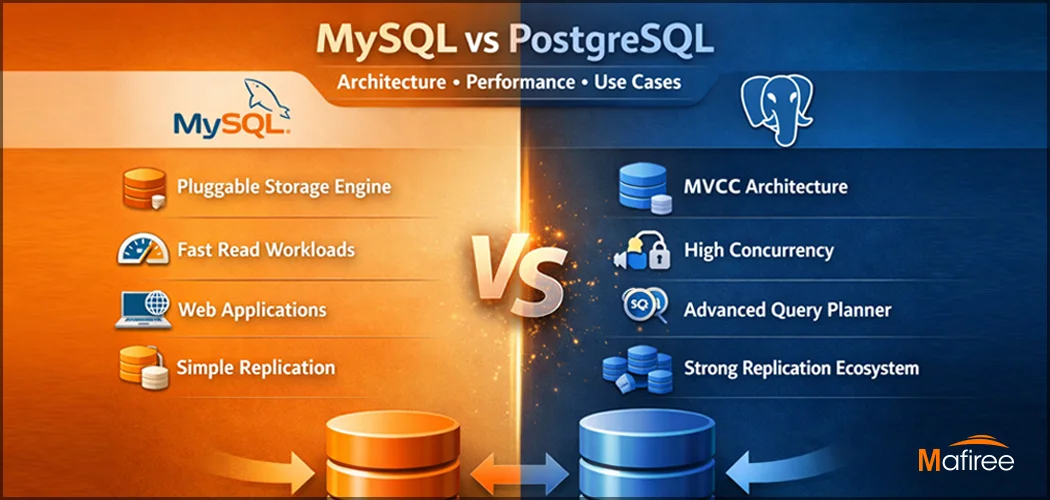
Key Differences Between MySQL and PostgreSQL: Architecture, Performance & Use Cases

Understanding the difference between MySQL and PostgreSQL is critical when choosing a database for production workloads. While both are powerful open-source relational databases, they are built with fundamentally different philosophies. This comprehensive guide compares MySQL vs PostgreSQL across architecture, performance behavior under concurrent loads, replication strategies, and real-world use cases — backed by Mafiree's 17+ years of hands-on production experience across India, APAC, and the Middle East.

  1334 views
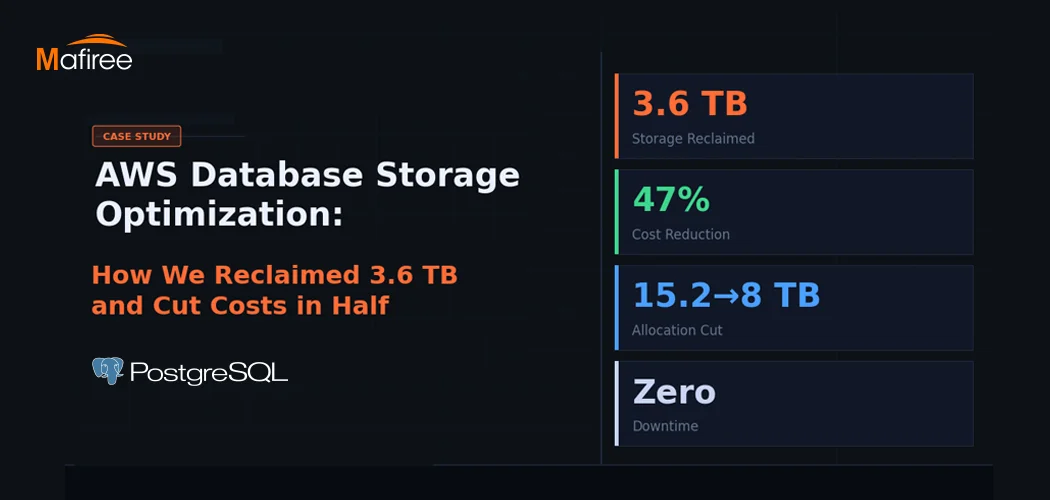
AWS Database Storage Optimization: How We Reclaimed 3.6 TB and Cut Costs in Half

A client came to us with a classic AWS database storage optimization problem: 15.2 TB allocated, less than a third actually in use — and a bill that kept growing regardless. Within one week, Mafiree had reclaimed 3.6 TB, validated a safe path to cut allocation nearly in half, and executed a zero-downtime migration. Here's the full story.

  980 views
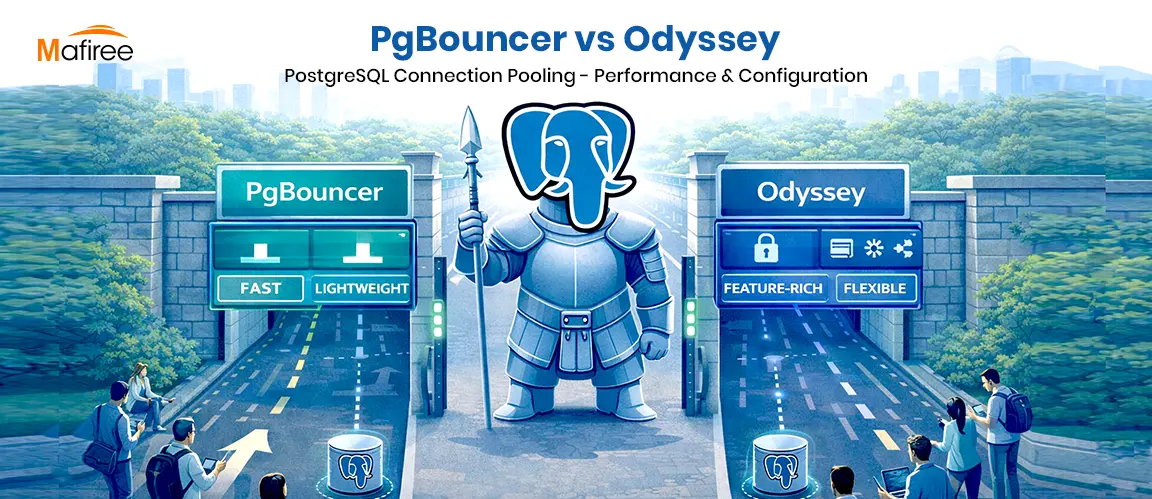
PostgreSQL Connection Pooling: PgBouncer vs Odyssey – Performance & Configuration

PostgreSQL uses a process-per-connection model, which can limit scalability in high-traffic environments. Connection poolers help manage this challenge by reusing database connections efficiently. This blog compares PgBouncer and Odyssey, two popular PostgreSQL connection poolers, highlighting their architecture, performance characteristics, configuration differences, and ideal use cases. It helps organizations choose the right pooling solution based on workload scale, complexity, and operational requirements.

  7671 views
8 Enhancing Features in PostgreSQL 18

PostgreSQL 18: Efficiency, security, and reliability, all in one upgrade

  13195 views
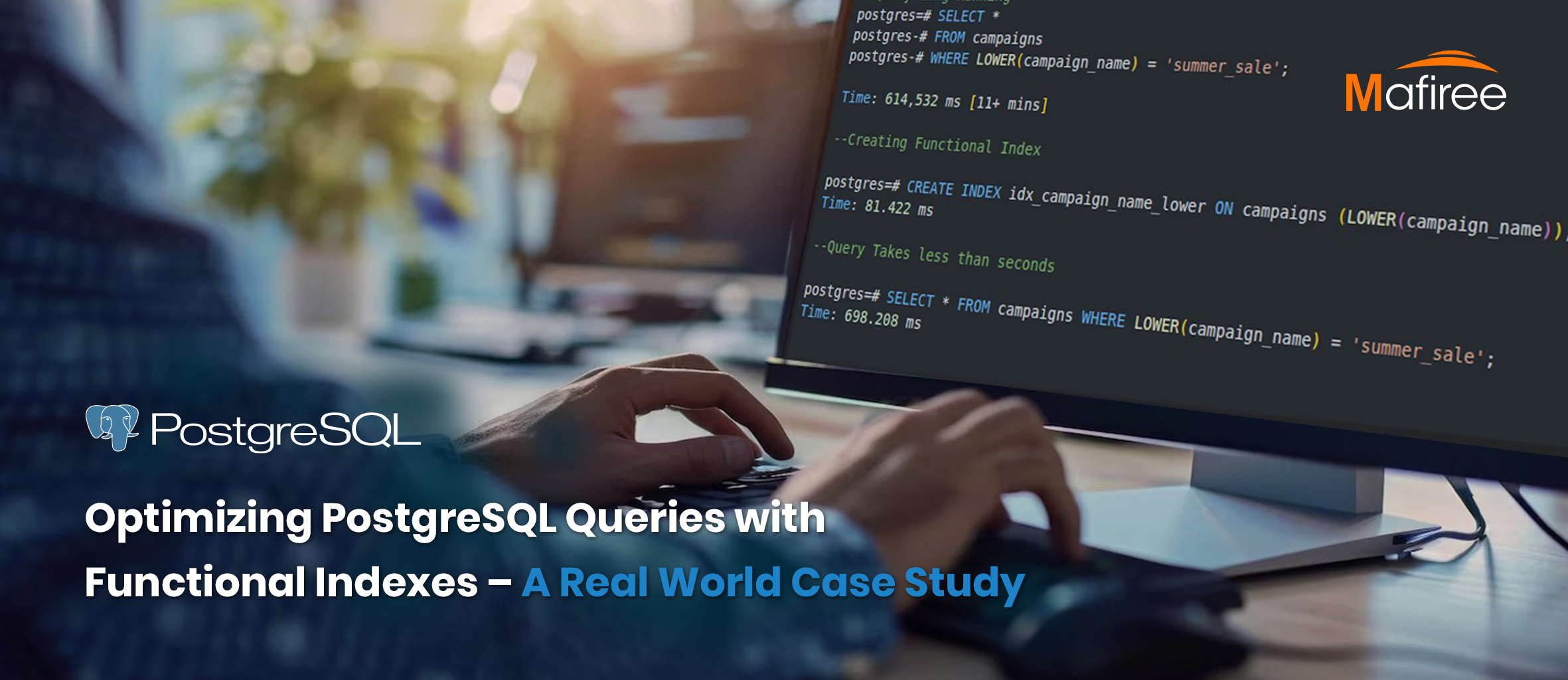
Optimizing PostgreSQL Queries with Functional Indexes – A Real-World Case Study

Cutting Query Time from 10 Minutes to Under 1 Second – How Functional Indexes Helped Us Optimize Aurora PostgreSQL and Stabilize CPU Performance.

  4528 views
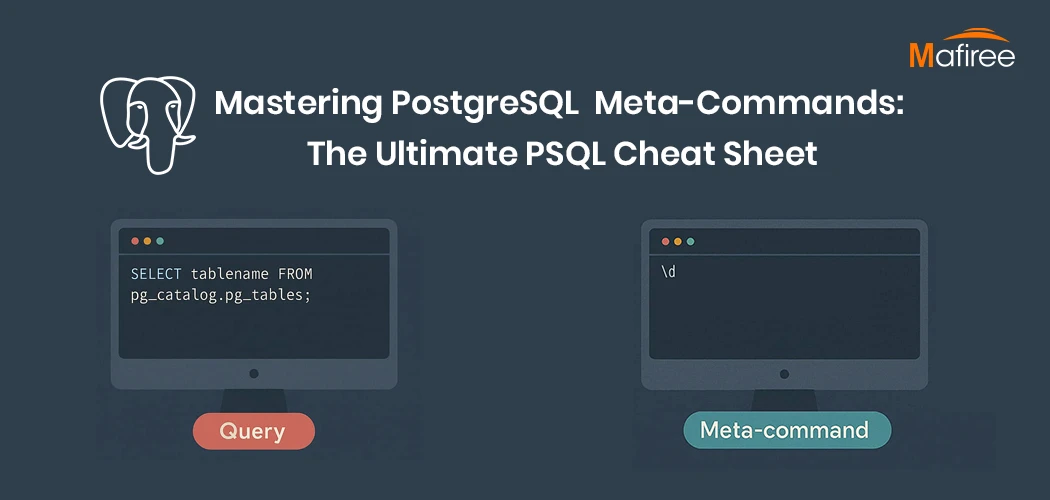
Mastering PostgreSQL Meta-Commands: The Ultimate psql Cheat Sheet

Why memorize SQL queries when \d, \l, and \dx do the heavy lifting? Learn the power of PostgreSQL’s psql meta-commands today.

  5224 views
PostgreSQL Schema Changes pg_osc: Zero-Downtime Migrations for Production Systems

Altering large tables in PostgreSQL can cause locks, performance issues, and downtime in production environments. This blog explains how pg_osc (PostgreSQL Online Schema Change) enables safe schema modifications using a shadow table approach, allowing applications to continue operating during migrations. The article covers how pg_osc works, compares it with alternatives like pg_repack, explores real-world use cases, and provides practical steps for implementing online schema changes in production. It also highlights best practices used by Mafiree to perform reliable zero-downtime PostgreSQL schema migrations in high-traffic environments.

  3238 views
Connecting MySQL to PostgreSQL Using mysql_fdw for Cross-DB Queries

This illustration represents the power of mysql_fdw in enabling smooth data exchange and real-time connectivity between MySQL and PostgreSQL. A perfect solution for cross-database operations and data integration!

  4723 views
Incremental Backup In PostgreSQL 17

Revolutionize your database management with PostgreSQL 17! Experience faster, smarter, and more efficient backups with the power of incremental backup. Reduce storage, save time, and ensure seamless recovery – the future of PostgreSQL backup starts here!

  1385 views
A Practical Guide to PostgreSQL Load Balancing

Load balancing in PostgreSQL distributes client connections across multiple database servers to improve performance, scalability, and availability. This guide compares Pgpool-II, ProxySQL, and HAProxy, covering their key features, advantages, limitations, and suitability for PostgreSQL workloads.

  13235 views
7 Enhancing Features In PostgreSQL 17

PostgreSQL 17 is here to revolutionize your database experience! Packed with enhanced performance, cutting-edge features, and improved scalability, this release is designed to meet the evolving demands of modern applications. Whether you're handling complex queries or scaling to new heights, PostgreSQL 17 brings unparalleled reliability and efficiency to your data management solutions.

  3773 views
6 Interesting Features in PostgreSQL 16

Recently Postgres 16 has launched and I have picked the most interesting feature in this blog.

  5656 views
PostgreSQL Autovacuum Explained in Detail

This blog explains how PostgreSQL Autovacuum works — covering the launcher/worker process model, the exact formula that decides when a table becomes eligible, and the key differences between VACUUM, Autovacuum, and VACUUM FULL. It includes an interactive eligibility calculator, tunable parameters, monitoring queries, and best practices to help DBAs prevent table bloat and transaction ID wraparound.

  1840 views

Subscribe for email updates

Get in touch with us

Highlights

More than 6000 Servers Monitored

Happy Clients

Certified DBAs

24 x 7 x 365 Support

PCI

Database Services

MySQL MongoDB PostgreSQL SQL Server Aerospike Clickhouse TiDB ScyllaDB

Quick Links

Careers Blog Contact Privacy Policy Disclaimer Policy

Contacts

Linkedin Mafiree Facebook Mafiree Twitter Mafiree

Nagercoil Office

Miru IT Park, Vallankumaranvillai,

Nagercoil, Tamilnadu - 629 002.

Bangalore Office

Unit 303, Vanguard Rise,

5th Main, Konena Agrahara,

Old Airport Road, Bangalore - 560 017.

Call: +91 6383016411

Email: sales@mafiree.com

Copyright © - All Rights Reserved - Mafiree