
Mafiree logo
  • About
  • Services
  • Blogs
  • Careers
  • Products
    • orbit logo Orbit
    • streamer logo Xstreami
  • Contact
Schedule a Call
Menu
  • About
  • Services
  • Blogs
  • Careers
  • Products
    • orbit logo Orbit
    • streamer logo Xstreami
  • Contact
  • Schedule a Call
Database
Database Database Managed Services
MySQL MySQL
MySQL Consulting Services
MySQL Migration Services
MySQL Optimization & Query Tuning
MySQL Database Administration
MySQL Backup & Recovery
MySQL Security & Maintenance
MySQL Cloud Services (AWS RDS, Aurora, Google Cloud SQL, Azure)
MySQL for Ecommerce
MySQL High Availability & Replication
MongoDB MongoDB
MongoDB Consulting Services
MongoDB Migration Services
MongoDB Optimization & Query Tuning
MongoDB Database Administration
MongoDB Backup & Recovery
MongoDB Security & Maintenance
MongoDB Cloud (Atlas)
MongoDB Solutions by Industry
MongoDB High Availability & Replication
PostgreSQL PostgreSQL
PostgreSQL Consulting
PostgreSQL Migration & Upgrades
Performance Tuning & Query Optimization
PostgreSQL Administration & Managed Services
High Availability, Clustering & Replication
PostgreSQL Backup, Recovery & Disaster Planning
PostgreSQL Security, Compliance & Auditing
PostgreSQL for Analytics & Data Warehousing
PostgreSQL on Cloud & Containers
PostgreSQL Extensions & Open-Source Integrations
PostgreSQL for Every Industry
SQL Server MSSQL
MSSQL Consulting Services
MSSQL Migration Services
MSSQL Optimization & Query Tuning Services
MSSQL Database Administration Services
MSSQL Backup & Recovery Services
MSSQL High Availability & Replication Services
MSSQL Security & Compliance Services
MSSQL Performance Monitoring & Health Checks
MSSQL Solutions by Industry
Aerospike Aerospike
Aerospike Consulting Services
Aerospike Migration Services
Aerospike Performance Optimization & Tuning
Aerospike Database Administration
Aerospike Backup & Recovery
Aerospike High Availability
Aerospike Cloud & Hybrid Deployments
Aerospike for Real-Time Applications (AdTech, FinTech, Retail, IoT)
Analytics DB
Analytics DB Analytics DB Services
Clickhouse Clickhouse
ClickHouse Consulting Services
ClickHouse Migration Services
ClickHouse Optimization & Query Tuning
ClickHouse Database Administration
ClickHouse Backup & Recovery
ClickHouse Security & Maintenance
ClickHouse Cloud Services (ClickHouse Cloud, AWS, GCP, Azure)
ClickHouse Solutions by Industry
ClickHouse High Availability & Replication
TiDB TiDB
TiDB Consulting & Architecture Planning
TiDB Administration & Maintenance
TiDB Security and Privacy Maintenance
TiDB Performance & Query Optimization
TiDB Migration Services
TiDB Backup & Disaster Recovery
TiDB High Availability Solutions
TiDB Solutions by Industry
TiDB Cloud Services
ScyllaDB ScyllaDB
ScyllaDB Consulting & Architecture Planning
ScyllaDB Administration & Maintenance
ScyllaDB Security and Privacy Maintenance
ScyllaDB Performance & Query Optimization
ScyllaDB Migration Services
ScyllaDB Backup & Disaster Recovery
ScyllaDB High Availability Solutions
ScyllaDB Solutions by Industry
ScyllaDB Cloud Services
DevOps
DevOps DevOps Services
Version Control Version Control
Kubernetes Kubernetes
Infrastructure Infrastructure Management
Web Servers Web Servers
Networking
Networking Networking Services
Basic Basic
Advanced Advanced
MySQL MySQL
MongoDB MongoDB
PostgreSQL PostgreSQL
MSSQL MSSQL
Aerospike Aerospike
Clickhouse Clickhouse
TiDB TiDB
ScyllaDB ScyllaDB
Version Control Version Control
Kubernetes Kubernetes
Infrastructure Infrastructure Management
Web Servers Web Servers
Basic Basic
Advanced Advanced
MySQL Consulting Services
MySQL Migration Services
MySQL Optimization & Query Tuning
MySQL Database Administration
MySQL Backup & Recovery
MySQL Security & Maintenance
MySQL Cloud Services (AWS RDS, Aurora, Google Cloud SQL, Azure)
MySQL for Ecommerce
MySQL High Availability & Replication
MongoDB Consulting Services
MongoDB Migration Services
MongoDB Optimization & Query Tuning
MongoDB Database Administration
MongoDB Backup & Recovery
MongoDB Security & Maintenance
MongoDB Cloud (Atlas)
MongoDB Solutions by Industry
MongoDB High Availability & Replication
PostgreSQL Consulting
PostgreSQL Migration & Upgrades
Performance Tuning & Query Optimization
PostgreSQL Administration & Managed Services
High Availability, Clustering & Replication
PostgreSQL Backup, Recovery & Disaster Planning
PostgreSQL Security, Compliance & Auditing
PostgreSQL for Analytics & Data Warehousing
PostgreSQL on Cloud & Containers
PostgreSQL Extensions & Open-Source Integrations
PostgreSQL for Every Industry
MSSQL Consulting Services
MSSQL Migration Services
MSSQL Optimization & Query Tuning Services
MSSQL Database Administration Services
MSSQL Backup & Recovery Services
MSSQL High Availability & Replication Services
MSSQL Security & Compliance Services
MSSQL Performance Monitoring & Health Checks
MSSQL Solutions by Industry
Aerospike Consulting Services
Aerospike Migration Services
Aerospike Performance Optimization & Tuning
Aerospike Database Administration
Aerospike Backup & Recovery
Aerospike High Availability
Aerospike Cloud & Hybrid Deployments
Aerospike for Real-Time Applications (AdTech, FinTech, Retail, IoT)
ClickHouse Consulting Services
ClickHouse Migration Services
ClickHouse Optimization & Query Tuning
ClickHouse Database Administration
ClickHouse Backup & Recovery
ClickHouse Security & Maintenance
ClickHouse Cloud Services (ClickHouse Cloud, AWS, GCP, Azure)
ClickHouse Solutions by Industry
ClickHouse High Availability & Replication
TiDB Consulting & Architecture Planning
TiDB Administration & Maintenance
TiDB Security and Privacy Maintenance
TiDB Performance & Query Optimization
TiDB Migration Services
TiDB Backup & Disaster Recovery
TiDB High Availability Solutions
TiDB Solutions by Industry
TiDB Cloud Services
ScyllaDB Consulting & Architecture Planning
ScyllaDB Administration & Maintenance
ScyllaDB Security and Privacy Maintenance
ScyllaDB Performance & Query Optimization
ScyllaDB Migration Services
ScyllaDB Backup & Disaster Recovery
ScyllaDB High Availability Solutions
ScyllaDB Solutions by Industry
ScyllaDB Cloud Services
  1. Home
  2. > Blogs
  3. > PostgreSQL
  4. > Key Differences Between MySQL and PostgreSQL: Architecture, Performance & Use Cases

Key Differences Between MySQL and PostgreSQL: Architecture, Performance & Use Cases

Understanding the difference between MySQL and PostgreSQL is critical when choosing a database for production workloads. While both are powerful open-source relational databases, they are built with fundamentally different philosophies. This comprehensive guide compares MySQL vs PostgreSQL across architecture, performance behavior under concurrent loads, replication strategies, and real-world use cases — backed by Mafiree's 17+ years of hands-on production experience across India, APAC, and the Middle East.

Jethish April 03, 2026

Subscribe for email updates

Choosing the right database is not just about popularity, it's about architecture, workload type, consistency guarantees, and long-term scalability. The difference between MySQL and PostgreSQL goes far deeper than syntax or feature lists. These two databases behave very differently under real-world production loads.


Two names dominate the open-source relational database world: MySQL and PostgreSQL.
 

For over 17 years, Mafiree has been helping organizations across the globe design, optimize, and manage both MySQL and PostgreSQL environments for mission-critical workloads.


From startups to large enterprises, Mafiree supports databases powering high-traffic web applications, financial systems, SaaS platforms, and analytics-driven architectures.


Mafiree’s real-world experience shows that while MySQL and PostgreSQL both speak SQL and store data in tables, they behave very differently under real-world workloads. Choosing the wrong database can lead to performance bottlenecks, scaling challenges, replication issues, and operational complexity.


In this blog, backed by Mafiree’s hands-on production experience, we compare MySQL vs PostgreSQL across:

 

  • Core architecture
  • Performance behavior
  • Concurrency and locking
  • Replication and high availability
  • Real-world use cases

Struggling to choose between MySQL and PostgreSQL. We are here to help you


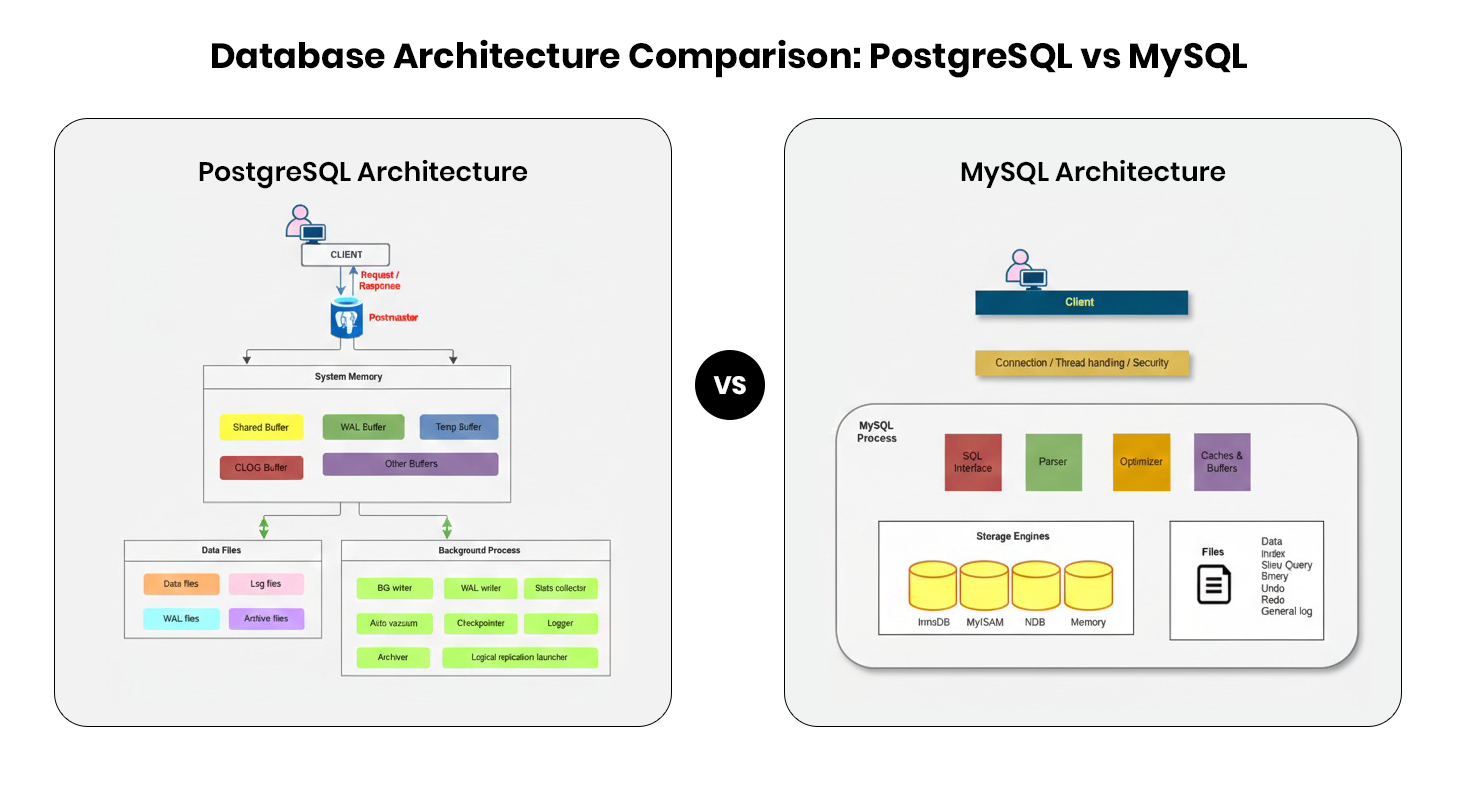
1. Understanding the Difference Between MySQL and PostgreSQL: Core Architecture

MySQL Architecture

MySQL follows a pluggable storage engine architecture, allowing different engines to handle data storage.


Key components:

  • SQL Layer (Parser, Optimizer, Query Cache)
  • Storage Engines (InnoDB, MyISAM, etc.)
  • Client/Server model

? InnoDB is the default and most widely used engine.


Key traits:

  • Engine-specific features
  • Row-level locking (InnoDB)
  • Redo/Undo logs for crash recovery
  • Simpler internal design compared to PostgreSQL

PostgreSQL Architecture

PostgreSQL uses a single, tightly integrated storage engine with a highly extensible core.


Key components:

  • SQL Parser & Planner
  • Executor
  • MVCC-based storage engine
  • Background processes (Autovacuum, WAL writer, Checkpointer)

Key traits:

  • True MVCC (readers never block writers)
  • Process-per-connection model
  • Deep extensibility (custom data types, indexes, extensions)

Architecture Comparison Table

FeatureMySQLPostgreSQL
Storage EnginePluggableSingle Integrated
MVCCPartial (InnoDB)Full MVCC
ExtensibilityLimitedVery High
Standards ComplianceModerateVery High


 MySQL Architecture & PostgreSQL Architecture


2. Performance Comparison: MySQL vs PostgreSQL

Read Performance

MySQL

  • Extremely fast for simple read-heavy workloads
  • Optimized for OLTP and web applications
  • Query cache (deprecated but historically useful)

PostgreSQL

  • Slightly slower for trivial reads
  • Excels with complex joins, subqueries, and analytics
  • Smarter query planner

Winner:

  • Simple reads → MySQL
  • Complex queries → PostgreSQL

Write Performance

MySQL

  • Faster single-row inserts
  • Less overhead per transaction
  • Can suffer under heavy concurrency

PostgreSQL

  • Strong transactional consistency
  • Handles concurrent writes gracefully
  • WAL-based durability model

Winner: 

PostgreSQL (for concurrent workloads)


3. Concurrency & Locking

MySQL (InnoDB)

  • Row-level locks
  • Gap locks & next-key locking
  • Readers can block writers in certain scenarios

PostgreSQL

  • True MVCC implementation
  • Readers never block writers
  • Writers never block readers

In high-concurrency systems such as banking, payments, and order-processing platforms, PostgreSQL consistently delivers better and more predictable performance.


4. Replication & High Availability

MySQL

  • Built-in asynchronous replication
  • Semi-sync replication available
  • Group Replication & InnoDB Cluster
  • Relatively easy to configure

PostgreSQL

  • Physical streaming replication
  • Logical replication
  • Rich ecosystem: Patroni, PgBouncer, HAProxy
  • Supports near-zero data loss architectures

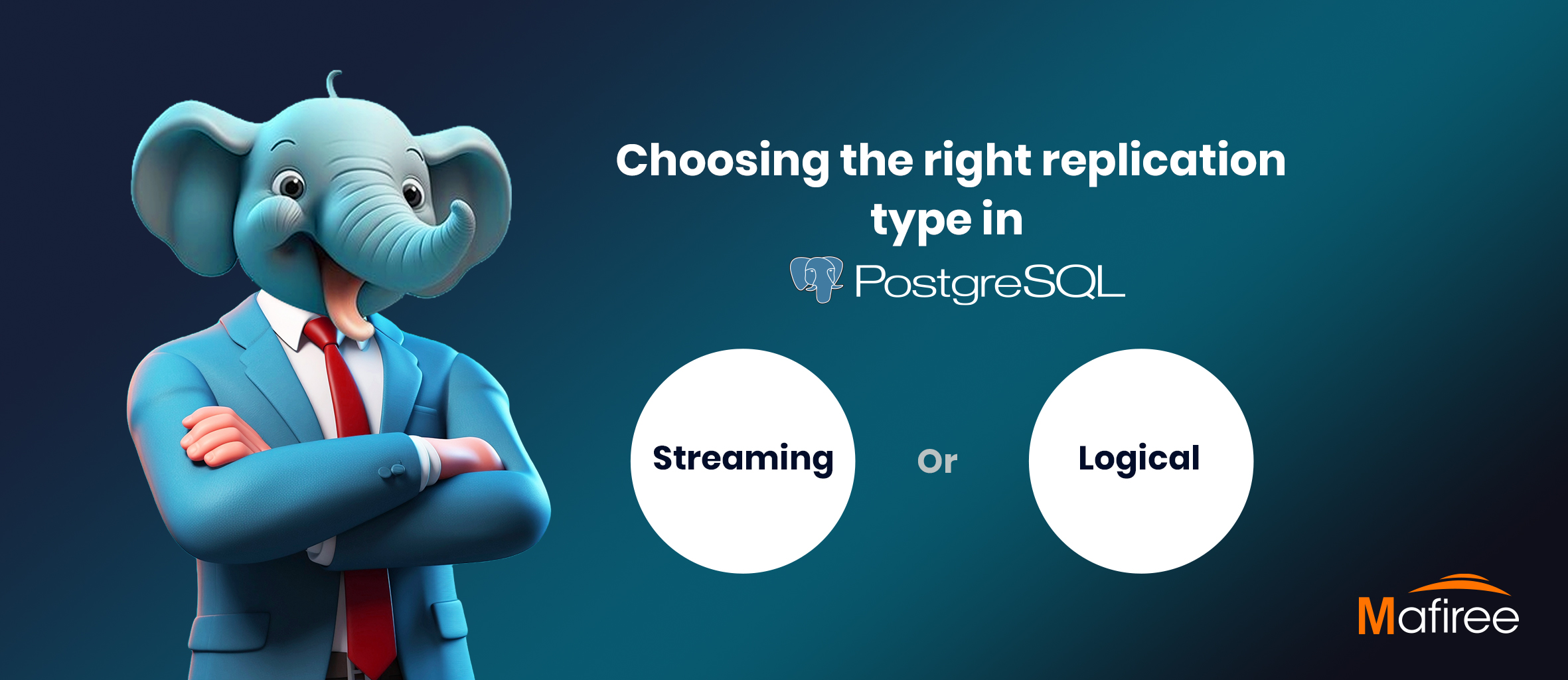
Mafiree has deep expertise in designing PostgreSQL replication strategies. If you’re evaluating replication models, we strongly recommend reading: Choosing the Right Replication Type in PostgreSQL


Replication Comparison

AspectMySQLPostgreSQL
Async ReplicationYesYes
Logical ReplicationLimitedNative
HA EcosystemModerateVery strong

5. Real-World Use Cases: When to Choose MySQL vs PostgreSQL

Based on Mafiree's experience deploying and optimizing both databases across India and APAC, here are the workload patterns where each database excels:

When MySQL Shines

  • CMS platforms (WordPress, Joomla)
  • E-commerce websites
  • Read-heavy web applications
  • Simple SaaS platforms

When PostgreSQL Dominates

  • Financial systems
  • Healthcare platforms
  • Analytics-heavy applications
  • Geospatial (PostGIS)
  • Complex transactional systems

6. Security & Compliance

PostgreSQL

  • Advanced role management
  • Row-level security
  • Better audit extensions

MySQL

  • Basic role-based access
  • Simpler security model

Community & Ecosystem

MySQL

  • Backed by Oracle
  • Massive adoption
  • Large hosting support

PostgreSQL

  • Community-driven
  • Enterprise-grade extensions
  • Strong open-source governance

Conclusion: Choosing Between MySQL and PostgreSQL

Choosing between MySQL and PostgreSQL isn’t about popularity—it’s about selecting the architecture that fits your workload, performance needs, and long-term growth.


MySQL works well for simple, read-heavy web applications, while PostgreSQL excels in high-concurrency, complex, and enterprise-grade workloads where consistency and scalability matter most.


With 17+ years of global experience, Mafiree has seen how the right database choice—and the right architecture—can make or break production systems.


Whether you’re building new, scaling fast, or planning a MySQL-to-PostgreSQL migration, Mafiree’s database experts can help you design a system that performs reliably today and scales confidently tomorrow.

 

Design you right database. Contact us


Explore more in-depth technical articles from Mafiree’s database experts:


MySQL Blogs

PostgreSQL Blogs


FAQ

PostgreSQL is better for complex queries, high concurrency, analytics, and strict data consistency. MySQL performs well for simple, read-heavy web applications. The best choice depends on workload and scalability needs.
MySQL is typically faster for simple read operations, while PostgreSQL delivers better performance for complex queries and concurrent workloads due to its advanced query planner and true MVCC architecture.
Yes. PostgreSQL uses true MVCC, ensuring readers never block writers and writers never block readers, making it ideal for high-concurrency systems such as banking and payment platforms.
PostgreSQL supports physical and logical replication and integrates well with high-availability tools like Patroni, PgBouncer, and HAProxy to achieve near-zero data loss architectures.
Startups with simple workloads often choose MySQL for ease of use, while those expecting complex queries, analytics, or long-term scalability benefit from PostgreSQL.
PostgreSQL is generally better for analytics due to its powerful query planner, support for complex joins, window functions, and extensions such as PostGIS and foreign data wrappers.
PostgreSQL offers more advanced features and tuning options, which can make it feel complex initially. With proper configuration and expert support, it becomes highly stable and predictable in production.
Yes. Mafiree provides end-to-end database migration services, including assessment, schema conversion, data migration, performance validation, and post-migration optimization for MySQL and PostgreSQL.

Author Bio

Jethish

Jethish is a PostgreSQL DBA at Mafiree with expertise in building scalable, reliable, and high-performance database infrastructures. He focuses on PostgreSQL architecture, replication strategies, performance tuning, and high availability for mission-critical systems. Through his technical writing, he shares clear, practical insights on database internals, replication choices, load balancing, and cross-database integrations that help engineers and DBAs tackle real-world data challenges.

Leave a Comment

Related Blogs

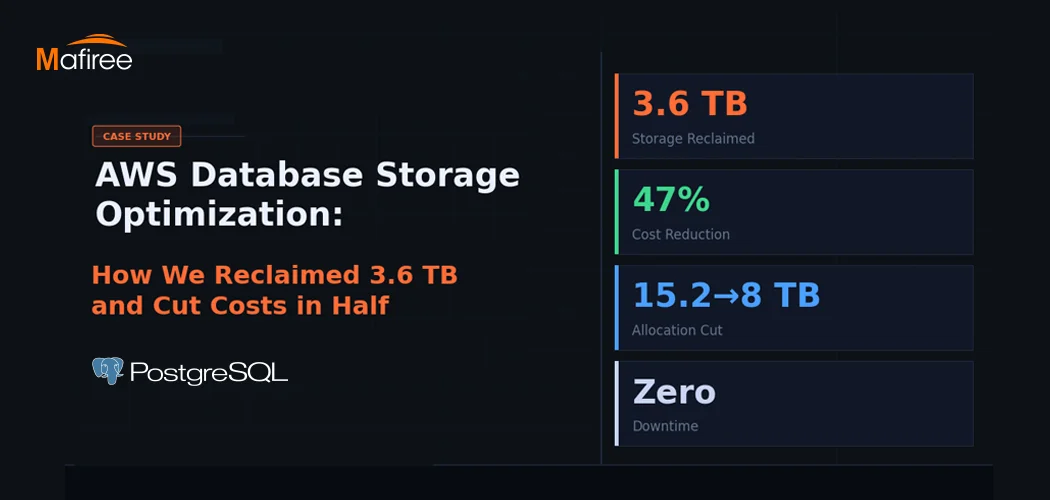
AWS Database Storage Optimization: How We Reclaimed 3.6 TB and Cut Costs in Half

A client came to us with a classic AWS database storage optimization problem: 15.2 TB allocated, less than a third actually in use — and a bill that kept growing regardless. Within one week, Mafiree had reclaimed 3.6 TB, validated a safe path to cut allocation nearly in half, and executed a zero-downtime migration. Here's the full story.

  209 views
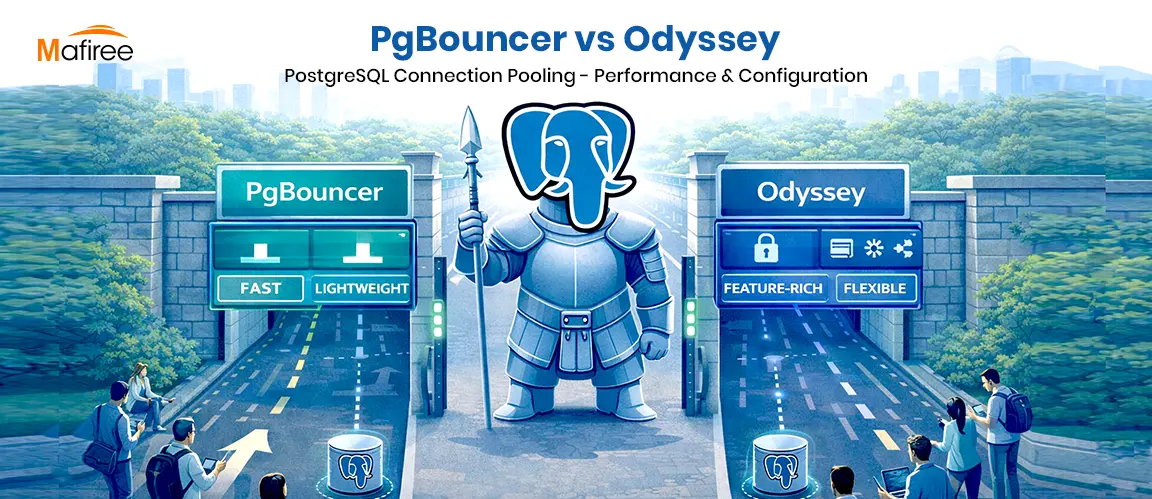
PostgreSQL Connection Pooling: PgBouncer vs Odyssey – Performance & Configuration

PostgreSQL uses a process-per-connection model, which can limit scalability in high-traffic environments. Connection poolers help manage this challenge by reusing database connections efficiently. This blog compares PgBouncer and Odyssey, two popular PostgreSQL connection poolers, highlighting their architecture, performance characteristics, configuration differences, and ideal use cases. It helps organizations choose the right pooling solution based on workload scale, complexity, and operational requirements.

  2291 views
8 Enhancing Features in PostgreSQL 18

PostgreSQL 18: Efficiency, security, and reliability, all in one upgrade

  4219 views
Optimizing PostgreSQL Queries with Functional Indexes – A Real-World Case Study

Cutting Query Time from 10 Minutes to Under 1 Second – How Functional Indexes Helped Us Optimize Aurora PostgreSQL and Stabilize CPU Performance.

  2948 views
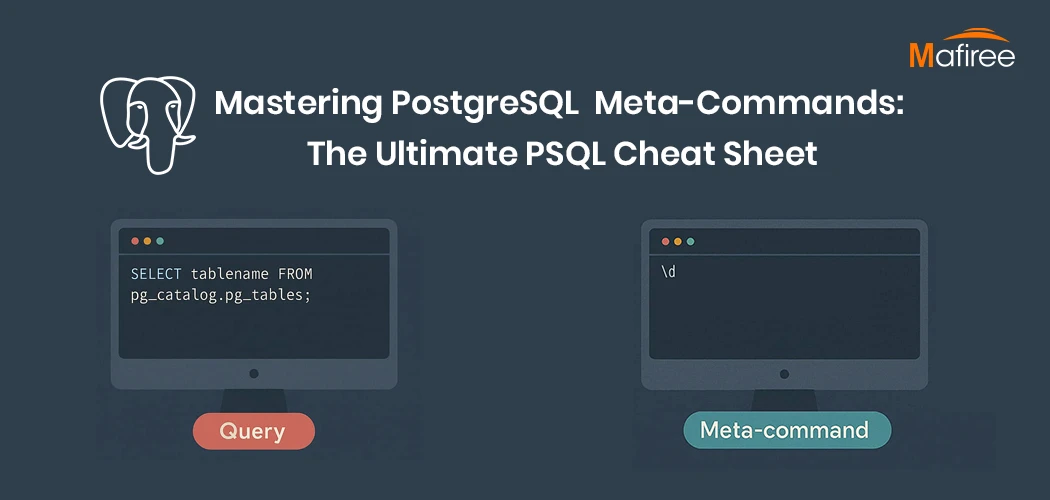
Mastering PostgreSQL Meta-Commands: The Ultimate psql Cheat Sheet

Why memorize SQL queries when \d, \l, and \dx do the heavy lifting? Learn the power of PostgreSQL’s psql meta-commands today.

  182 views

Subscribe for email updates

Get in touch with us

Highlights

More than 6000 Servers Monitored

Happy Clients

Certified DBAs

24 x 7 x 365 Support

PCI

Database Services

MySQL MongoDB PostgreSQL SQL Server Aerospike Clickhouse TiDB MariaDB Columnstore

Quick Links

Careers Blog Contact Privacy Policy Disclaimer Policy

Contacts

Linkedin Mafiree Facebook Mafiree Twitter Mafiree

Nagercoil Office

Miru IT Park, Vallankumaranvillai,

Nagercoil, Tamilnadu - 629 002.

Bangalore Office

Unit 303, Vanguard Rise,

5th Main, Konena Agrahara,

Old Airport Road, Bangalore - 560 017.

Call: +91 6383016411

Email: sales@mafiree.com

Copyright © - All Rights Reserved - Mafiree