
 Orbit
Orbit
 Xstreami









Database Insights, Tips & Expert Blogs

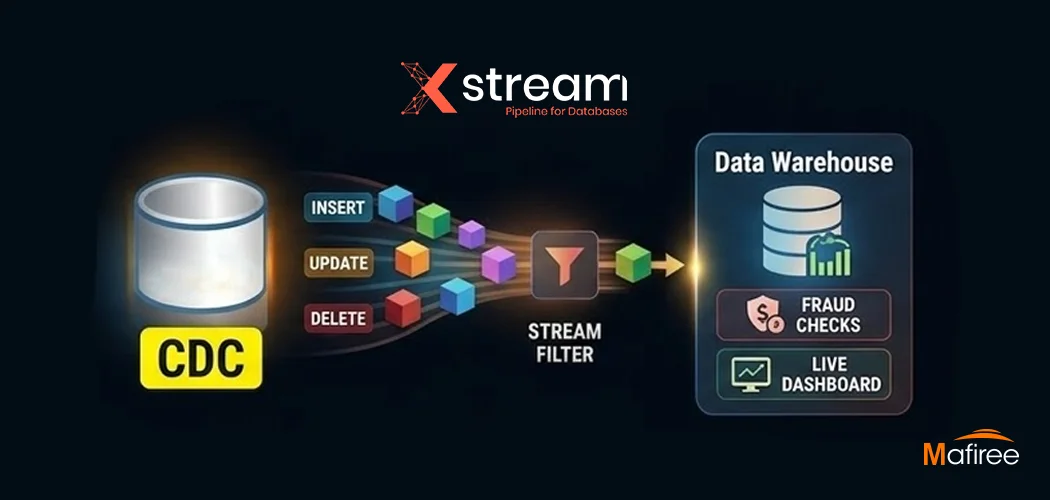
Change Data Capture (CDC): How It Works, Benefits & Real-World Use Cases
Author : Shenbaga Varna S
Xstreami
Each second, databases are constantly changing—and this is where change data capture plays a crucial role. As updates happen across systems, applications need a way to instantly know what changed without scanning entire datasets. Change Data Capture (CDC) solves this by tracking only the changes and delivering them in real time, enabling systems to stay in sync and power efficient, scalable real-time data pipelines.
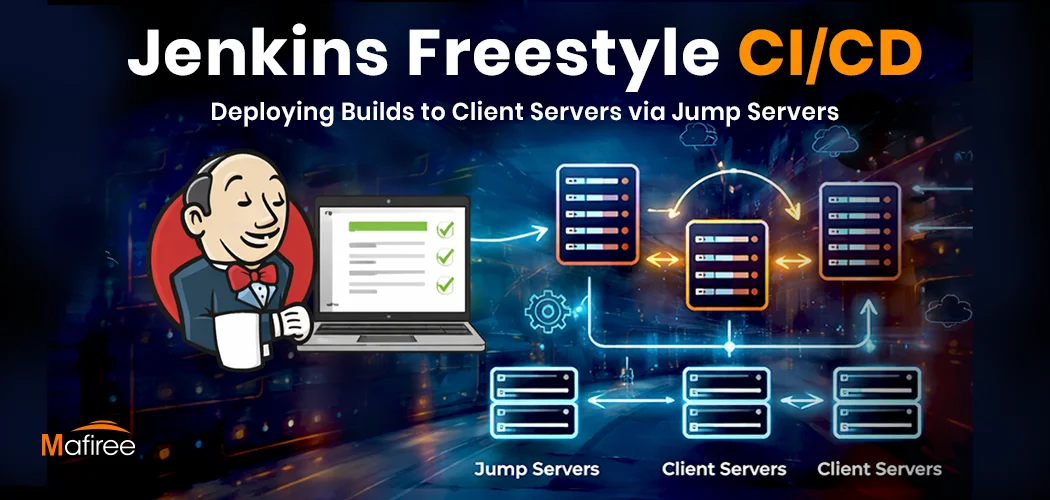
Jenkins Freestyle Deployment: Automating Multi-Server Builds via Jump Servers
Author : Ananth B
Devops
This blog explains how Jenkins Freestyle deployment can be used to automate application deployments across multiple client servers through secure jump server architecture. It covers the real-world CI/CD workflow used in production environments, where Jenkins executes SSH-based deployment commands to distribute builds efficiently. By leveraging Freestyle jobs, organizations can simplify build automation, manage multi-server deployments, and maintain consistent release processes across client infrastructure.
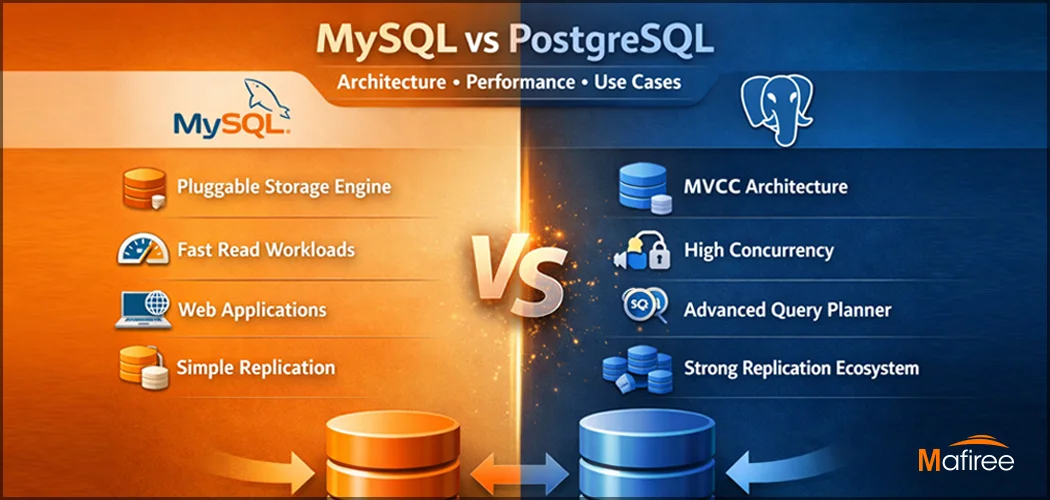
Key Differences Between MySQL and PostgreSQL: Architecture, Performance & Use Cases
Author : Jethish
Postgresql
Understanding the difference between MySQL and PostgreSQL is critical when choosing a database for production workloads. While both are powerful open-source relational databases, they are built with fundamentally different philosophies. This comprehensive guide compares MySQL vs PostgreSQL across architecture, performance behavior under concurrent loads, replication strategies, and real-world use cases — backed by Mafiree's 17+ years of hands-on production experience across India, APAC, and the Middle East.
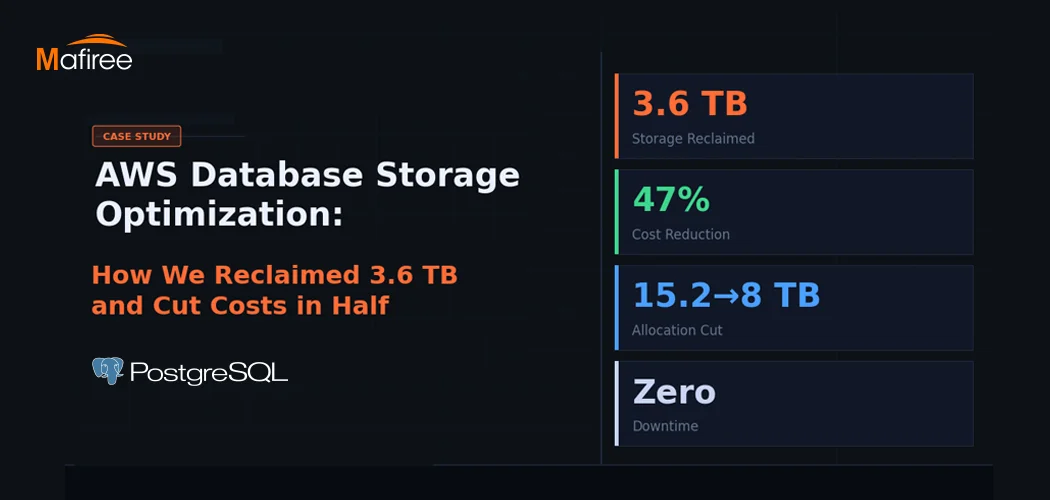
AWS Database Storage Optimization: How We Reclaimed 3.6 TB and Cut Costs in Half
Author : sukan
Postgresql
A client came to us with a classic AWS database storage optimization problem: 15.2 TB allocated, less than a third actually in use — and a bill that kept growing regardless. Within one week, Mafiree had reclaimed 3.6 TB, validated a safe path to cut allocation nearly in half, and executed a zero-downtime migration. Here's the full story.
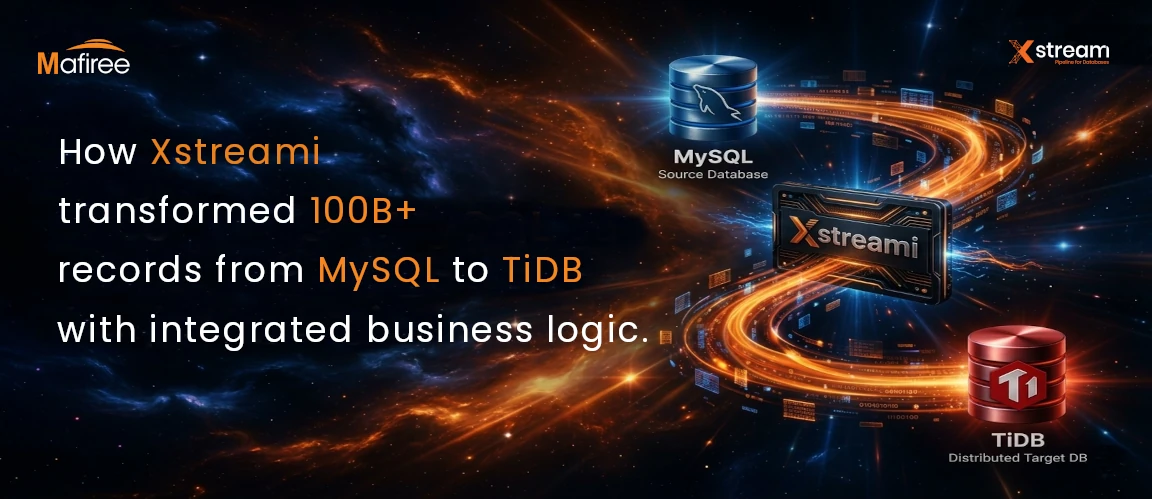
MySQL to TiDB Migration: Streaming 100 Billion Records in Real Time
Author : Divine Steve
Xstreami
A payment service needed real-time streaming AND historical data transformation across 40 MySQL tables into one TiDB table. Xstreami delivered 100 billion records migrated with 0% data loss, complex business logic — zero lines of code written.
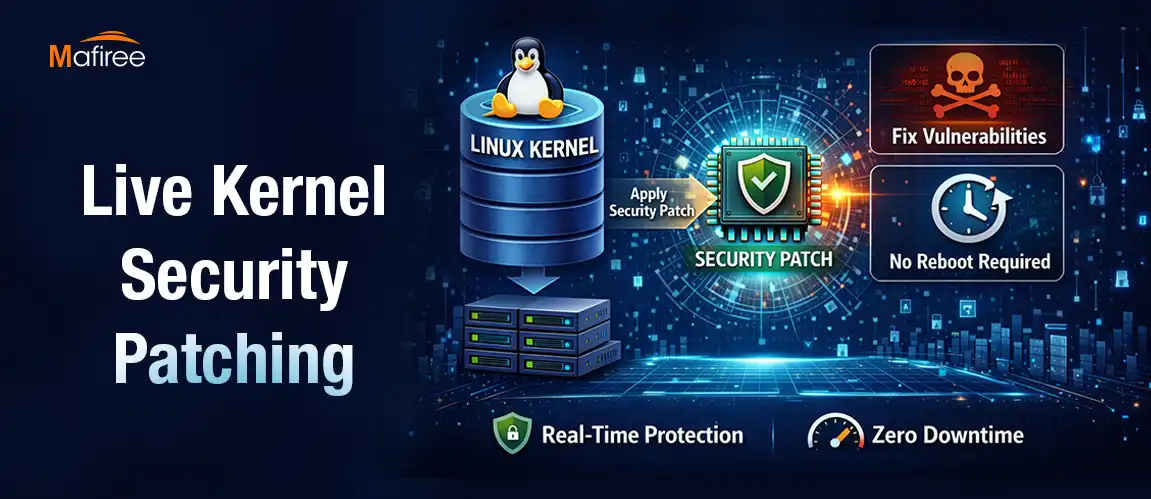
Linux Kernel Live Patching:Zero-Downtime Security Explained
Author : Ananth B
Devops
This blog explains why live linux kernel live patching has become essential for modern infrastructure security, and how real-time patching technologies allow critical vulnerabilities to be fixed instantly without reboots, downtime, or service disruption—helping organizations maintain high availability while staying continuously protected.
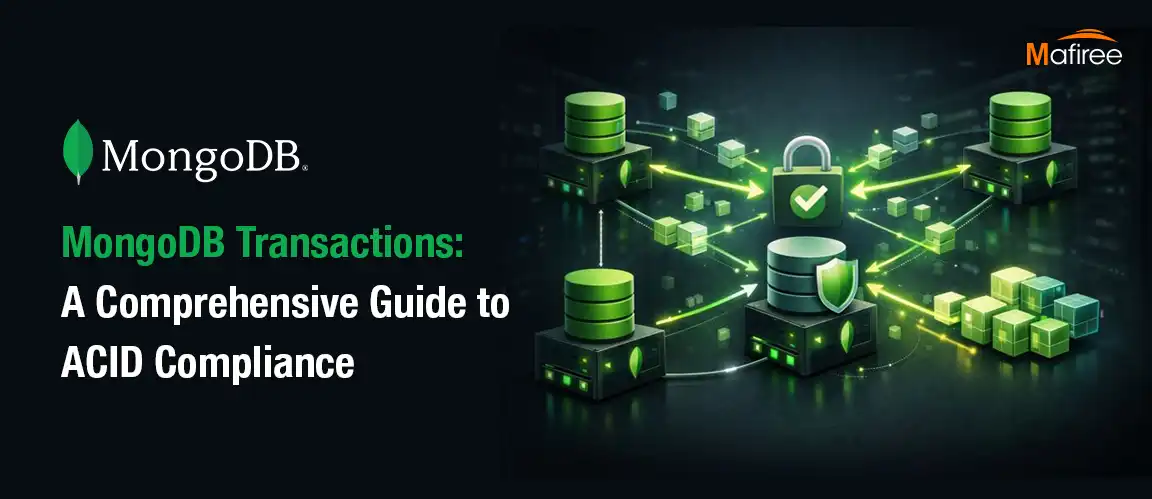
MongoDB Transactions: A Comprehensive Guide to ACID Compliance
Author : Abishek S
Mongodb
MongoDB ensures data consistency with single-document atomic operations and multi-document transactions. This guide explains how to implement transactions, their limitations, performance impacts, and best practices for production environments. It also highlights when to use distributed transactions and how expert consulting can help optimize performance.
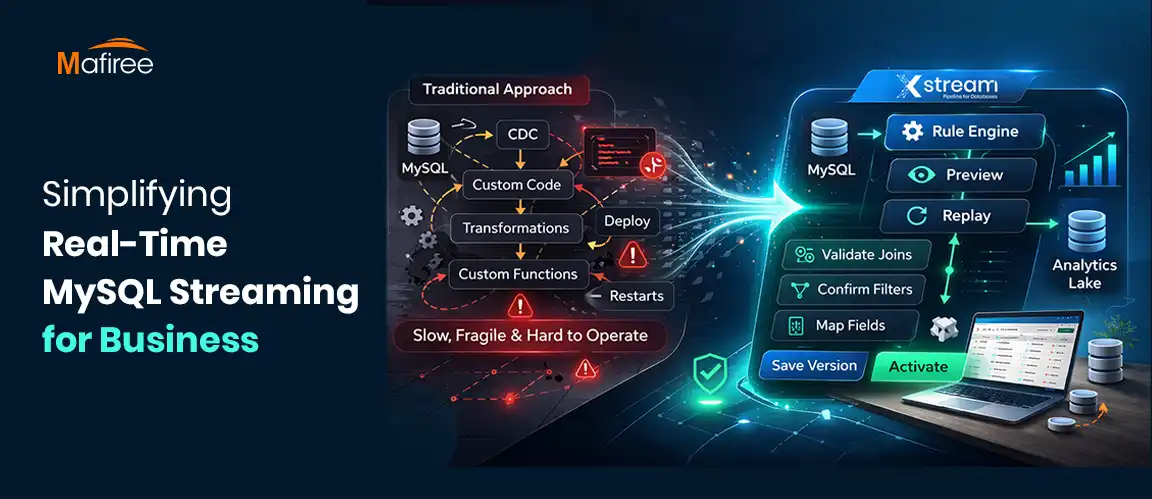
How Xstreami Makes Real-Time MySQL CDC Operationally Simple for Business Use-Cases
Author : Thiyaghu
Xstreami
This blog explains how Xstreami helps teams operationalise real-time MySQL CDC or streaming by simplifying business rule management, preview, deployment and replay—without sacrificing technical depth or reliability.
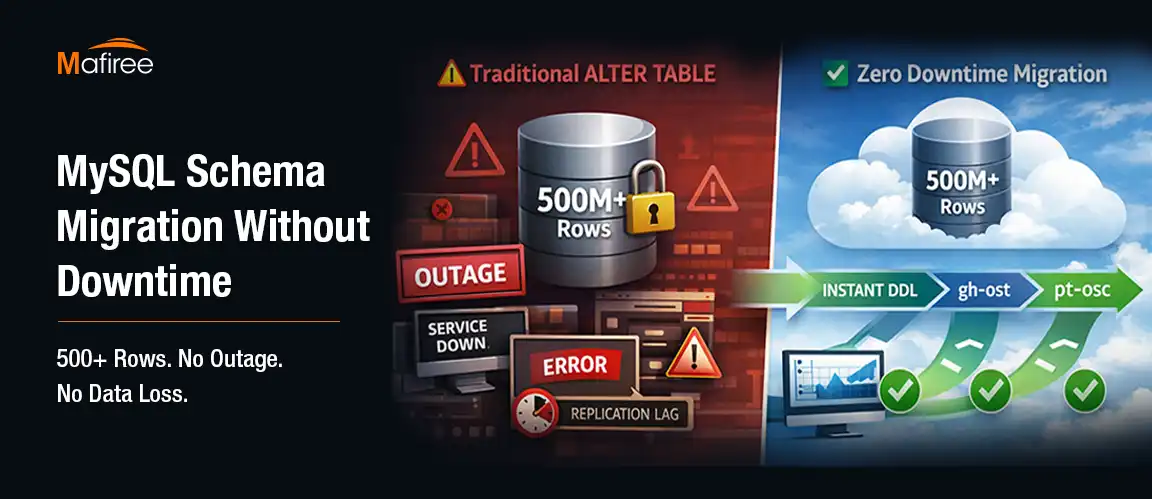
MySQL Schema Migration Without Downtime: A Real Fintech Case Study
Author : Jethish
Mysql
Schema changes on large MySQL tables can bring production systems to a halt if not handled correctly. This case study walks through how Mafiree helped a fintech client execute a zero-downtime MySQL schema migration on a 500M+ row production database — covering the real challenges faced, the three-phase tool strategy using gh-ost, pt-online-schema-change, and MySQL 8.0 INSTANT DDL, production configuration settings with performance benchmarks, and best practices for safely evolving your MySQL schema without impacting users
Highlights
More than 6000 Servers Monitored
Happy Clients
Certified DBAs
24 x 7 x 365 Support

Contacts



Nagercoil Office
Miru IT Park, Vallankumaranvillai,
Nagercoil, Tamilnadu - 629 002.
Bangalore Office
Unit 303, Vanguard Rise,
5th Main, Konena Agrahara,
Old Airport Road, Bangalore - 560 017.
Call: +91 6383016411
Email: sales@mafiree.com