
Mafiree logo
  • About
  • Services
  • Blogs
  • Careers
  • Products
    • orbit logo Orbit
    • streamer logo Xstreami
  • Contact
Schedule a Call
Menu
  • About
  • Services
  • Blogs
  • Careers
  • Products
    • orbit logo Orbit
    • streamer logo Xstreami
  • Contact
  • Schedule a Call
Database
Database Database Managed Services
MySQL MySQL
MySQL Consulting Services
MySQL Migration Services
MySQL Optimization & Query Tuning
MySQL Database Administration
MySQL Backup & Recovery
MySQL Security & Maintenance
MySQL Cloud Services (AWS RDS, Aurora, Google Cloud SQL, Azure)
MySQL for Ecommerce
MySQL High Availability & Replication
MongoDB MongoDB
MongoDB Consulting Services
MongoDB Migration Services
MongoDB Optimization & Query Tuning
MongoDB Database Administration
MongoDB Backup & Recovery
MongoDB Security & Maintenance
MongoDB Cloud (Atlas)
MongoDB Solutions by Industry
MongoDB High Availability & Replication
PostgreSQL PostgreSQL
PostgreSQL Consulting
PostgreSQL Migration & Upgrades
Performance Tuning & Query Optimization
PostgreSQL Administration & Managed Services
High Availability, Clustering & Replication
PostgreSQL Backup, Recovery & Disaster Planning
PostgreSQL Security, Compliance & Auditing
PostgreSQL for Analytics & Data Warehousing
PostgreSQL on Cloud & Containers
PostgreSQL Extensions & Open-Source Integrations
PostgreSQL for Every Industry
SQL Server MSSQL
MSSQL Consulting Services
MSSQL Migration Services
MSSQL Optimization & Query Tuning Services
MSSQL Database Administration Services
MSSQL Backup & Recovery Services
MSSQL High Availability & Replication Services
MSSQL Security & Compliance Services
MSSQL Performance Monitoring & Health Checks
MSSQL Solutions by Industry
Aerospike Aerospike
Aerospike Consulting Services
Aerospike Migration Services
Aerospike Performance Optimization & Tuning
Aerospike Database Administration
Aerospike Backup & Recovery
Aerospike High Availability
Aerospike Cloud & Hybrid Deployments
Aerospike for Real-Time Applications (AdTech, FinTech, Retail, IoT)
Analytics DB
Analytics DB Analytics DB Services
Clickhouse Clickhouse
ClickHouse Consulting Services
ClickHouse Migration Services
ClickHouse Optimization & Query Tuning
ClickHouse Database Administration
ClickHouse Backup & Recovery
ClickHouse Security & Maintenance
ClickHouse Cloud Services (ClickHouse Cloud, AWS, GCP, Azure)
ClickHouse Solutions by Industry
ClickHouse High Availability & Replication
TiDB TiDB
TiDB Consulting & Architecture Planning
TiDB Administration & Maintenance
TiDB Security and Privacy Maintenance
TiDB Performance & Query Optimization
TiDB Migration Services
TiDB Backup & Disaster Recovery
TiDB High Availability Solutions
TiDB Solutions by Industry
TiDB Cloud Services
ScyllaDB ScyllaDB
ScyllaDB Consulting & Architecture Planning
ScyllaDB Administration & Maintenance
ScyllaDB Security and Privacy Maintenance
ScyllaDB Performance & Query Optimization
ScyllaDB Migration Services
ScyllaDB Backup & Disaster Recovery
ScyllaDB High Availability Solutions
ScyllaDB Solutions by Industry
ScyllaDB Cloud Services
DevOps
DevOps DevOps Services
Version Control Version Control
Kubernetes Kubernetes
Infrastructure Infrastructure Management
Web Servers Web Servers
Networking
Networking Networking Services
Basic Basic
Advanced Advanced
MySQL MySQL
MongoDB MongoDB
PostgreSQL PostgreSQL
MSSQL MSSQL
Aerospike Aerospike
Clickhouse Clickhouse
TiDB TiDB
ScyllaDB ScyllaDB
Version Control Version Control
Kubernetes Kubernetes
Infrastructure Infrastructure Management
Web Servers Web Servers
Basic Basic
Advanced Advanced
MySQL Consulting Services
MySQL Migration Services
MySQL Optimization & Query Tuning
MySQL Database Administration
MySQL Backup & Recovery
MySQL Security & Maintenance
MySQL Cloud Services (AWS RDS, Aurora, Google Cloud SQL, Azure)
MySQL for Ecommerce
MySQL High Availability & Replication
MongoDB Consulting Services
MongoDB Migration Services
MongoDB Optimization & Query Tuning
MongoDB Database Administration
MongoDB Backup & Recovery
MongoDB Security & Maintenance
MongoDB Cloud (Atlas)
MongoDB Solutions by Industry
MongoDB High Availability & Replication
PostgreSQL Consulting
PostgreSQL Migration & Upgrades
Performance Tuning & Query Optimization
PostgreSQL Administration & Managed Services
High Availability, Clustering & Replication
PostgreSQL Backup, Recovery & Disaster Planning
PostgreSQL Security, Compliance & Auditing
PostgreSQL for Analytics & Data Warehousing
PostgreSQL on Cloud & Containers
PostgreSQL Extensions & Open-Source Integrations
PostgreSQL for Every Industry
MSSQL Consulting Services
MSSQL Migration Services
MSSQL Optimization & Query Tuning Services
MSSQL Database Administration Services
MSSQL Backup & Recovery Services
MSSQL High Availability & Replication Services
MSSQL Security & Compliance Services
MSSQL Performance Monitoring & Health Checks
MSSQL Solutions by Industry
Aerospike Consulting Services
Aerospike Migration Services
Aerospike Performance Optimization & Tuning
Aerospike Database Administration
Aerospike Backup & Recovery
Aerospike High Availability
Aerospike Cloud & Hybrid Deployments
Aerospike for Real-Time Applications (AdTech, FinTech, Retail, IoT)
ClickHouse Consulting Services
ClickHouse Migration Services
ClickHouse Optimization & Query Tuning
ClickHouse Database Administration
ClickHouse Backup & Recovery
ClickHouse Security & Maintenance
ClickHouse Cloud Services (ClickHouse Cloud, AWS, GCP, Azure)
ClickHouse Solutions by Industry
ClickHouse High Availability & Replication
TiDB Consulting & Architecture Planning
TiDB Administration & Maintenance
TiDB Security and Privacy Maintenance
TiDB Performance & Query Optimization
TiDB Migration Services
TiDB Backup & Disaster Recovery
TiDB High Availability Solutions
TiDB Solutions by Industry
TiDB Cloud Services
ScyllaDB Consulting & Architecture Planning
ScyllaDB Administration & Maintenance
ScyllaDB Security and Privacy Maintenance
ScyllaDB Performance & Query Optimization
ScyllaDB Migration Services
ScyllaDB Backup & Disaster Recovery
ScyllaDB High Availability Solutions
ScyllaDB Solutions by Industry
ScyllaDB Cloud Services
  1. Home
  2. > Blogs
  3. > Xstreami
  4. > MySQL to TiDB Migration: Streaming 100 Billion Records in Real Time

MySQL to TiDB Migration: Streaming 100 Billion Records in Real Time

A payment service needed real-time streaming AND historical data transformation across 40 MySQL tables into one TiDB table. Xstreami delivered 100 billion records migrated with 0% data loss, complex business logic — zero lines of code written.

Divine Steve March 31, 2026

Subscribe for email updates

 
100B+
Records Transformed
Historical + real-time
 
0%
Data Loss
Guaranteed accuracy
 
40→1
Tables Consolidated
Complex logic, no code
 
Zero
Lines of Code
Visual config only

The Challenge: real-time Streaming + 100 Billion Historical Records


A leading payment service provider came to Xstreami with a primary goal: set up a real-time data streaming pipeline so every transaction in their MySQL databases would instantly flow into a high-performance TiDB analytics layer. Standard streaming — or so it seemed.

Then came the full picture. Their system held over 100 billion historical payment records spread across 40 MySQL tables — years of transactions, merchant profiles, fraud logs, reconciliation data, settlement records, and more. This historical data could not be left behind. It needed to be transformed with the same complex business logic as the live stream and loaded into TiDB before go-live. And there was one non-negotiable requirement: absolute zero data loss.

The Streaming Requirement

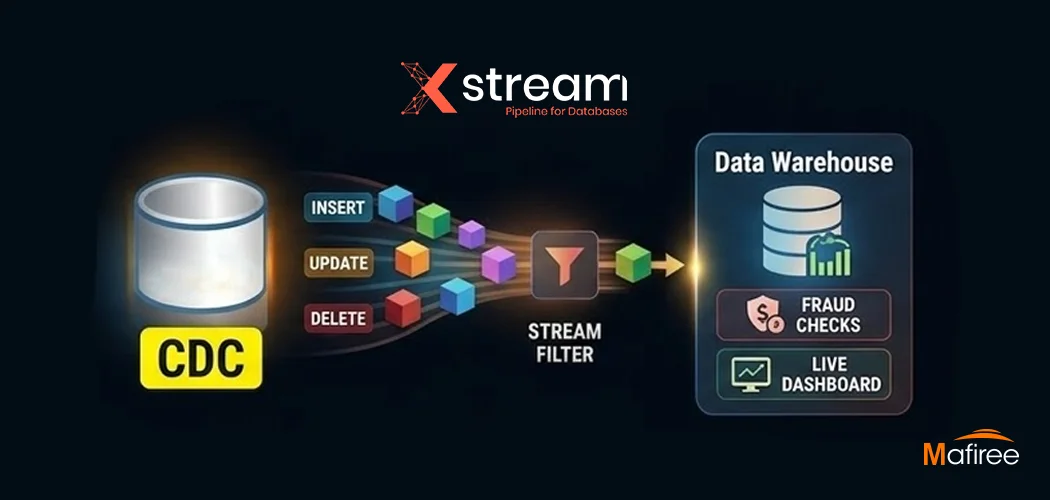
Every new payment transaction — INSERTs, UPDATEs, DELETEs — had to be captured from MySQL in real-time, transformed on-the-fly with complex business logic, and delivered to TiDB in under 100 milliseconds.

The Historical Data Requirement

100 billion+ existing records from 40 fragmented MySQL tables needed to be read, enriched, transformed through multi-layer business logic, and loaded into a single consolidated TiDB table — with guaranteed zero data loss.

The operational challenges driving this transformation were severe:

  • ● Query Performance Collapse: Joining 15–20 MySQL tables for a single analytics query took 5–10 seconds during peak hours — unacceptable for a real-time payment environment
  • ● Massively Complex Transformation Logic: Business rules spanned fee calculations, currency conversions, tiered risk scoring, AML compliance flags, merchant-level settlement adjustments, and dynamic fraud thresholds — all needing to apply consistently to both historical and live data
  • ● Zero Tolerance for Data Loss: In a regulated payments environment, even a single missing record means compliance failure, reconciliation errors, and potential financial liability. Data accuracy had to be 100%
  • ● No Production Disruption: The migration of 100B+ historical records had to run in parallel with live transaction processing — MySQL could not be taken offline, and live streaming could not be delayed
  • ● No Custom Code Acceptable: Engineering resources were already stretched. The team needed a platform that business analysts could configure and update without writing or deploying code

The core requirement in one sentence: Stream live MySQL transactions to TiDB in real-time while simultaneously transforming 100 billion historical records — all with zero data loss and zero custom code. No traditional ETL tool on the market could do both simultaneously at this scale.

The Xstreami Solution: no code Data Transformation


Enter Xstreami—a cutting-edge real-time data streaming platformthat transforms how organizations handle data consolidation and mysql to tidb migration. For this payment service, Xstreami became the bridge between their legacy MySQL infrastructure and a modern, high-performance TiDB database.

 
High-Level Architecture
Dual-mode: Historical IDS + Live CDC streaming in one unified pipeline
 
Source
MySQL Database
40 Payment Tables
100B+ Historical Records
Live CDC Binlog
CDC +
IDS
 
Platform
Xstreami Engine
no code Transform
IDS + Live CDC Stream
Zero Data Loss
<100ms
Latency
 
Destination
TiDB Analytics
1 Unified Table
Sub-100ms Queries
Infinite Scale

What Makes Xstreami Different?

Unlike traditional ETL tools that require extensive programming and maintenance, Xstreami offers a revolutionary approach to data consolidation:

 
no code Transformation

Configure complex data transformations through an intuitive UI. No Python scripts, no Java code, no SQL procedures—just point, click, and transform.

 
real-time Processing

Stream changes from MySQL to TiDB in milliseconds. Every payment transaction is instantly available for analytics and reporting.

 
Initial Data Sync (IDS)

Migrate historical data at scale before switching to real-time streaming. Handle 100 billion records efficiently with zero data loss.

 
Single-Click Updates

Modify transformation logic instantly through the UI. No code deployments, no downtime, no risk—just immediate updates.

 
Universal Connectors

Connect to 50+ data sources and destinations. MySQL, PostgreSQL, MongoDB, TiDB, Snowflake, Kafka, and more—all pre-built and ready to use.

 
Enterprise-Grade Reliability

Built-in monitoring, automatic retries, data validation, and exactly-once delivery guarantees ensure your payment data is always accurate.

The Migration Journey: From 40 Tables to 1


The transformation happened in two critical phases: Initial Data Sync (IDS) for historical data migration, followed by continuous real-time streaming for ongoing transactions.

 
1
Phase 1: Planning
Architecture Design & Configuration

The team used Xstreami's visual interface to map the 40 MySQL source tables to a unified TiDB schema. All transformation logic—data enrichment, field mapping, calculations, and business rules—was configured through the UI without writing a single line of code. The entire configuration took just 2 days.

2
Phase 2: Initial Data Sync
Transforming 100 Billion Historical Records With Zero Data Loss

Xstreami's IDS engine kicked off the massive data migration. Across the migration window, 100 billion payment records were read from MySQL, transformed according to the configured logic, and loaded into TiDB. The parallel processing capabilities ensured minimal impact on production MySQL databases. Progress was monitored in real-time through Xstreami's dashboard.

3
Phase 3: real-time Streaming
Switching to Live Data Replication

Once IDS completed, Xstreami automatically transitioned to real-time streaming mode. Every INSERT, UPDATE, and DELETE operation in the MySQL payment tables was captured instantly and streamed to TiDB with the same transformation logic. Latency from source to destination: less than 100 milliseconds.

4
Phase 4: Validation
Data Quality Verification

The team conducted comprehensive validation checks comparing MySQL source data with the TiDB destination. Xstreami's built-in data quality tools verified record counts, field values, and business logic accuracy, achieving a 100% success rate—fully meeting the standards expected for a payment system.

5
Phase 5: Production
Go-Live & Continuous Operation

The payment service cutover to querying TiDB for analytics and reporting while maintaining MySQL for transactional operations. Xstreami continues to run 24/7, streaming every payment transaction in real-time. The no code platform allows the team to modify transformation logic instantly whenever business requirements change.

Deep Dive: The Payment Data Transformation


Let's examine exactly how Xstreami transformed the complex 40-table payment structure into a single, queryable table optimized for high-performance data pipelines.

Source: 40 MySQL Payment Tables

The original MySQL schema was highly normalized across multiple categories:

MySQL Source Schema (Simplified)
-- Core Transaction Tables
    transactions (txn_id, merchant_id, customer_id, amount, currency, status, created_at)
    transaction_details (detail_id, txn_id, payment_method_id, gateway_id, reference_id)
    transaction_items (item_id, txn_id, product_id, quantity, unit_price)
    -- Party Tables
    merchants (merchant_id, name, category_id, country_id, status, kyc_status)
    customers (customer_id, name, email, phone, risk_score, tier)
    merchant_accounts (account_id, merchant_id, bank_id, account_number)
    -- Payment Method Tables
    payment_methods (method_id, customer_id, type, provider, card_last4, expiry)
    payment_gateways (gateway_id, name, provider, region, fees)
    payment_processors (processor_id, gateway_id, processor_code, status)
    -- Settlement & Reconciliation
    settlements (settlement_id, txn_id, amount, status, settled_at)
    reconciliation (recon_id, settlement_id, status, discrepancy_amount)
    payouts (payout_id, merchant_id, amount, status, payout_date)
    -- Risk & Compliance
    fraud_checks (check_id, txn_id, risk_score, rules_triggered, status)
    compliance_logs (log_id, txn_id, check_type, result, timestamp)
    aml_records (aml_id, customer_id, risk_level, last_check_date)
    -- Reference Data
    countries (country_id, name, code, currency, tax_rate)
    currencies (currency_id, code, symbol, exchange_rate)
    merchant_categories (category_id, name, mcc_code, risk_level)
    products (product_id, name, category, price)
    -- Plus 20+ more tables for fees, disputes, refunds, chargebacks, etc.
  

The Challenge: A typical payment analytics query required joining 15-20 of these tables, resulting in:

  • Query execution times of 5-10 seconds during peak hours
  • Heavy load on the production MySQL database
  • Complex SQL that only senior engineers could write
  • Delayed insights due to query performance bottlenecks

Transformation: Xstreami's no code Logic

1
Source Capture

Monitor all 40 MySQL tables for changes using CDC (Change Data Capture). Capture every INSERT, UPDATE, and DELETE operation in real-time.

2
Event Enrichment

For each transaction event, perform lookups to enrich data from related tables: merchant details, customer info, payment method, gateway, country, currency, etc.

3
Field Mapping

Map source fields to destination schema. Rename fields for clarity, combine fields where needed, and format data according to business requirements.

4
Calculations

Compute derived fields: fees, net amounts, currency conversions, tax calculations, merchant share, risk scores, and business metrics.

5
Data Validation

Apply validation rules to ensure data quality: check for null values, validate formats, verify referential integrity, and flag anomalies.

6
Load to TiDB

Write the enriched, transformed record to the consolidated TiDB table using optimized batch inserts for maximum throughput.

The Power of no code: All of this complex transformation logic was configured through Xstreami's visual interface in less than 2 days. No Java, no Python, no SQL scripts. Just point-and-click configuration with instant deployment.

Destination: Single TiDB Payment Analytics Table

The resulting schema in TiDB is a fully denormalized, analytics-optimized table:

TiDB Destination Table
CREATE TABLE payment_analytics (
  -- Transaction Core
  txn_id                  VARCHAR(50) PRIMARY KEY,
  txn_timestamp           TIMESTAMP,
  txn_amount              DECIMAL(15,2),
  txn_currency            VARCHAR(3),
  txn_status              VARCHAR(20),
                                                                  
  -- Merchant Information
  merchant_id             VARCHAR(50),
  merchant_name           VARCHAR(200),
  merchant_category       VARCHAR(100),
  merchant_country        VARCHAR(50),
  merchant_risk_level     VARCHAR(20),
                                                                  
  -- Customer Information
  customer_id             VARCHAR(50),
  customer_name           VARCHAR(200),
  customer_email          VARCHAR(200),
  customer_tier           VARCHAR(20),
  customer_risk_score     INT,
                                                                  
  -- Payment Details
  payment_method_type     VARCHAR(50),
  payment_provider        VARCHAR(100),
  payment_gateway         VARCHAR(100),
  card_last4              VARCHAR(4),
                                                                  
  -- Financial Calculations
  gross_amount            DECIMAL(15,2),
  gateway_fee             DECIMAL(10,2),
  platform_fee            DECIMAL(10,2),
  tax_amount              DECIMAL(10,2),
  net_amount              DECIMAL(15,2),
  merchant_share          DECIMAL(15,2),
                                                                  
  -- Settlement Info
  settlement_status       VARCHAR(20),
  settlement_date         DATE,
  payout_status           VARCHAR(20),
                                                                  
  -- Risk & Compliance
  fraud_check_status      VARCHAR(20),
  fraud_risk_score        INT,
  aml_check_status        VARCHAR(20),
  compliance_flags        JSON,
                                                                  
  -- Location Data
  country_code            VARCHAR(3),
  country_name            VARCHAR(100),
  region                  VARCHAR(100),
                                                                  
  -- Metadata
  created_at              TIMESTAMP,
  updated_at              TIMESTAMP,
  data_version            INT,
                                                                  
  -- Indexes
  INDEX idx_merchant (merchant_id),
  INDEX idx_customer (customer_id),
  INDEX idx_timestamp (txn_timestamp),
  INDEX idx_status (txn_status)
  );
  

The Result: Simplified Queries

What once required complex 15-20 table joins now becomes:

Optimized TiDB Query
-- Get all high-value transactions for a merchant in the last 30 days
    SELECT 
      txn_id,
      txn_timestamp,
      customer_name,
      txn_amount,
      payment_method_type,
      fraud_risk_score,
      settlement_status
      FROM payment_analytics
      WHERE merchant_id = 'MERCH_12345'
      AND txn_timestamp >= NOW() - INTERVAL 30 DAY
      AND txn_amount > 10000
      ORDER BY txn_timestamp DESC;
      -- Query time: 0.2 seconds ⚡
      -- Previously: 8.5 seconds with 15+ table joins
  

Performance & Business Impact


The mysql to tidb migration delivered transformative results across all dimensions of the payment service's data infrastructure.

MetricBefore XstreamiAfter XstreamiImprovement
Query Response Time5-10 seconds0.2-0.5 seconds95% faster
Data Freshness15-30 minute delay<100 millisecondsreal-time
Tables to Query15-20 joinsSingle tableZero joins
Developer Time per Report2-3 days2-3 hours90% reduction
Infrastructure LoadHigh MySQL CPUMinimal impactIsolated workloads
Schema Change Time2-3 weeks1-2 hoursSingle-click updates
Code MaintenanceComplex ETL scriptsZero code100% reduction
Data Quality IssuesFrequent discrepancies99.999% accuracyAutomated validation

Real Business Benefits

 
Revenue Impact

Faster payment processing and real-time fraud detection prevented an estimated $2M in potential fraud losses in the first quarter after deployment.

 
Time-to-Market

New payment features and reports now launch 10x faster. What took weeks of development now takes hours of configuration.

 
Business Intelligence

real-time dashboards enabled instant decision-making. Executives now see payment trends as they happen, not hours later.

 
Team Productivity

Data analysts can now create reports independently without waiting for engineering resources. SQL complexity reduced by 80%.

 
Risk Management

real-time fraud detection and compliance monitoring became possible, dramatically reducing exposure to fraudulent transactions.

 
Scalability

System now handles 3x transaction volume with no performance degradation. Ready to scale to 10x with TiDB's distributed architecture.

The Bottom Line: The payment service achieved a 10x improvement in data infrastructure efficiency while eliminating the need for complex custom code. Xstreami's no code platform transformed their ability to deliver real-time payment insights at massive scale.

How Xstreami Achieved Zero Data Loss at 100 Billion Record Scale

Transforming 100 billion historical payment records while simultaneously streaming live transactions is not a problem that scales with brute force. It requires an architecture purpose-built for exactness — where every record is accounted for, every transformation is verifiable, and no interruption can cause data loss. Xstreami's Initial Data Sync (IDS) engine was designed for exactly this.

Why IDS Guarantees Zero Data Loss

Xstreami's IDS engine eliminates data loss through layered, redundant guarantees — not just one safeguard, but many:

 
IDS Execution: 4 Stages, Zero Data Loss
Every stage has built-in checkpoints, automatic retry, and validation — data loss is architecturally impossible
01
Parallel Extract
Multi-threaded reads from all 40 MySQL tables simultaneously. Peak throughput: 15,000+ records/sec
02
Complex Transform
Same no code business logic applied: fee calc, risk scoring, currency conversion, AML flags, enrichment
03
Checkpoint & Retry
Continuous progress tracking. Any interruption resumes from exact last checkpoint — no re-processing, no data loss
04
Validate & Certify
Checksum verification, field-level validation, and row-count reconciliation before marking each batch complete
Zero Data Loss Guarantee: 100 billion records processed → 100 billion records validated in TiDB. 0% discrepancy. Zero tolerance, achieved.

IDS Performance Highlights:

  • → Peak throughput sustained at 15,000+ records per second without impacting live MySQL workloads
  • → Automatic recovery from network interruptions — resumes at exact checkpoint, zero duplicate records
  • → Parallel processing across all 40 source tables with intelligent rate limiting
  • → End-to-end data validation success rate: 100% — every record accounted for

Seamless Transition to real-time

Once IDS completed, Xstreami automatically switched to real-time streaming mode. This transition was completely transparent—no manual intervention required, no service disruption, no downtime.

From that moment forward, every payment transaction in MySQL was:

  1. Captured via Change Data Capture (CDC) within milliseconds
  2. Transformed according to the same no code logic configured in the UI
  3. Streamed to TiDB with sub-100ms latency
  4. Available immediately for real-time analytics and reporting

The no code Advantage


Perhaps the most revolutionary aspect of this project wasn't the scale or speed—it was achieving all of this without writing a single line of code.

Traditional ETL vs. Xstreami

AspectTraditional ETLXstreami Platform
DevelopmentMonths of coding in Python/JavaDays of visual configuration
Skills RequiredSenior data engineersAnalysts with business knowledge
Logic ChangesCode deployment (hours/days)Single-click update (seconds)
TestingManual test scripts, staging envBuilt-in validation, preview mode
MonitoringCustom logging, external toolsreal-time dashboard included
Error HandlingCustom retry logic, alertingAutomatic retries, dead letter queue
MaintenanceOngoing code updates, debuggingMinimal—platform handles it
DocumentationMust be written separatelySelf-documenting configuration

Single-Click Logic Updates

One of the most powerful features of Xstreami is the ability to modify transformation logic instantly through the UI. Here's a real example from the payment project:

Scenario: The business team decided to change how merchant fees are calculated—from a flat percentage to a tiered structure based on transaction volume.

Traditional Approach:

  • Data engineer updates Python ETL script
  • Code review and testing (2-3 days)
  • Deployment to staging environment
  • UAT and validation (1-2 days)
  • Production deployment window (off-hours)
  • Total time: 1 week minimum

Xstreami Approach:

  • Business analyst updates fee calculation rule in UI
  • Preview transformation with sample data
  • Click "Deploy" button
  • Logic goes live instantly, applies to all new transactions
  • Total time: 15 minutes

Why no code Matters for Payment Systems

In the fast-paced world of fintech data streaming, agility is everything:

  •  Regulatory Changes: When compliance requirements change, payment systems must adapt immediately. Xstreami enables same-day compliance updates.
  •  Product Launches: New payment methods, currencies, or merchant types can be added to the data model without code deployments.
  •  Business Experimentation: A/B testing different risk models or pricing structures requires rapid data pipeline changes—impossible with traditional ETL.
  •  Reduced Risk: No code means no code bugs, no deployment failures, no production incidents from typos in SQL scripts.
  •  Team Empowerment: Business analysts who understand payment logic can make changes directly without waiting for engineering resources.

How Does Xstreami Compare to Other Tools?

When evaluating tools for migrating MySQL to a distributed SQL platform like TiDB, the critical differentiators are whether the tool handles historical data migration and real-time streaming simultaneously — and whether it requires custom code to do it.

Tool NameHistorical Migration Supportreal-time CDCno codeData Loss GuaranteeBest For
Xstreami✅ Full IDS engine✅ Sub-100ms CDC✅ Full UI✅ Exactly-once deliveryUnified migration + streaming, no code teams
Debezium❌ CDC only✅ Strong CDC❌ Requires config/code⚠️ Depends on setupDevelopers needing open-source CDC
AWS DMS✅ Partial✅ Yes⚠️ Limited⚠️ Best-effortAWS-native migrations
Airbyte✅ Batch sync❌ Near real-time only⚠️ Partial UI⚠️ No built-in guaranteeELT to cloud warehouses
Talend✅ Yes⚠️ Add-on❌ Code-heavy⚠️ ConfigurableEnterprise ETL with large teams
Custom Python✅ Possible✅ Possible❌ Full code❌ ManualTeams with engineering bandwidth

Unlike tools that handle either historical migration or real-time streaming — but not both— Xstreami delivers a unified, no code pipeline that covers the entire migration lifecycle without a single line of custom code.

Beyond Payment Systems: Universal Connectors


While this case study focuses on MySQL to TiDB migration, Xstreami's platform offers universal connectivity across 50+ data sources and destinations.

Supported Connectors

 
Relational Databases

MySQL, PostgreSQL, SQL Server, Oracle, MariaDB, TiDB, CockroachDB

 
NoSQL & Cloud

MongoDB, Cassandra, DynamoDB, Redis, Elasticsearch

 
Data Warehouses

Snowflake, BigQuery, Redshift, Azure Synapse, Databricks

 
Messaging Systems

Kafka, RabbitMQ, AWS Kinesis, Azure Event Hubs, Pulsar

 
File Systems

S3, GCS, Azure Blob, HDFS, FTP, SFTP

 
APIs & SaaS

REST APIs, Salesforce, HubSpot, Zendesk, custom integrations

Multi-Source Scenarios

Xstreami excels at consolidating data from multiple sources into unified destinations:

  •  Customer 360: Combine data from CRM (Salesforce), support tickets (Zendesk), orders (MySQL), and product usage (MongoDB) into a single customer view
  •  real-time Analytics: Stream from operational databases (PostgreSQL), clickstream data (Kafka), and mobile events (Kinesis) into BigQuery
  •  Hybrid Cloud: Synchronize on-premise Oracle databases with cloud-native services like Snowflake and Redshift
  •  Event-Driven Architecture: Capture changes from any database and publish to Kafka topics for downstream microservices

The power of universal connectors: Whether you're migrating MySQL to TiDB (like this case study), syncing PostgreSQL to Snowflake, or streaming MongoDB to Elasticsearch—Xstreami provides the same no code experience with enterprise-grade reliability.

Key Takeaways for Payment & Fintech Companies


This real-world payment system transformation demonstrates the transformative potential of modern real-time data streaming platforms. Here are the critical lessons:

 
real-time is Non-Negotiable

In payment systems, delayed data means delayed fraud detection, delayed insights, and delayed decisions. real-time streaming with sub-100ms latency should be the baseline, not the aspiration.

 
Consolidation Beats Complexity

40 normalized tables might be ideal for OLTP, but they're terrible for analytics. A well-designed consolidated table optimized for queries delivers 10-100x better performance than complex joins.

 
no code Enables Agility

When business logic changes (and in payments, it changes constantly), you need the ability to update transformations in minutes, not weeks. no code platforms eliminate the development bottleneck.

 
IDS + Streaming = Complete Solution

You need both historical migration (IDS) and ongoing replication (streaming). Platforms that only do one force you to cobble together multiple tools with fragile integration points.

 
Data Quality is Built-In

Payment data must be 100% accurate. Choose platforms with automatic validation, exactly-once delivery guarantees, and comprehensive monitoring—not tools that require you to build these capabilities yourself.

 
Scalability from Day One

Payment volumes can spike 10x during peak seasons. Your data pipeline must scale horizontally without architectural changes. TiDB + Xstreami delivered this by design.

The Future of Payment Data Infrastructure: This project proves that modern real-time data platforms can handle the most demanding fintech workloads—100 billion records, 40-table consolidations, sub-100ms latency—all without custom code. This is the new standard for payment data pipelines.

Ready to Transform Your Payment Data Pipeline?

Discover how Xstreami can consolidate your complex database architecture into a real-time, high-performance data streaming platform—with zero programming required.

Get Started with Xstreami 

Conclusion: The real-time Data Revolution


This payment service's journey from 40 fragmented MySQL tables to a single, real-time TiDB analytics powerhouse represents more than just a technical migration—it's a fundamental shift in how modern financial services should approach data infrastructure.

The results speak for themselves:

  •  100 billion records migrated without disrupting live production operations using Xstreami's IDS engine
  •  95% query performance improvement by eliminating complex multi-table joins
  •  real-time payment insights with sub-100ms latency from MySQL to TiDB
  •  Zero lines of code written—all transformation logic configured through the UI
  •  Single-click logic updates enabling rapid business adaptation
  •  10x faster time-to-market for new payment features and reports

What makes this transformation truly remarkable is not just the scale or speed, but the accessibility. By providing a no code data transformation platform, Xstreami democratized the ability to build and maintain enterprise-grade data pipelines. Business analysts who understand payment logic can now make changes directly, without waiting for engineering resources.

Looking for a Consulting Firm to Migrate from MySQL to a Distributed SQL Platform?

Mafiree's database consulting team specializes in end-to-end MySQL to TiDB migrations from traditional RDBMS systems to modern distributed SQL platforms. We have executed MySQL to TiDB migrations for payment providers, fintech companies, and high-volume e-commerce platforms across India and APAC — combining certified DBA expertise with the Xstreami platform for a fully managed, zero-downtime migration delivery.

Talk to a Migration Specialist → 

What makes this transformation truly remarkable is not just the scale or speed, but the accessibility. By providing a no code data transformation platform, Xstreami democratized the ability to build and maintain enterprise-grade data pipelines. Business analysts who understand payment logic can now make changes directly, without waiting for engineering resources.

What This Means for the Payments Industry

This case study has implications far beyond one payment service:

  •  For fintech companies: real-time payment data streaming is no longer a luxury requiring massive engineering investment—it's an accessible capability that can be deployed in weeks
  •  For data teams: The no code approach frees engineers from writing and maintaining repetitive ETL scripts, allowing them to focus on higher-value work
  •  For business leaders: Faster data pipeline development means faster product launches, quicker regulatory compliance, and more agile responses to market changes
  •  For the industry: As payment volumes continue to explode and real-time expectations become universal, platforms like Xstreami set the new standard for what's possible

The bottom line: Traditional batch ETL is dead. Custom-coded streaming pipelines are overkill. The future belongs to no code, real-time data platforms that combine the power of enterprise-grade streaming with the accessibility of visual configuration. Xstreami is leading that future.

Is Your Payment System Ready for real-time Streaming? 5 Questions to Ask

Before committing to a data infrastructure overhaul, the right questions matter more than the right tools. Here's how to self-assess whether your payment system has the same structural bottlenecks this case study solved:

  1. How complex are your analytics queries?

    If your queries involve multiple joins across several tables, your system is likely optimized for transactions, not analytics. Complex joins increase query time and reduce performance. 

    In many cases, teams rely on 10–20 table joins, leading to slow reports and heavy database load. A denormalized, analytics-ready structure can simplify queries and dramatically improve performance.
  2. How fresh is your data?

    If your data has even a 15–30 minute delay, your business decisions are always behind reality. 

    real-time systems powered by CDC (Change Data Capture) enable sub-100ms latency, ensuring your dashboards, alerts, and decision engines operate on live data — not outdated snapshots.
  3. How quickly can you adapt to changes?

    If updating a business rule requires development effort, testing, and deployment cycles, your system lacks flexibility. 

    Modern no code or low-code platforms allow teams to implement changes in minutes instead of days — reducing risk and improving responsiveness to business needs.
  4. Where is your engineering time going?

    If your team spends significant time maintaining ETL pipelines, fixing failures, or handling schema changes, that’s a hidden cost. 

    Instead of focusing on product innovation, engineers get stuck managing infrastructure. Reducing code-heavy pipelines can free up valuable engineering bandwidth.
  5. Can your system scale with your growth?

    If scaling your system requires re-architecture, your current setup is already a limitation. 

    A scalable architecture should handle increased data volume and traffic seamlessly — without requiring constant redesign or performance tuning.

If you recognize even a few of these challenges in your current system, it’s a strong signal that your data architecture needs modernization.

Plan Your real-time Migration ? 

The payment service in this case study took the leap—and achieved results that exceeded their most optimistic projections. Your organization can too.

FAQ

Real-time data streaming is the continuous capture and processing of data changes the instant they occur — rather than batch processing them hours later. Xstreami implements this using Change Data Capture (CDC), which monitors your MySQL binlog and detects every INSERT, UPDATE, and DELETE within milliseconds. Those changes are then transformed through your configured no-code business logic and delivered to the destination (e.g., TiDB) with sub-100ms end-to-end latency — keeping your analytics layer perpetually current.
Xstreami guarantees zero data loss through four layered mechanisms:(1) Durable checkpointing — progress is saved at every committed batch so any interruption resumes from the exact last record, never from scratch; (2) Exactly-once delivery — built-in deduplication prevents duplicate records even after a retry; (3) Checksum validation — source and destination record counts and checksums are compared after every batch before proceeding; (4) Automatic retry with dead-letter queuing — any failed record is isolated, retried, and flagged for review rather than silently dropped. In this case study, 100 billion records were transformed with 100% accuracy.
Yes — this is one of Xstreami's core differentiators. The platform operates in two coordinated modes: Initial Data Sync (IDS) for bulk historical data migration, and CDC Streaming for ongoing real-time changes. IDS runs in parallel with live operations — it reads from MySQL without locking tables or degrading production performance. Once IDS completes, Xstreami automatically transitions to streaming mode with zero manual intervention, zero downtime, and zero gap in data coverage. The transition is seamless and atomic.
No-code data transformation means configuring complex data manipulation rules through a visual UI — no Python, no Java, no SQL scripts required. Xstreami supports: multi-table joins and enrichment (look up merchant details, customer risk scores, gateway fees from related tables); calculated fields (net amount = gross - gateway_fee - tax);conditional logic (if merchant_category = 'high_risk' then flag_for_review = true); data type conversions and formatting AML and compliance flag computationand tiered fee structures. Changes to transformation logic go live with a single click — no code deployment, no downtime.
Xstreami supports 50+ sources and destinations including MySQL, PostgreSQL, SQL Server, TiDB, MongoDB, Oracle Snowflake, Kafka , BigQuery, Amazon Redshift, Apache, and more. Any combination of source and destination can be connected with the same no-code transformation experience.
Traditional ETL tools and custom pipelines require months of development, senior engineering resources, complex deployment processes, and ongoing maintenance. They also separate historical migration and real-time streaming into different tools — creating integration complexity and data consistency risks. Xstreami unifies both in a single no-code platform: configure once in the UI, and the same logic applies to both your 100 billion historical records and every new live transaction. Logic changes deploy in seconds via a single click — not a sprint cycle. The result: 90% less development time, zero code maintenance burden, and guaranteed data consistency across both historical and real-time pipelines.Share

Author Bio

Divine Steve

Divine Steve is an Team Lead at Mafiree with 7 years of experience in software development, specializing in architecting high-performance, scalable systems. He works on AI/ML and LLM-driven solutions, combined with Go, PHP, Python, React, Next.js, Laravel, and Flutter, to build intelligent applications and real-time streaming platforms, with a strong focus on performance, reliability, and scalability. He enjoys solving complex engineering challenges and delivering production-grade systems at scale.

Leave a Comment

Related Blogs

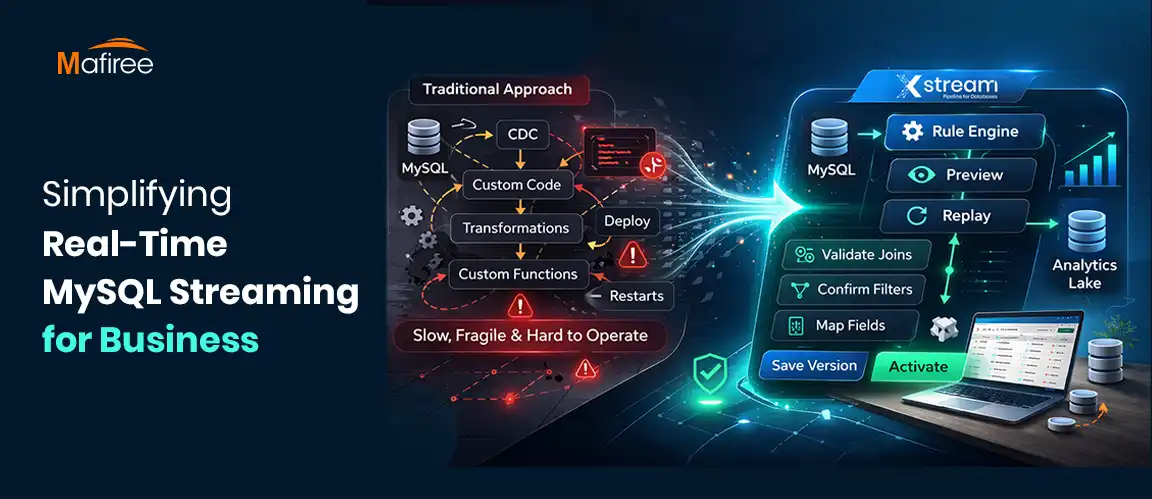
How Xstreami Makes Real-Time MySQL CDC Operationally Simple for Business Use-Cases

This blog explains how Xstreami helps teams operationalise real-time MySQL CDC or streaming by simplifying business rule management, preview, deployment and replay—without sacrificing technical depth or reliability.

  253 views
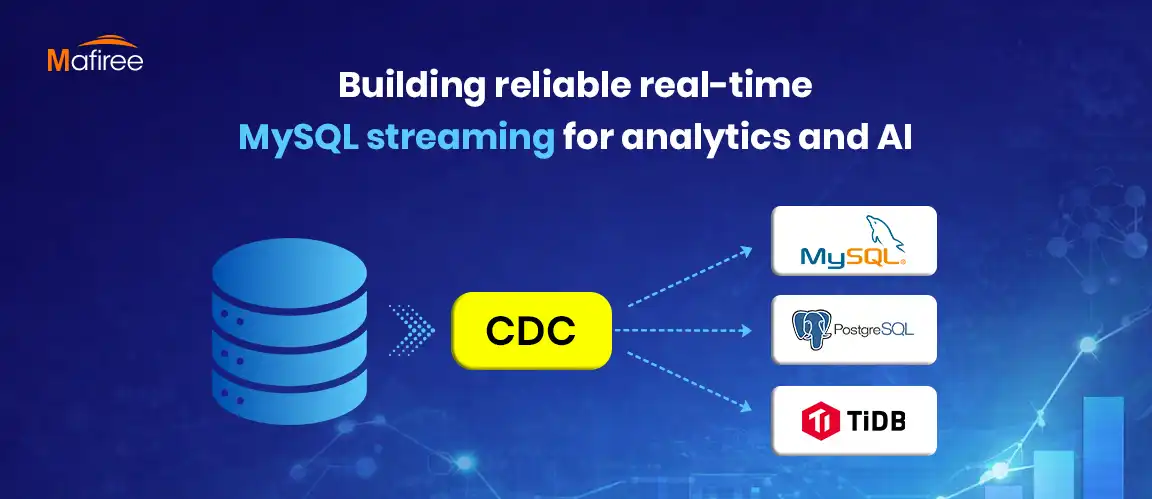
Building reliable real-time MySQL streaming for analytics and AI

This blog explains why MySQL real-time streaming has become essential for modern analytics and AI systems, and how CDC-based architectures enable reliable, observable and scalable data pipelines for fast, data-driven decisions.

  494 views
Real-Time ETL at Scale: How Xstreami Transformed Data Operations for a Major Transportation Company

In the fast-moving world of logistics and transportation, real-time data management is critical. A leading transportation company, handling millions of transactions per hour, faced growing complexity in managing, transforming, and analyzing operational data.

  65 views
Understanding Xstreami: The Future of Database Streaming

Xstreami: The Future of Real-Time Database Streaming

  886 views
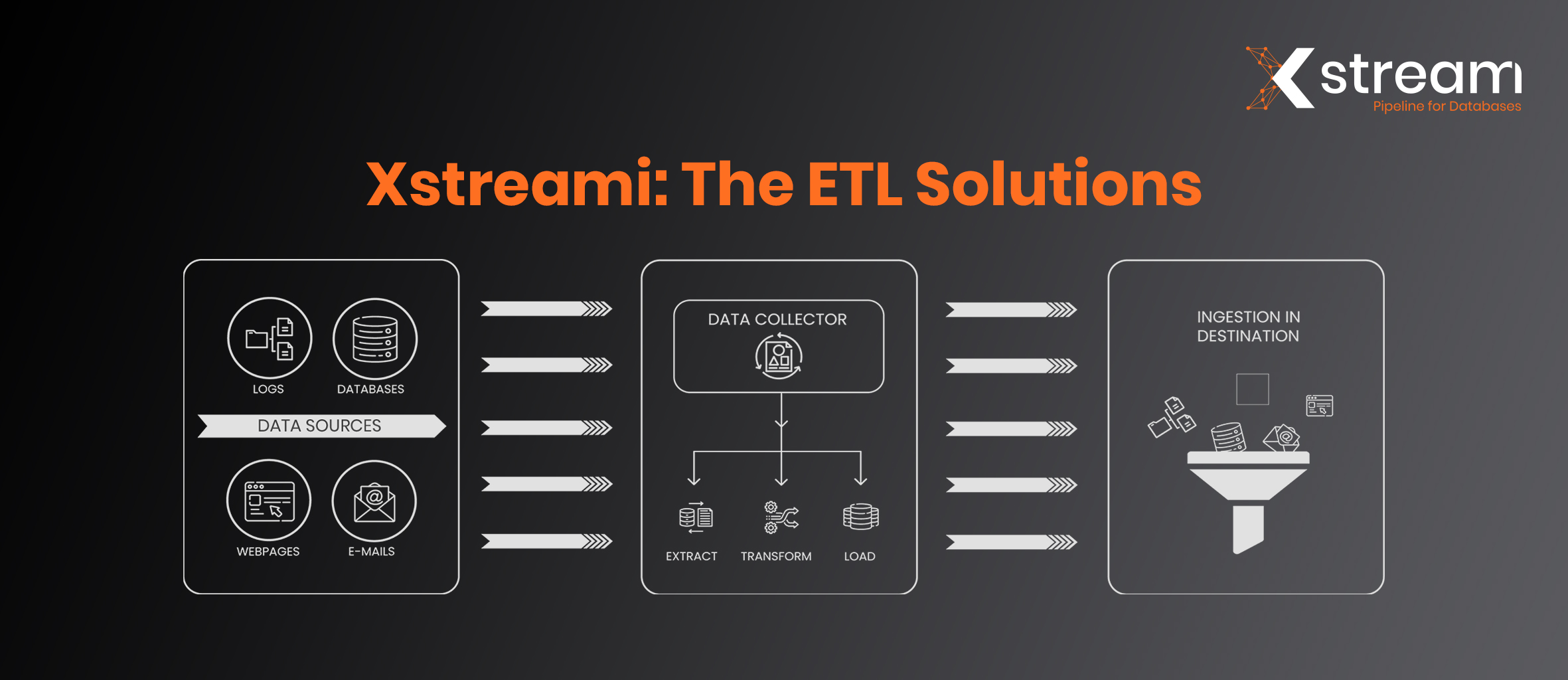
Xstreami: The ETL Solution

Xstreami is engineered to support databases like MySQL, TiDB, ClickHouse, PostgreSQL, and MongoDB. It can be configured for various ETL flows, including single-source to single-destination, single-source to multiple destinations, multiple sources to a single destination, and multiple sources to multiple destinations

  780 views

Subscribe for email updates

Get in touch with us

Highlights

More than 6000 Servers Monitored

Happy Clients

Certified DBAs

24 x 7 x 365 Support

PCI

Database Services

MySQL MongoDB PostgreSQL SQL Server Aerospike Clickhouse TiDB MariaDB Columnstore

Quick Links

Careers Blog Contact Privacy Policy Disclaimer Policy

Contacts

Linkedin Mafiree Facebook Mafiree Twitter Mafiree

Nagercoil Office

Miru IT Park, Vallankumaranvillai,

Nagercoil, Tamilnadu - 629 002.

Bangalore Office

Unit 303, Vanguard Rise,

5th Main, Konena Agrahara,

Old Airport Road, Bangalore - 560 017.

Call: +91 6383016411

Email: sales@mafiree.com

Copyright © - All Rights Reserved - Mafiree