
 Orbit
Orbit
 Xstreami

- About
- Services
- Blogs
- Careers
- Products
- Contact Schedule a Call

Author : Shenbaga Varna S
Mysql
Slow MySQL incident resolution is often a symptom of a weak support model—not just a technical problem. Learn how to identify gaps in escalation, monitoring, automation, DBA expertise, and post-incident reviews before they lead to recurring downtime.
Author : Jethish
Postgresql
Understand how PostgreSQL streaming replication works, deploy a primary server and replica node, implement failover for high availability, and optimize your replication setup with Mafiree's expert DBA services. Ensuring high availability and data protection in PostgreSQL environments is critical for modern applications. One of the most effective ways to achieve this is through PostgreSQL replication setup, particularly using streaming replication with failover capabilities. This guide walks you through configuring a robust PostgreSQL replication system, covering everything from basic setup to handling failover scenarios.
Author : Jethish
Postgresql
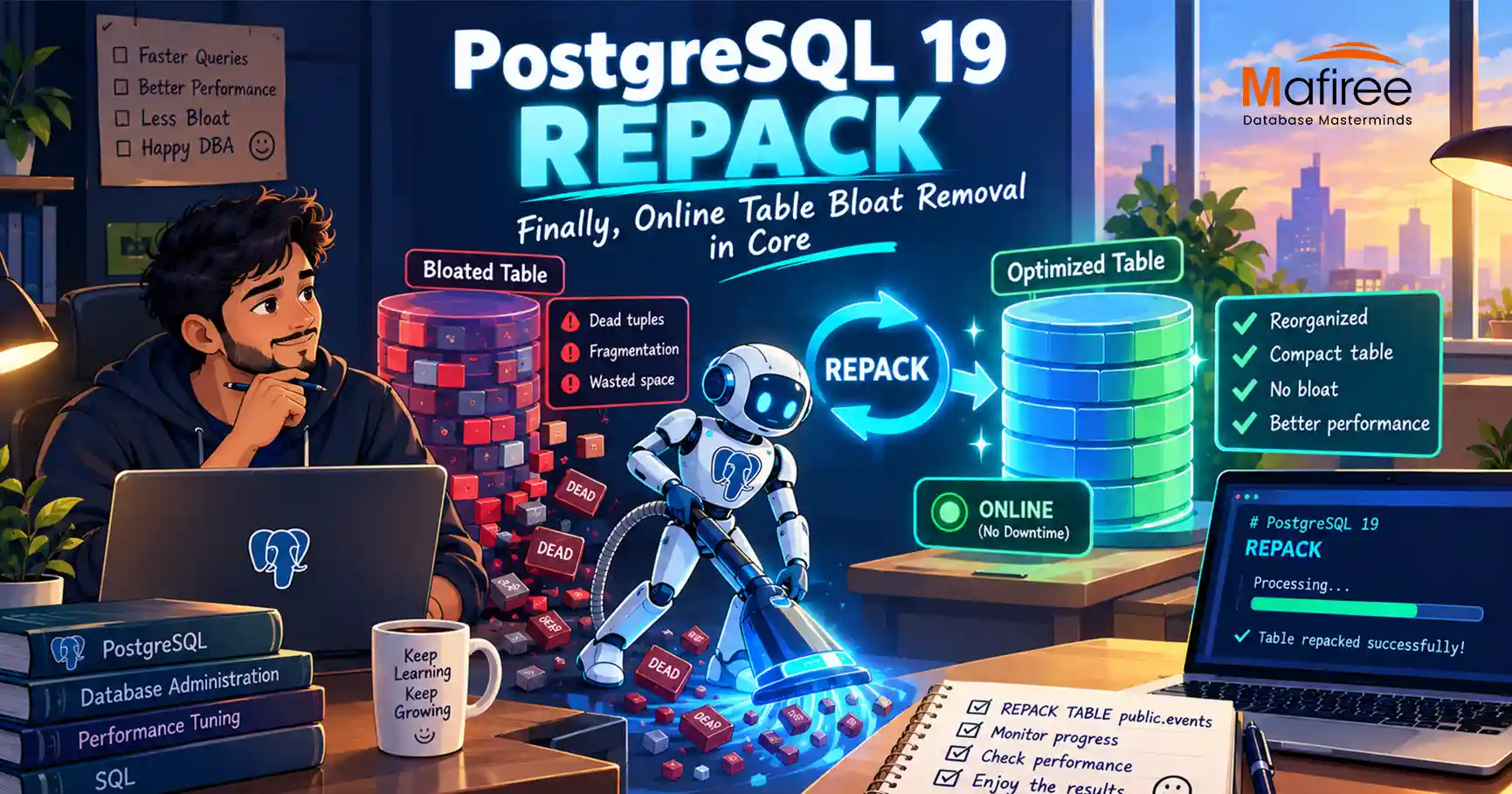
PostgreSQL 19 introduces REPACK, a native command that unifies the functionality of VACUUM FULL and CLUSTER while adding support for CONCURRENTLY to minimize downtime. Unlike traditional table rewrites that require long ACCESS EXCLUSIVE locks, REPACK can reclaim table bloat online by copying live data, rebuilding indexes, and applying concurrent changes before a final metadata swap. This article explores how REPACK works internally, compares it with VACUUM FULL and pg_repack, demonstrates a hands-on performance test, explains the new pg_stat_progress_repack monitoring view, and covers current limitations and best practices for production environments.

Author : Kishore S
Network
Intermittent VPN issues are some of the hardest network problems to diagnose. The tunnel shows UP, latency looks normal, packet loss is zero — yet monitoring graphs break and users report inconsistent behavior. Here's how Mafiree found the real cause.
Author : Shenbaga Varna S
Mysql
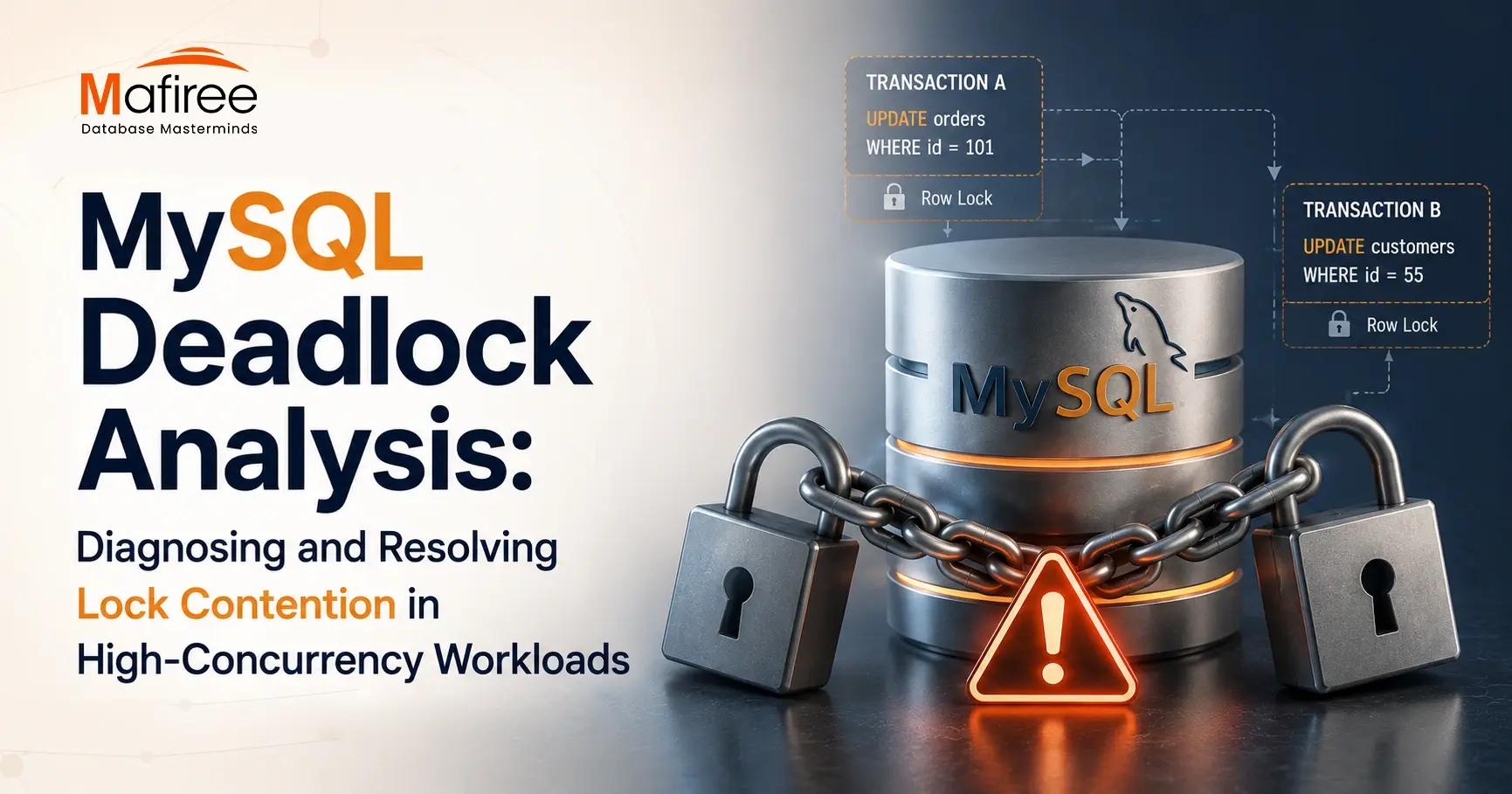
A MySQL deadlock occurs when two or more transactions hold locks that each other needs, creating a circular dependency that prevents them from proceeding. InnoDB detects the deadlock and rolls back one transaction; applications typically receive MySQL error 1213 and should safely retry the transaction. To diagnose a deadlock, start with SHOW ENGINE INNODB STATUS; for recurring incidents, use innodb_print_all_deadlocks and Performance Schema data_locks and data_lock_waits to investigate lock relationships. Common causes include inconsistent transaction ordering, long-running transactions, and inefficient indexing or locking patterns. The most effective fixes are to keep transactions short, access shared resources in a consistent order, optimize the indexes used by locking statements, and implement safe retry handling.

Author : Abishek S
Tidb
TiDB OOM Errors fall into two types — a full node crash triggered by the OS, or a single query cancelled by TiDB's own memory controls. This guide walks through how to confirm which occurred, identify the SQL patterns most responsible (HashJoin, HashAgg, large transactions, stale statistics), configure the four key memory parameters, enable disk spill as a safety net, and verify production readiness with a structured checklist.

Author : Shenbaga Varna S
Mysql
Choose an in-house DBA when you need continuous database ownership, deep knowledge of internal systems, and day-to-day operational control. Choose MySQL consulting when you need specialized expertise, performance tuning, migrations, complex troubleshooting, or additional database capacity without hiring a full-time specialist. A hybrid model can be the best fit when your team handles routine database operations internally but needs external expertise for complex projects, peak workloads, or specialized MySQL problems. The right choice depends on workload consistency, technical complexity, required coverage, internal expertise, scalability, and total cost—not simply the hourly or salary cost. Mafiree's managed database services provide ongoing MySQL support alongside specialized database expertise for organizations that need more flexibility than a purely in-house model.

Author : Godwin Udayakumar M
Devops
This blog explains the purpose and importance of software deployment environments in modern IT and DevOps workflows. It covers the complete software deployment environments pipeline from Development (DEV) to Quality Assurance (QA), User Acceptance Testing (UAT), and Production (PROD). Readers will learn how each environment helps improve software quality, reduce deployment risks, protect user data, and ensure stable releases. The article highlights the differences between Staging & UAT and how software deployment environments in DevOps, provides a side-by-side comparison table, and answers common questions about deployment strategies in IT companies.We also provide managed database consulting services to ensure your application infrastructure remains secure, scalable, and highly available throughout every deployment stage
Author : Shenbaga Varna S
Postgresql
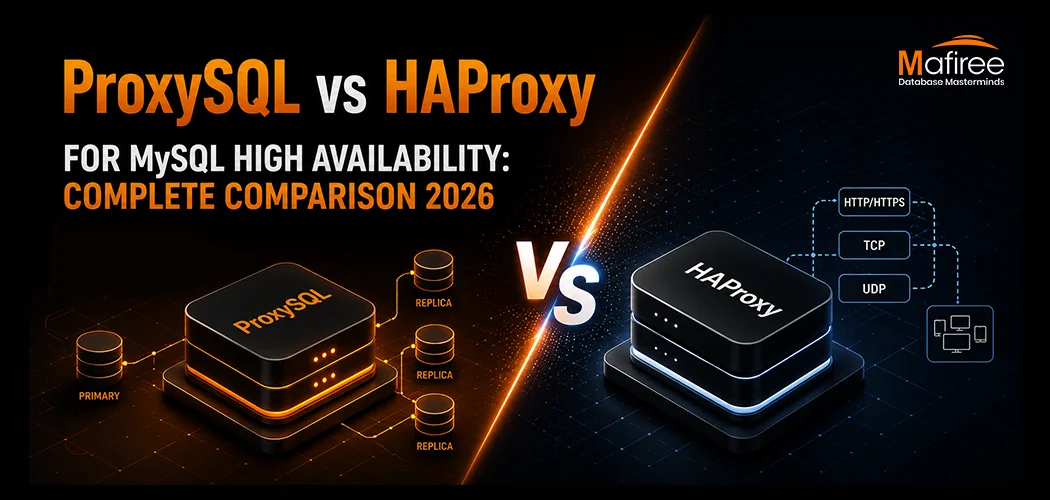
ProxySQL excels in MySQL-specific query routing, read/write splitting, and performance tuning. HAProxy offers robust load balancing across multiple protocols and is ideal for general-purpose proxying. Choose ProxySQL if your focus is on MySQL optimization; select HAProxy for broader application-level load balancing. Both tools support failover mechanisms but with different levels of database-specific integration.
More than 6000 Servers Monitored
Happy Clients
Certified DBAs
24 x 7 x 365 Support



Miru IT Park, Vallankumaranvillai,
Nagercoil, Tamilnadu - 629 002.
Unit 303, Vanguard Rise,
5th Main, Konena Agrahara,
Old Airport Road, Bangalore - 560 017.
Call: +91 6383016411
Email: sales@mafiree.com