
Not every MongoDB project needs a consultant—but complex workloads often do. This guide covers five MongoDB use cases where expert support can make the difference: schema design, large-scale migration, performance optimization, high availability and disaster recovery, and security and compliance.
Shenbaga Varna S October 01, 2026
MongoDB does not automatically require consulting support. Expert MongoDB consulting becomes valuable when database decisions involve significant scale, production performance, migration risk, availability requirements, or security and compliance constraints.
Five situations are most likely to benefit from specialist support: complex schema design, large-scale migration, performance optimization, high availability and disaster recovery, and production security and compliance.
| MongoDB situation | Signs you need expert help | Typical consulting work |
|---|---|---|
| Schema design | Complex relationships, growing documents, inconsistent access patterns | Data modeling, embedding vs. referencing, schema review |
| Migration | Large datasets, downtime constraints, legacy dependencies | Migration architecture, testing, cutover planning |
| Performance | Slow queries, resource pressure, indexing problems | Profiling, query tuning, index optimization |
| HA / DR | Strict uptime, RPO, or RTO requirements | Replica-set architecture, failover, backup and restore planning |
| Security / compliance | Sensitive data, regulatory requirements, production exposure | Access controls, encryption, auditing, compliance assessment |
MongoDB's document-based model offers great flexibility, but it also introduces unique challenges. Without proper expertise, teams can quickly fall into pitfalls like inefficient schema design, poor query performance, or inadequate backup strategies.
A skilled database expert from Mafiree understands how to leverage MongoDB's strengths while mitigating its risks. Our MongoDB consulting services help teams address architecture, performance, migration, and production challenges.
Routine schema design can usually be handled internally. Expert input becomes valuable once the data model has to support multiple teams, evolving access patterns, or large production datasets.
Symptoms: query performance that degrades as collections grow, disagreement across teams about how data should be structured, and uncertainty about when to embed versus reference documents.
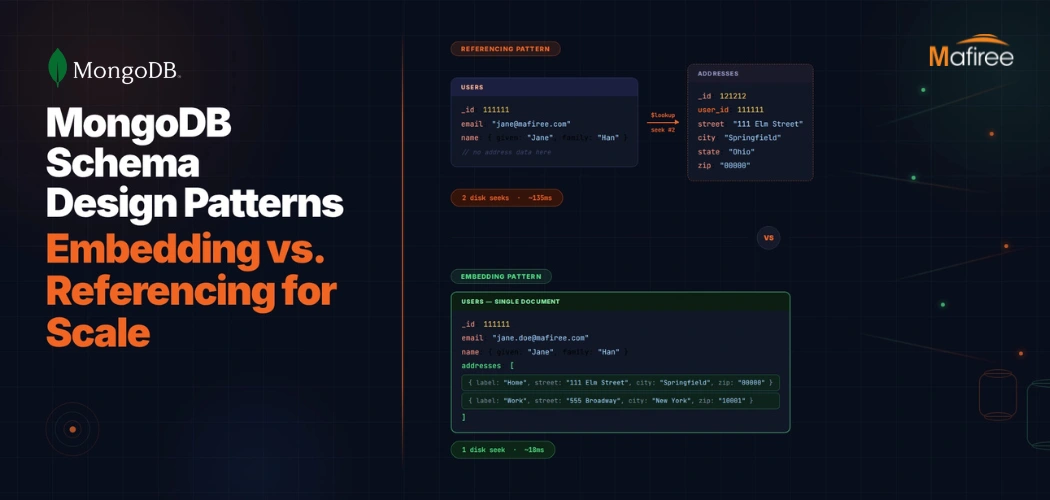
Why it gets complex: schema design should start with application access patterns rather than attempting to reproduce a relational schema inside a document database. Embedded documents, arrays, and references must be carefully planned to avoid performance degradation or data inconsistency. For a deeper look at these decisions, see our guide to MongoDB schema design: embedding vs. referencing.
For example, when modeling e-commerce product catalogs with nested reviews or user preferences, a well-thought-out schema can significantly impact query speed and storage efficiency.
Consulting becomes valuable when:
What consulting looks like: a structured review of access patterns, data relationships, and growth projections, resulting in a schema design that holds up as the application scales.
Outcome: a data model the team can build on with confidence, instead of one that needs to be reworked after it's already in production.
Straightforward migrations with small datasets and flexible downtime windows are usually manageable in-house. Migrations involving large datasets, tight downtime constraints, or legacy dependencies are where risk increases.
Symptoms: uncertainty about how long a migration will take, no clear rollback plan, or concern about data integrity once systems change.
Why it gets complex: migrating large volumes of data from legacy systems to MongoDB requires careful planning, testing, and execution. Downtime, data integrity, and performance during the transition can derail even well-intentioned migrations.
Consulting becomes valuable when:
What consulting looks like: expert consultants help define migration strategies tailored to your dataset size, structure, and business requirements — including testing and cutover planning. Organizations with complex migration requirements can benefit from MongoDB consulting services to plan the transition and minimize operational risk.
Outcome: a migration that moves data without unplanned downtime or data loss.
Occasional slow queries can often be fixed with a quick index or query adjustment. Recurring or unpredictable performance issues at scale usually point to a deeper problem worth a proper diagnostic.
Symptoms: slow queries, memory pressure, or inefficient indexing that severely impacts application responsiveness.
Why it gets complex: as databases grow, the root cause of a performance issue is rarely obvious from monitoring dashboards alone — it can involve query patterns, index design, sharding, or a combination of all three.
Consulting becomes valuable when:
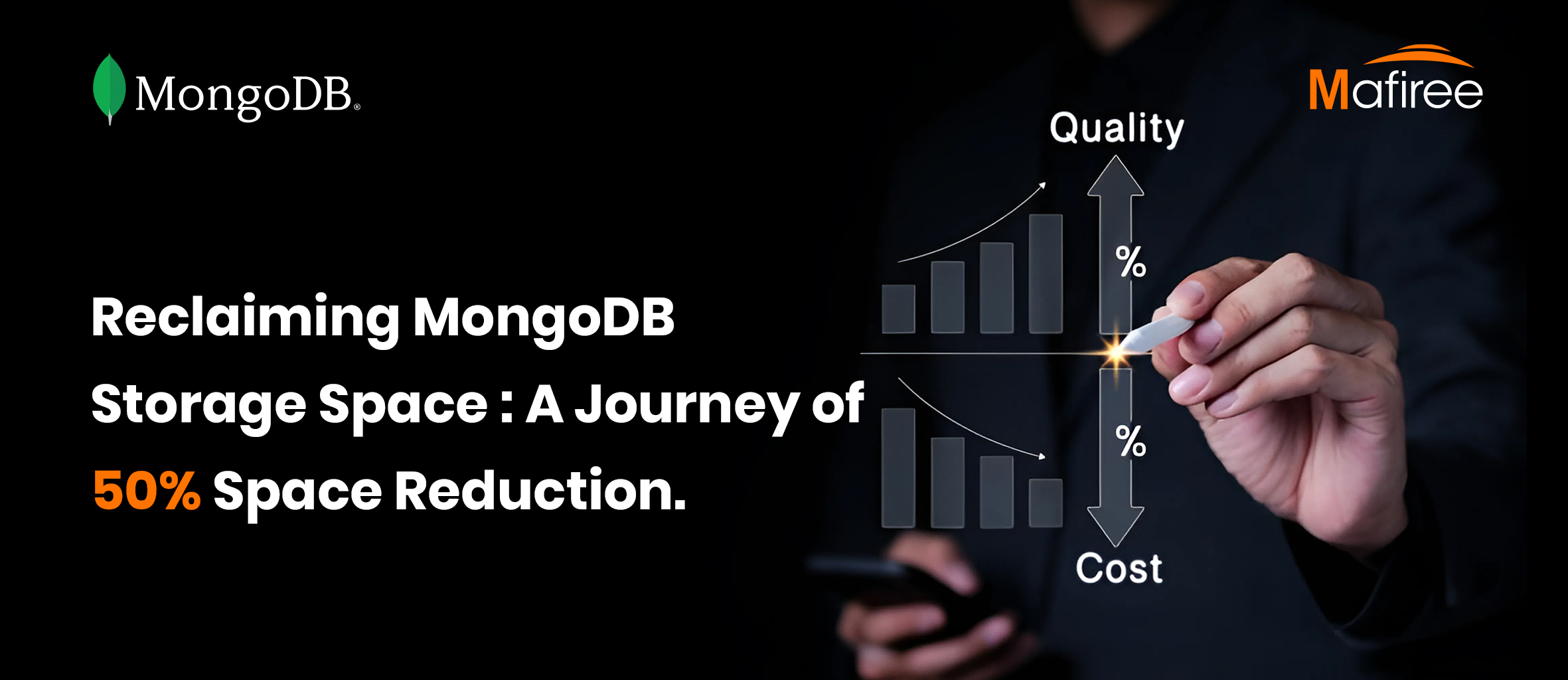
What consulting looks like: Mafiree experts perform deep-dive diagnostics to identify root causes and implement targeted optimizations. These MongoDB optimization services can include query tuning, index management, schema improvements, and sharding strategies. For a practical example, see our MongoDB query optimization case study, which demonstrates how targeted performance improvements can reduce database latency.
Outcome: faster, more predictable query performance under real production load.
Basic replica-set setups can often be configured internally. Strict uptime, RPO, or RTO requirements are where a misconfiguration becomes a real business risk.
Symptoms: uncertainty about failover behavior, backup processes that have never been tested under real failure conditions, or SLA requirements that haven't been mapped to the current architecture.
Why it gets complex: ensuring continuous availability demands robust configurations for replication, failover, and backup processes. Misconfigurations can lead to data loss or service outages.
Consulting becomes valuable when:
What consulting looks like: consultants from Mafiree design resilient architectures that meet SLA requirements while minimizing operational overhead. This work can include ongoing MongoDB administration services covering deployment, monitoring, availability, and operational management.
Outcome: an architecture that's been tested to fail gracefully, not just designed to.
Basic access controls are usually within reach for an internal team. Regulatory requirements, sensitive data, or production exposure raise the stakes considerably.
Symptoms: unclear ownership of access controls, encryption that's inconsistently applied, or audit logging that wouldn't hold up to a compliance review.
Why it gets complex: with increasing regulatory scrutiny, securing MongoDB instances is critical — including access controls, encryption at rest and in transit, audit logging, and compliance with standards like GDPR or HIPAA.
Consulting becomes valuable when:
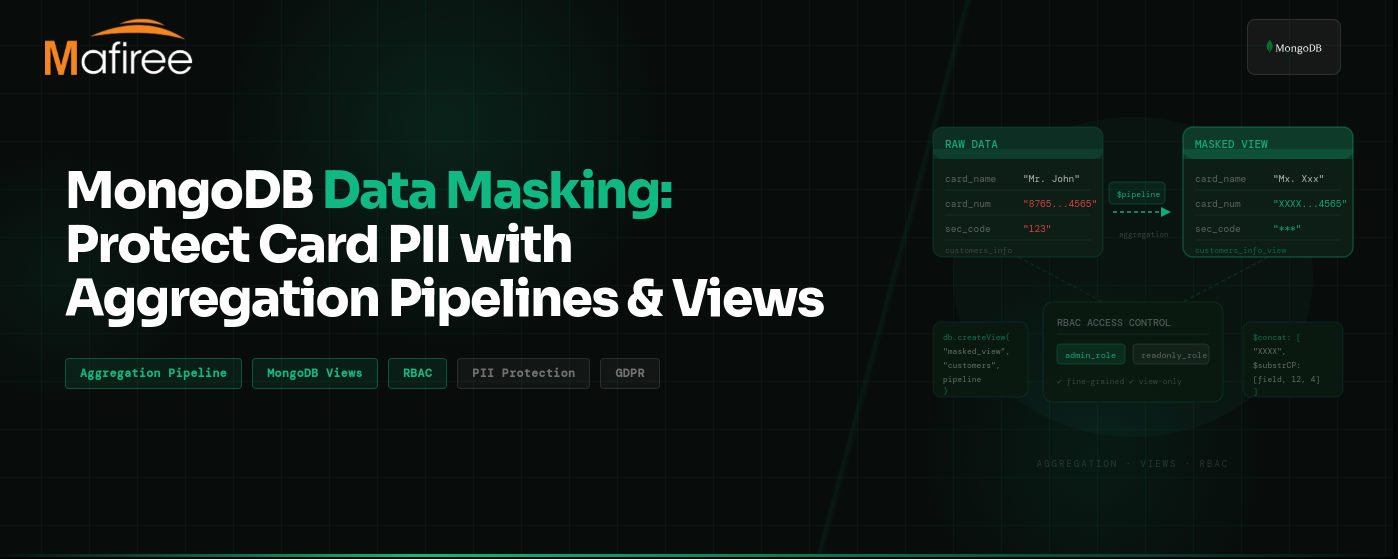
What consulting looks like: Mafiree provides comprehensive security assessments and implements best practices to protect sensitive data without compromising performance. Organizations requiring ongoing database protection can also explore MongoDB security and maintenance services. For a more specific privacy use case, see our guide to MongoDB data masking for privacy compliance.
Outcome: a security posture that satisfies both regulators and auditors, without slowing the application down.
| Situation | DIY | Expert review |
|---|---|---|
| Basic CRUD application | Yes | Optional |
| Simple schema | Yes | Optional |
| Complex multi-document relationships | Caution | Recommended |
| Large-scale migration | Caution | Recommended |
| Persistent production performance issues | Caution | Recommended |
| Strict RPO/RTO requirements | Not recommended | Strongly recommended |
| Regulated or sensitive workloads | Caution | Recommended |
| Major sharding architecture decision | Caution | Recommended |
| Production migration with minimal downtime | Caution | Strongly recommended |
Talk to a Mafiree MongoDB expert today
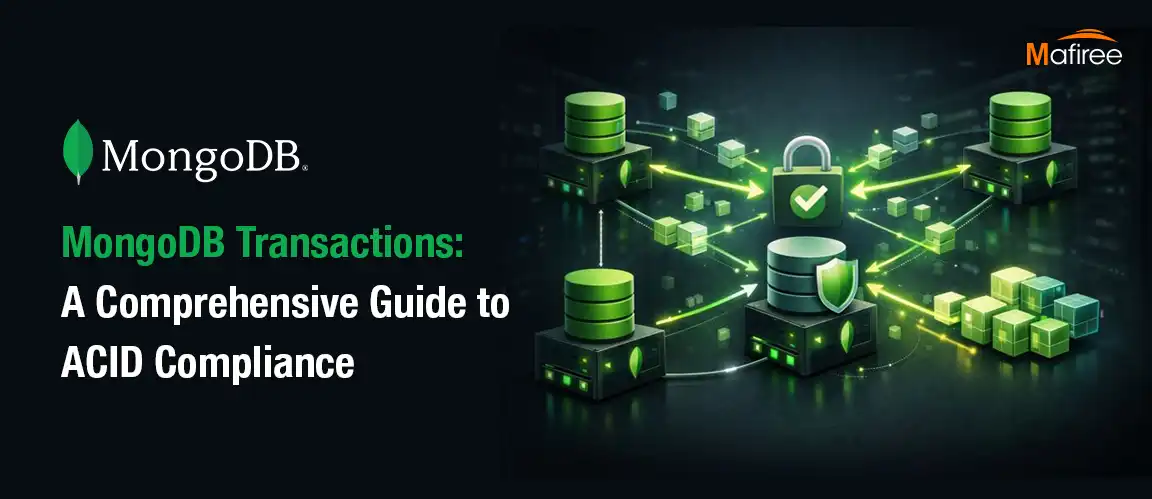
Book a consultationMafiree brings deep expertise in MongoDB architecture, deployment, and optimization. Our consultants work closely with your team to understand your unique use case and deliver tailored solutions that align with your business goals — including complex operations like transaction handling, covered in our comprehensive guide to MongoDB transactions.
Related resources
MongoDB use cases are diverse and dynamic, but not all are simple to implement. Whether you're designing a new application or optimizing an existing one, expert consulting support ensures that your MongoDB deployment is efficient, scalable, and secure.
Mafiree's database experts provide the guidance needed to navigate complex scenarios and maximize the value of your investment in MongoDB.
Get expert support for your MongoDB use cases
Get in touchMiru IT Park, Vallankumaranvillai,
Nagercoil, Tamilnadu - 629 002.
Unit 303, Vanguard Rise,
5th Main, Konena Agrahara,
Old Airport Road, Bangalore - 560 017.
Call: +91 6383016411
Email: sales@mafiree.com