Moving mission-critical data doesn't have to mean taking your application offline. This guide explores the most effective database migration strategies, specifically focusing on zero-downtime patterns for MySQL, PostgreSQL, and MongoDB. From the initial database migration process to advanced database migration testing strategies, we provide a roadmap for a risk-free transition.
sukan April 21, 2026
Moving mission-critical data doesn't have to mean taking your application offline. This guide explores the most effective database migration strategies, specifically focusing on zero-downtime patterns for MySQL, PostgreSQL, and MongoDB. From the initial database migration process to advanced database migration testing strategies, we provide a roadmap for a risk-free transition.
In today's 24/7 digital economy, data is the lifeblood of business operations. But as companies grow, their data needs evolve, leading to a critical question: What is database migration? Simply put, it is the process of moving data from one storage system, format, or environment to another. Whether you are moving from an on-premises server to the cloud (AWS, Azure, or GCP) or switching database engines entirely, your database migration approach will determine the success of the project.
The biggest challenge? Balancing data integrity with application availability. Traditional "Big Bang" migrations often require hours—or even days—of downtime. For modern enterprises, this is unacceptable. This blog explores high-availability types of database migration strategies that keep your services running while the data moves in the background.
A successful migration isn't just about moving rows and columns; it's about a well-orchestrated database migration process. Skipping steps is the fastest way to encounter data corruption or extended outages.
Before writing a single line of code, you must audit your source and target environments.
For heterogeneous migrations, you'll need to map NoSQL BSON (MongoDB) to Relational SQL schemas. This is where a database migration example often involves tools like AWS SCT (Schema Conversion Tool) or custom scripts.
Don't migrate "junk" data. Use this phase to archive old records and normalize your data.
Choosing the right strategy depends on your "Recovery Time Objective" (RTO) and budget.
Single-window migration
Best for small, non-critical databases with an acceptable downtime window.
Incremental parallel move
Best for large datasets where running parallel systems short-term is tolerable.
Live CDC replication
Best for mission-critical enterprise apps that must stay online 24/7.
All data is moved in one single operation during a scheduled maintenance window.
Data is moved in small increments. The old and new systems run in parallel for a period.
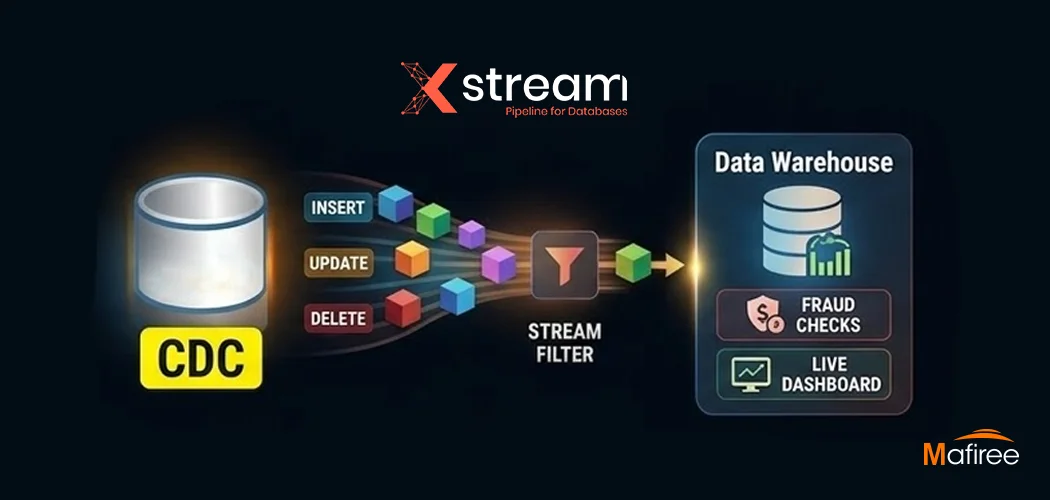
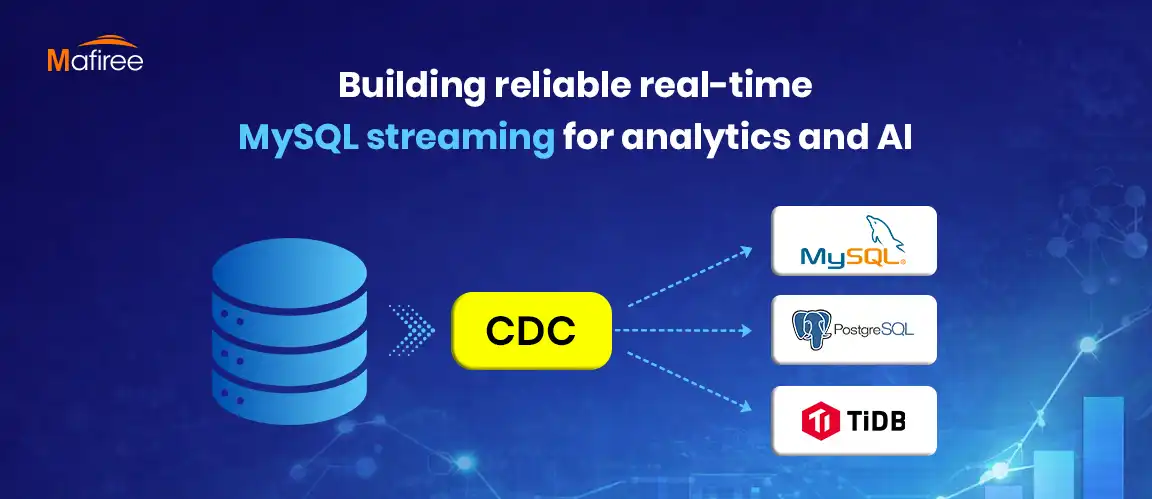
This is the gold standard for enterprise apps. It involves setting up a replica of the production database in the target environment and using Change Data Capture (CDC) to keep them in sync until the final cutover.
Each database engine has unique native tools that facilitate a zero-downtime database migration approach.
For MySQL, the most common database migration example is setting up a target instance as a "Slave" (Replica) to the current "Master" (Primary).
mysqldump or Percona XtraBackup.PostgreSQL's logical replication allows you to migrate across different major versions (e.g., PG 12 to PG 16) with almost zero lag. Unlike physical replication, logical replication lets you choose specific tables to sync, providing more flexibility during the database migration process.
Since MongoDB is a distributed system, you can migrate by adding a new node to your replica set in the target environment. The new node will "heartbeat" with the primary and sync data via the Oplog.
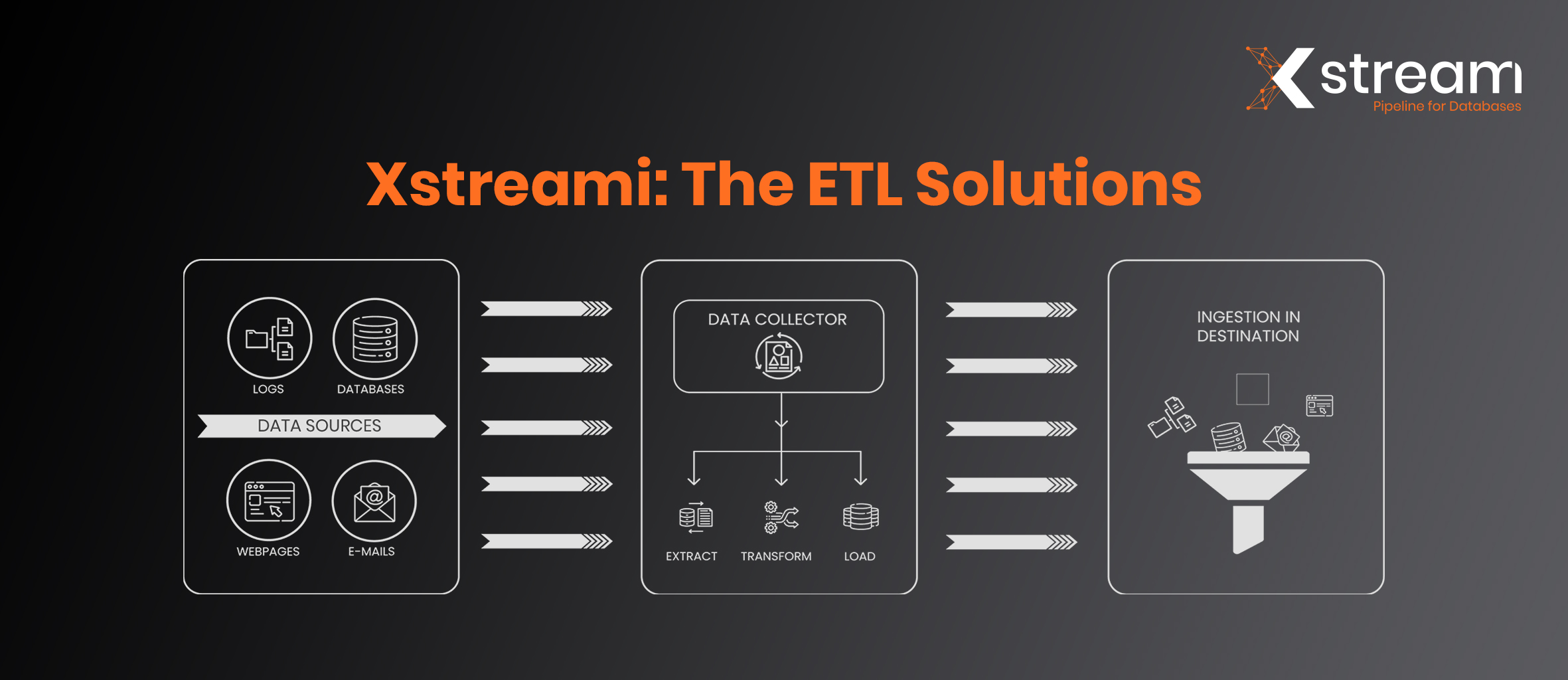
Each of the zero-downtime approaches we've outlined—MySQL primary-replica switchover, PostgreSQL logical replication, MongoDB oplog tailing—shares a common challenge: they all rely on continuous data synchronization.
During migration, your data pipeline must:
Built for exactly this challenge
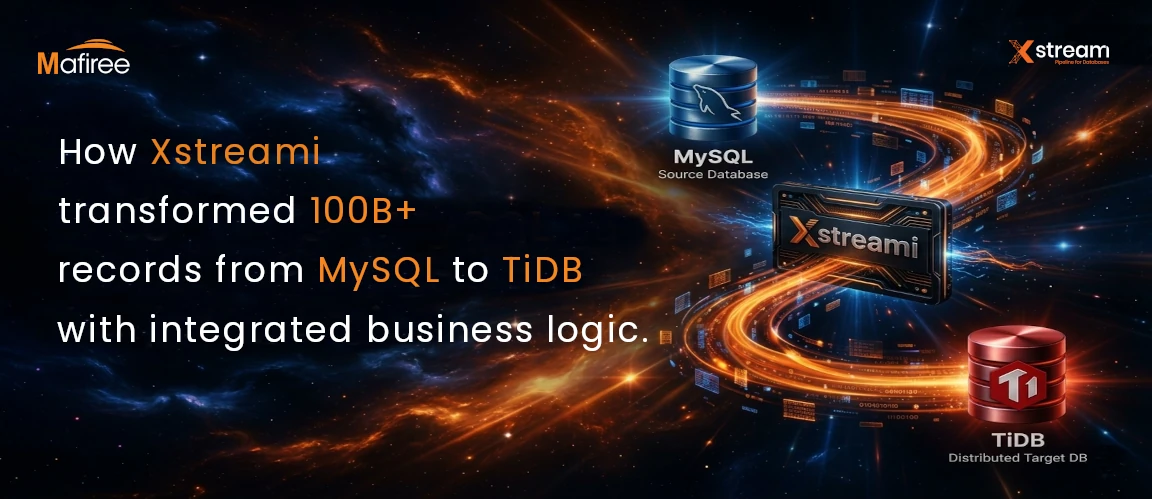
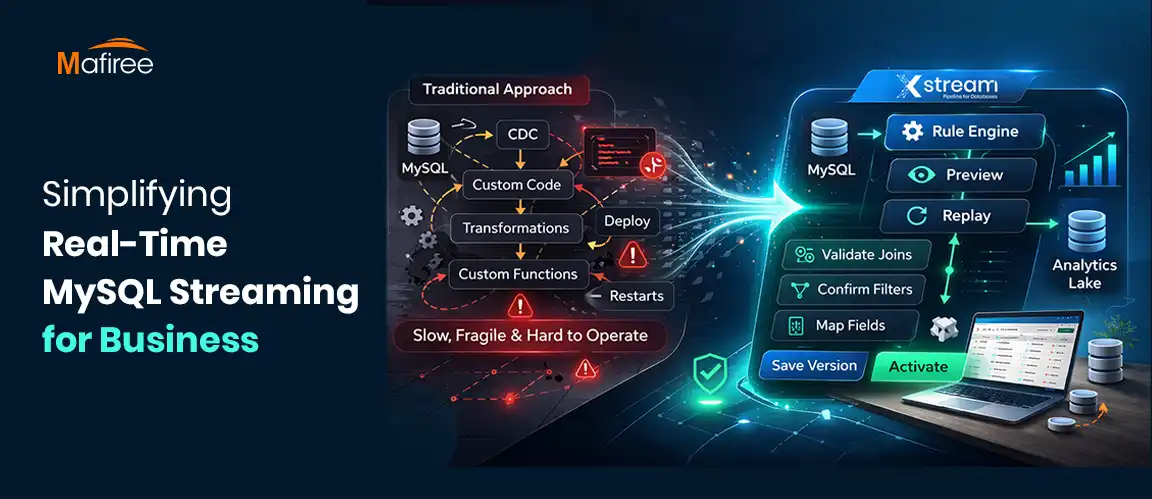
Xstreami doesn't just move data — it monitors every byte, transforms it according to your rules, and ensures zero-latency synchronization across MySQL, PostgreSQL, MongoDB, and cloud data warehouses like Redshift and ClickHouse.
Even well-planned migrations fail when edge cases aren't anticipated. Based on Mafiree's experience across thousands of enterprise migrations, the following six scenarios represent the most frequent failure patterns — and how to stop them before they derail your project.
| Failure Scenario | Symptoms | Mafiree's Solution | Prevention Tip |
|---|---|---|---|
| Replication Lag Spike | Cutover results in missing rows; app shows stale data | Xstreami monitors lag in real-time and halts cutover if threshold exceeded | Set lag threshold alert at <5 seconds before scheduling cutover |
| Schema Mismatch Post-Cutover | Application crashes; NULL constraint errors; broken foreign keys | Mafiree runs automated schema diff reports pre- and post-migration using custom validators | Never skip schema compatibility audit, especially for heterogeneous migrations |
| Silent Data Corruption | Row counts match but checksums differ; wrong values in critical fields | Post-migration MD5/SHA checksum verification on every critical table | Never rely on row count alone — always validate checksums |
| Insufficient Network Bandwidth | Migration takes 10× longer than planned; replication never catches up | Pre-migration network throughput tests; Xstreami uses batched CDC to reduce pipe load | Benchmark network capacity against your data volume before day one |
| No Rollback Plan | Failed cutover with no way to revert; extended unplanned downtime | Mafiree keeps source DB live as a fallback and maintains reverse CDC stream until sign-off | Define a documented rollback procedure with a time-boxed decision window before cutover |
| Index Bloat After Cutover | Query performance degrades significantly on the new DB within days of go-live | Mafiree's post-migration optimization includes index rebuild, ANALYZE, and query plan review | Run VACUUM/ANALYZE (PostgreSQL) or OPTIMIZE TABLE (MySQL) immediately after cutover |
These failure patterns are avoidable with the right monitoring and planning in place. Mafiree's migration specialists conduct a pre-migration failure-mode analysis as a standard step — mapping each risk to a mitigation strategy before a single byte is moved. Learn more about Xstreami →
Your database migration testing strategy is what stands between a successful launch and a middle-of-the-night rollback.
Validate your backup and restore procedures. Ensure that the target environment can handle the production load by running stress tests.
Monitor "Replication Lag" religiously. If the lag grows too high, the cutover will result in data loss.
To ensure a smooth transition, follow these data migration best practices:
To deepen your understanding of database migration and related data engineering topics, explore these resources:
Database migrations are high-stakes operations. A single error can lead to permanent data loss or costly downtime. At Mafiree, we have successfully migrated thousands of databases for global enterprises.
Our database migration approach combines automated CDC tools with human expertise to provide:
Your users won't even know you've moved. We maintain full application availability throughout the entire migration window.
All data is encrypted in transit and at rest. We comply with GDPR, SOC 2, and industry-specific regulatory requirements.
We don't just move your data — we tune the target environment for better speed, including index rebuilds and query plan reviews.
Whether you are performing a simple database migration example between two MySQL instances or a complex heterogeneous move, the key to success is preparation. By choosing the right database migration strategies and implementing a rigorous database migration testing strategy, you can evolve your tech stack without the fear of failure.
Migrations fail silently 30% of the time.
Don't find out the hard way.
Xstreami catches replication lag, schema drift, and data corruption before cutover. Our pre-migration readiness review maps every failure risk to a fix.
Free 30-minute session with a Mafiree migration specialist
Miru IT Park, Vallankumaranvillai,
Nagercoil, Tamilnadu - 629 002.
Unit 303, Vanguard Rise,
5th Main, Konena Agrahara,
Old Airport Road, Bangalore - 560 017.
Call: +91 6383016411
Email: sales@mafiree.com