 Orbit
Orbit
 Xstreami

- About
- Services
- Blogs
- Careers
- Products
- Contact Schedule a Call
This blog explains why MySQL real-time streaming has become essential for modern analytics and AI systems, and how CDC-based architectures enable reliable, observable and scalable data pipelines for fast, data-driven decisions.
Thiyaghu February 06, 2026

AI systems, operational dashboards, live alerts, and customer-facing features all have something in common. All of them depend on one thing: fresh data — not data from last night.
Today’s organisations expect answers as events occur:
In short, real-time data is no longer an engineering luxury.
It is a business capability.
At Mafiree, we’ve seen first-hand how real-time streaming transforms analytics and AI outcomes — driving better dashboards, faster alerts, and more responsive customer systems.
Traditional batch pipelines were designed for a different world:
They work well when latency does not matter. The problem is that modern platforms no longer operate in that comfort zone.
When data arrives late, the impact becomes visible immediately:
When business teams start asking,
“Show me what is happening right now,”
batch processing stops being an optimisation issue and becomes a structural limitation.
A subtle but important change is happening in modern data platforms.
We are no longer just copying tables between systems.
We are streaming changes as events.
Instead of asking:
“What does the table look like now?”
Systems are designed to ask,
“What just changed?”
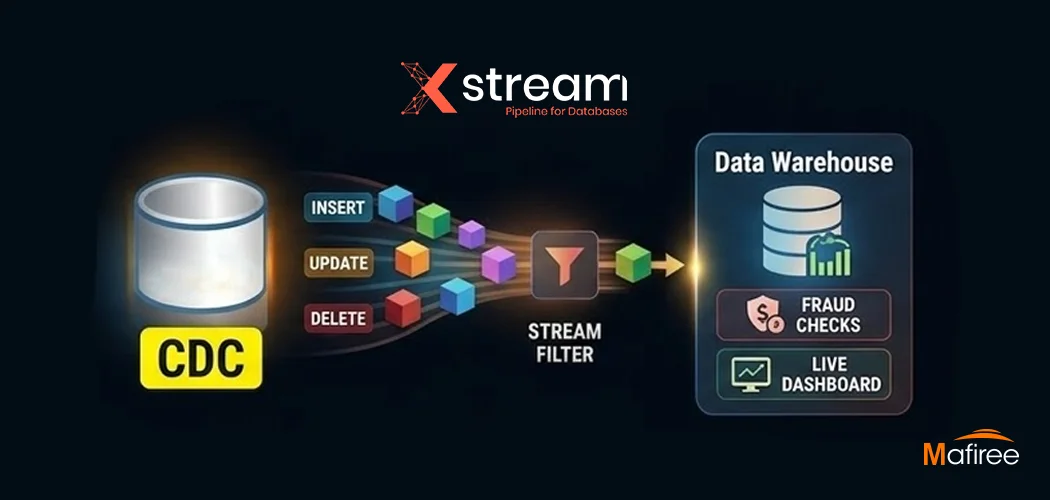
This is where real-time MySQL streaming and Change Data Capture (CDC) become foundational.

By consuming binary log events directly:
This event stream feeds:
In practice, the database becomes a continuous source of business facts — not just a storage layer.
Most teams start streaming quickly. Very few teams get reliability right.
In practice, reliability has nothing to do with raw throughput alone.
It is about correctness under pressure.
A production-grade streaming layer must guarantee:
Downstream systems must never see duplicated business events.
Especially important for financial data, inventory, and stateful systems.
Columns will be added and types will change, but streaming should not break silently.
Restarts, crashes, and network partitions should never corrupt the stream or lose events.
You must know:
This is the difference between saying,
“We have a pipeline”
and
“We can trust this pipeline.”
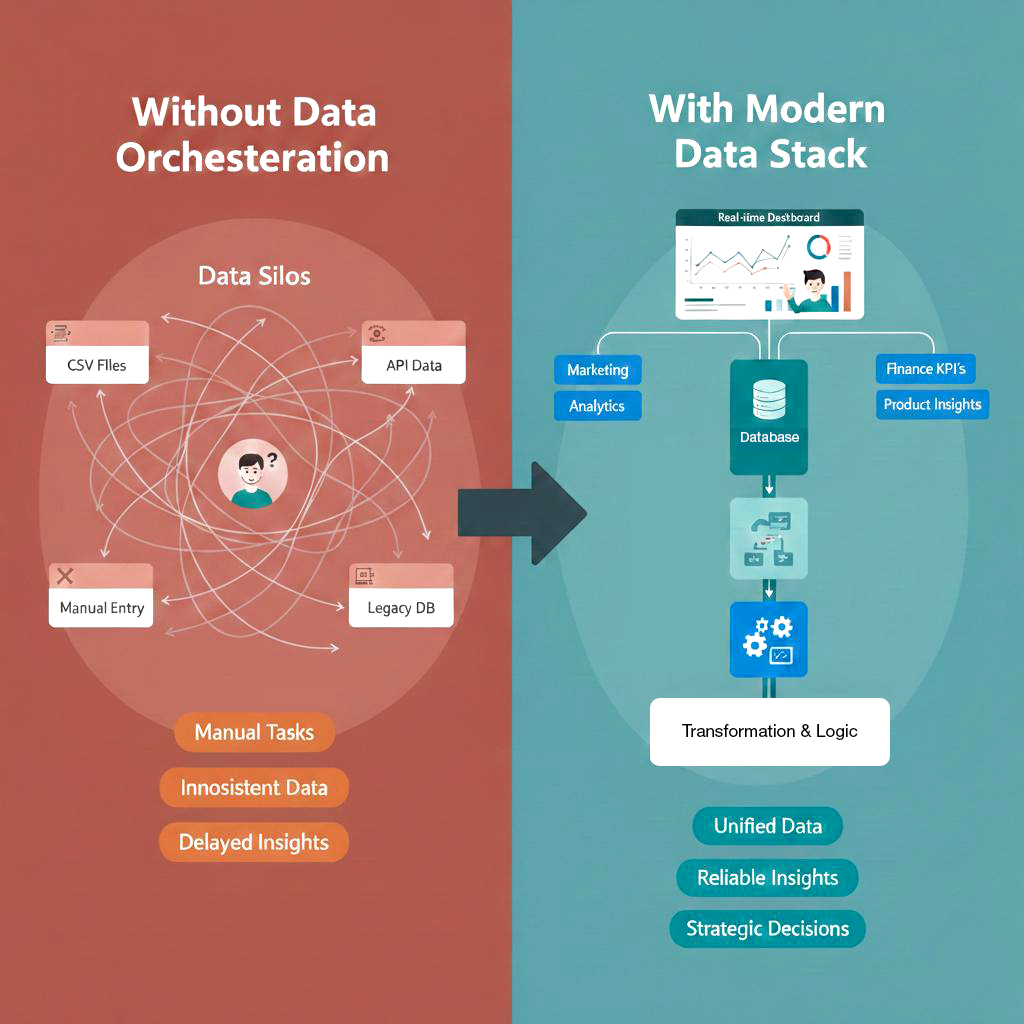
In real deployments, a reliable MySQL streaming architecture usually follows a simple but powerful structure.
On top of this foundation, multiple independent consumers can operate in parallel, including:
The key design principle is simple:
One source of truth feeding many independent real-time consumers.
This separation allows analytics and AI platforms to evolve independently from operational systems, without coupling release cycles or availability requirements.
For a practical implementation of this architecture using MySQL CDC and robust deliverability, see how Xstreami handles change event streaming and schema management in real production workloads.

AI systems are extremely sensitive to data freshness.
Even small delays directly affect:
Across real production environments, a clear shift is now visible.
Training pipelines are no longer purely batch-driven. They are slowly becoming continuous pipelines.
This turns database streaming from a data integration component into a core part of the machine-learning infrastructure itself.
When feature stores are built directly from real-time streams, teams unlock:
The alignment between operational data and AI pipelines is rapidly becoming a competitive advantage.
The most common mistake in a streaming project is designing only for the first consumer.
A better long-term approach is to assume:
That means:
This future-proofs your streaming layer and avoids painful redesigns later.

More than 6000 Servers Monitored
Happy Clients
Certified DBAs
24 x 7 x 365 Support



Miru IT Park, Vallankumaranvillai,
Nagercoil, Tamilnadu - 629 002.
Unit 303, Vanguard Rise,
5th Main, Konena Agrahara,
Old Airport Road, Bangalore - 560 017.
Call: +91 6383016411
Email: sales@mafiree.com